Great Sand Dunes National Park and Preserve
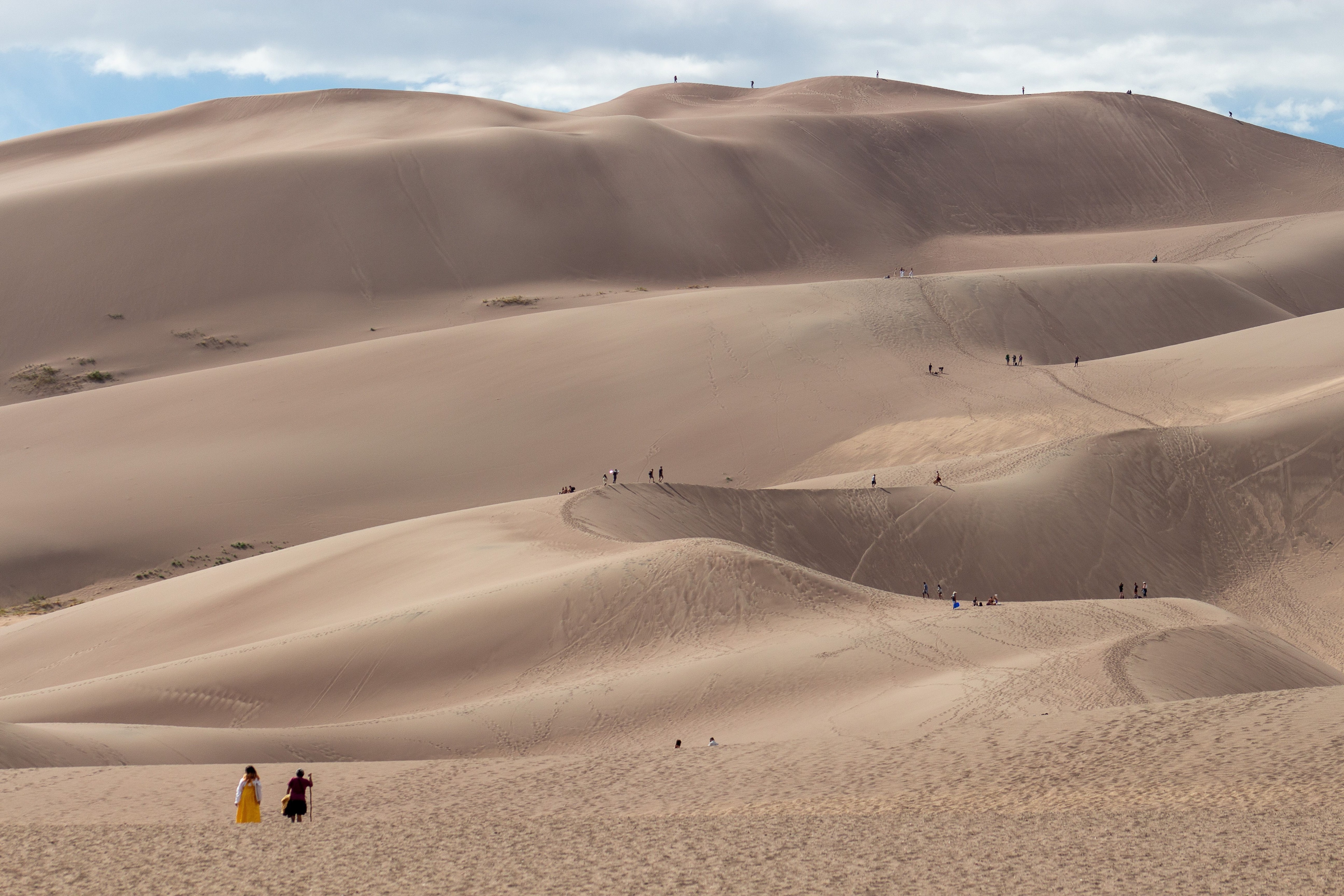
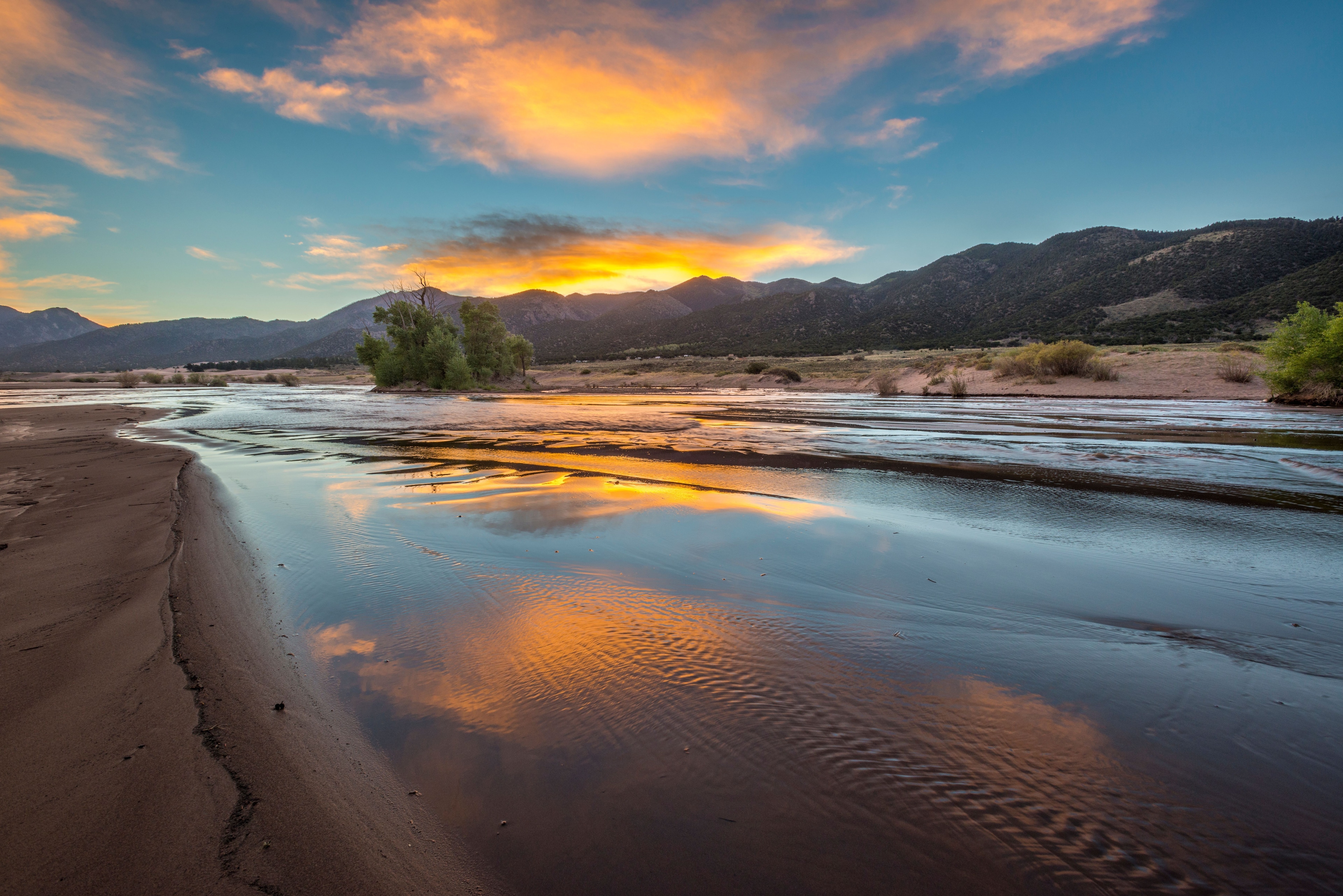
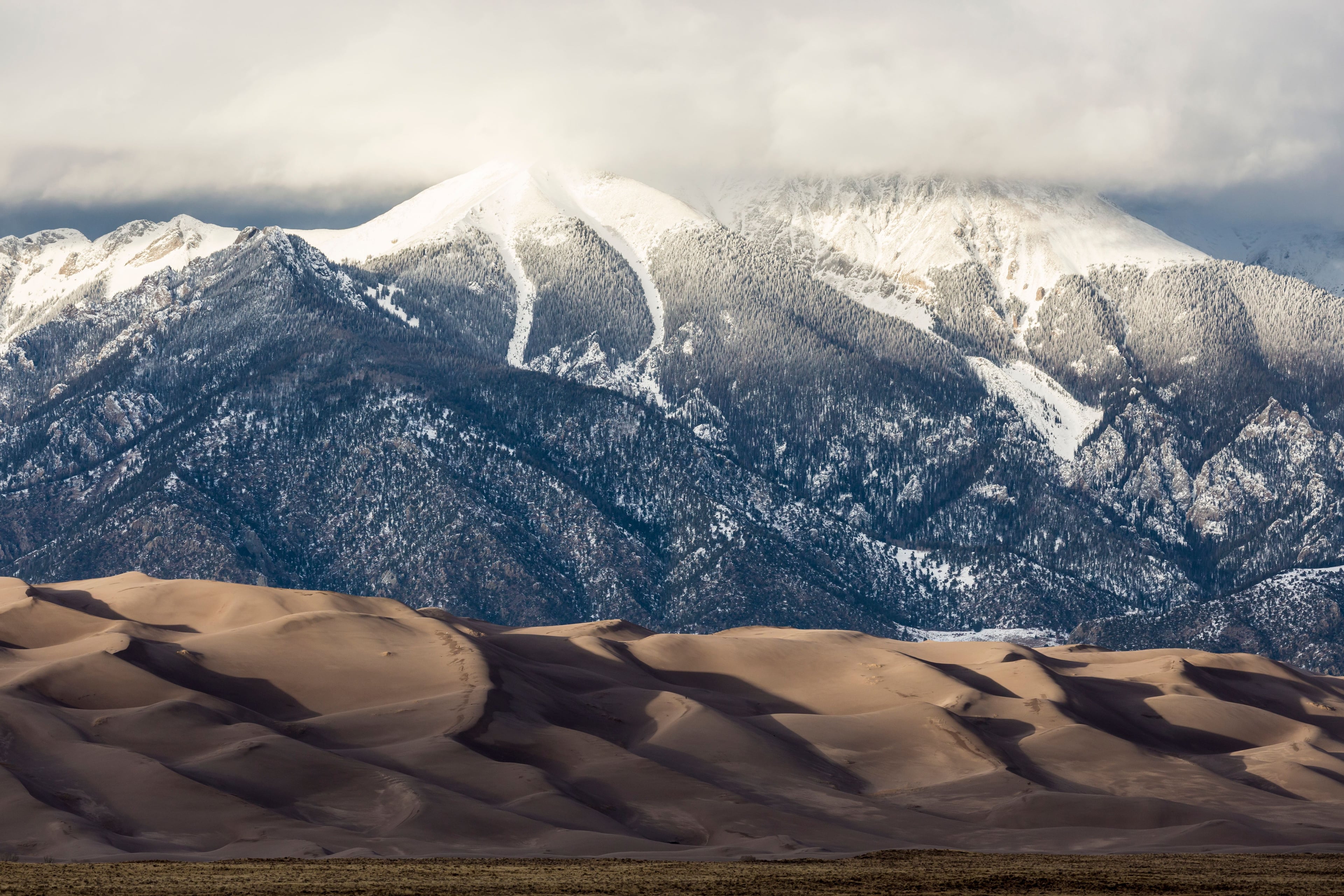
Towering dunes, rippling creeks, alpine forests, grasslands, and rugged peaks, the Great Sand Dunes National Park is a surreal Colorado gem where desert and mountains collide and where shifting sand meets star‑filled skies and boundless Colorado wonder.

Type of Area
National Park

Address

Nearest Town
Alamosa
Key Features

Park Size
About 150,000 acres, or 604 square km

Highest Point
Hidden Dune is the tallest dune in North America at 741 feet (225 m)

Major Wildlife
Elk; Mule Deer; Pronghorn; Bison; Black Bears; Mountain Lions; Bobcats

Miles of Trail
Dunefield is 30 square miles

Popular Activities
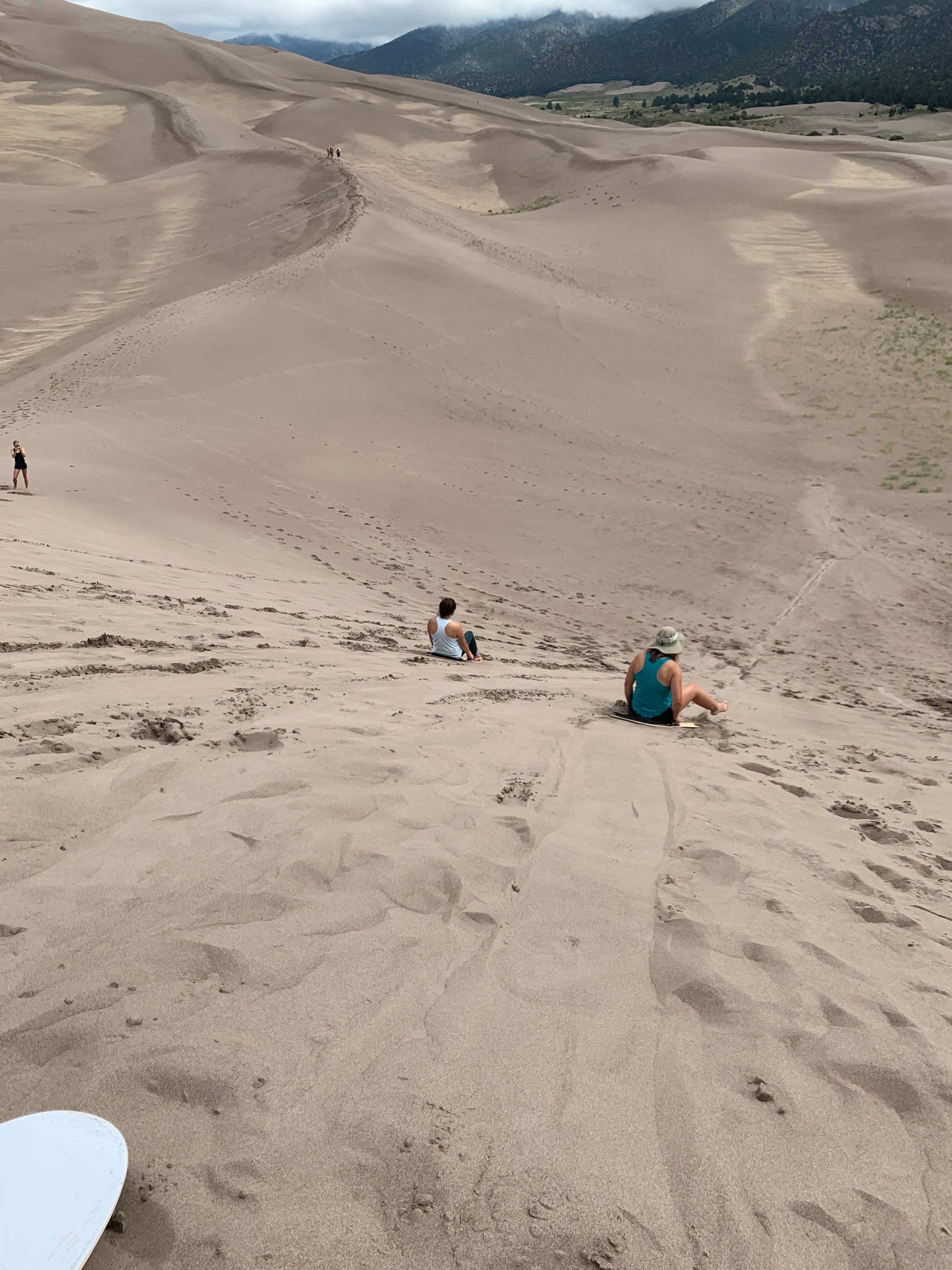
Sandboarding; Sand Sledding; Hiking; Photography; Stargazing

Scenic Views
High Dune on First Ridge; Hidden Dune (tallest dune in North America); Star Dune; Eastern Dune Ridge

WiFi Access
Public WiFi is not available

Best Time to Visit
Spring and fall
Overview
Open 24/7 year-round with no timed entries or reservations, Great Sand Dunes showcases North America’s tallest dunes amid grasslands, wetlands, forests, alpine lakes, and breathtaking star-filled skies.
Maps
Maps
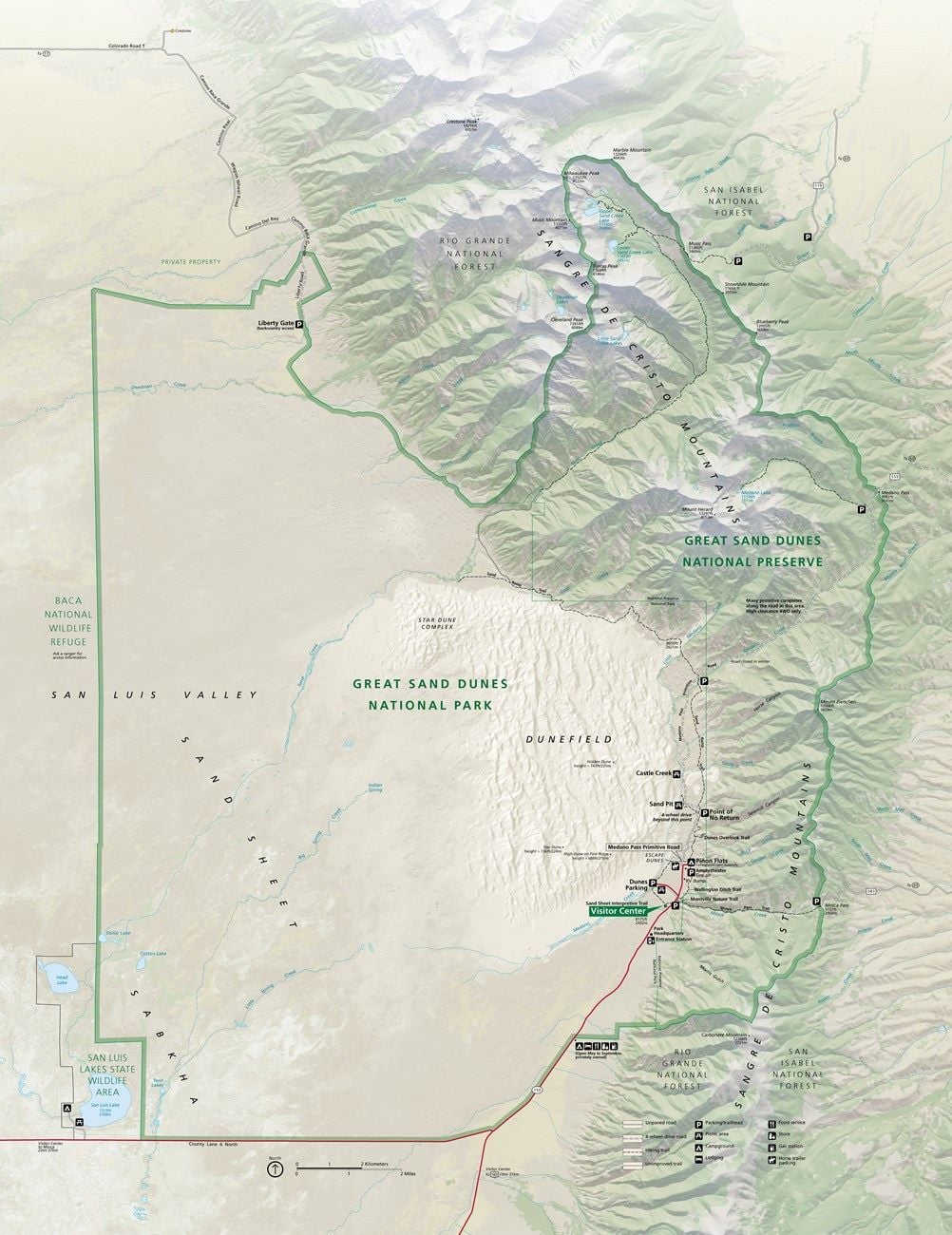
Maps for Great Sand Dunes National Park
Entrances & Fees
Park Entrances
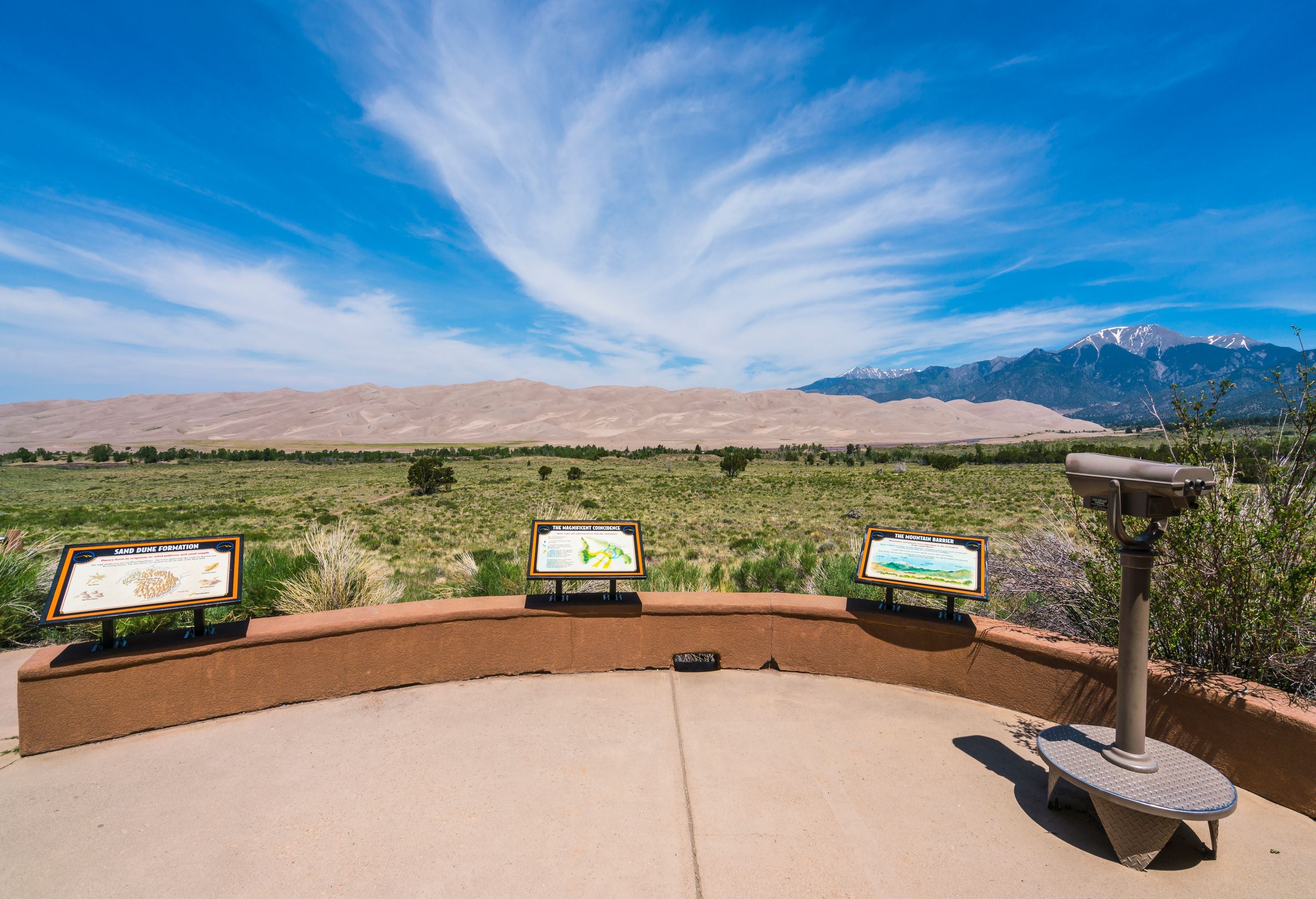
The primary entrance to the Great Sand Dunes National Park and Preserve is via the Main Park Entrance on CO-150. There is also seasonal backcountry access via Medano Pass Primitive Road (high-clearance 4WD only).
Fees & Passes
To visit Great Sand Dunes, you need an entrance pass; choose from the Standard pass ($15 to $25), the Great Sand Dunes Annual pass at $45, or the America the Beautiful pass ($0-$80). The park is cashless, so you can pay by credit or debit card, Google Pay, or Apple Pay.
Activities
Facilities
Accessibility & Seasonal Info
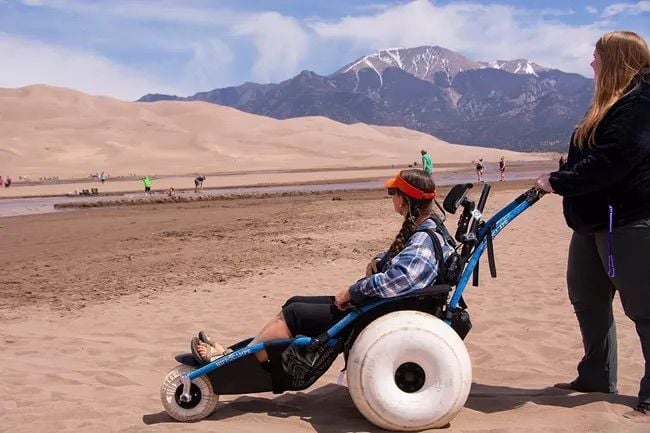
Accessibility
Great Sand Dunes offers the free use of special balloon-tire wheelchairs to access the dunes. Choose between a traditional 4-wheel chair for adults that's fairly easy to push or a 3-wheel chair that may work for a small child.
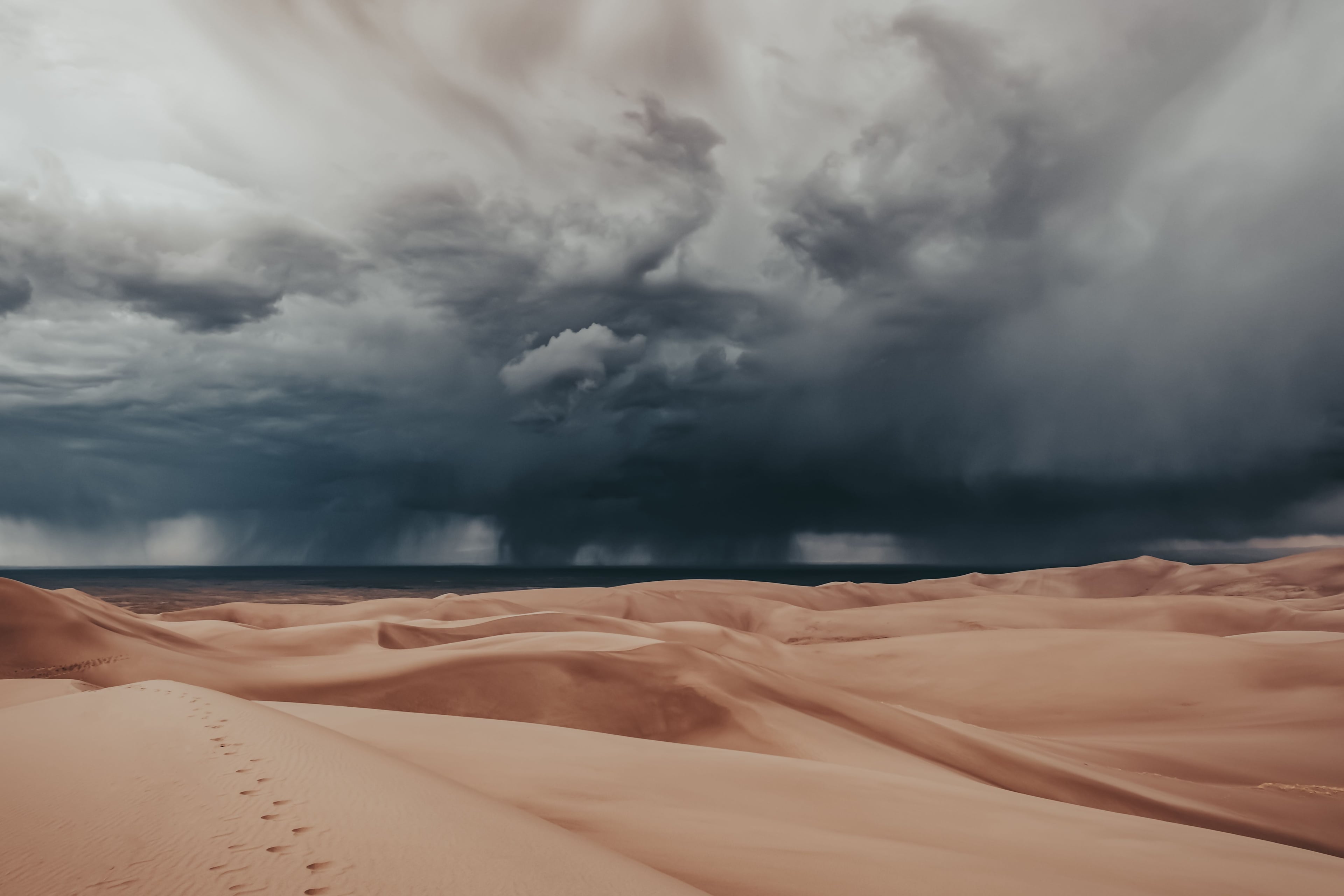
Seasonal Access & Weather
As of July 25, 2025, 3:30 pm, Medano Pass Primitive Road is open SH 150 to Medano Pass and FR 559. You need high-clearance 4WD low-range beyond the Point of No Return. Air down for deep sand. Watch for large dips near Ponderosa Point. Sand to Castle Creek is wet and firm. Air station is on. ATVs and UTVs aren’t allowed. It crosses Medano Creek nine times and is typically open mid to late May through late November.
Seasonal Closures
Seasonal Closures
Piñon Flats Campground is open April through October and closed November through March. Car camping isn’t permitted in winter, though a few area campgrounds stay open. Medano Pass Primitive Road requires high clearance 4WD and is open for driving and camping late spring through fall as conditions allow. Backpacking is permitted year-round. Check the weather forecast and follow NPS wildlife safety guidance for occasional mountain lion advisories on specific trails.
History & Culture
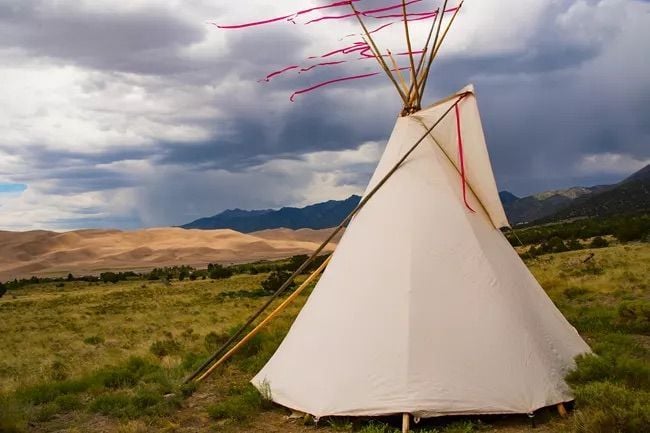
History & Culture
People have lived with these dunes for thousands of years. You’ll see history in manos and metates and in a major Folsom site where at least 49 bison were taken with atlatl spears. Clovis and Folsom peoples were here near the end of the ice age, and Ute, Jicarilla Apache, and Navajo ties continue. Visit Indian Grove to view culturally peeled ponderosa pines, with peel dates from 1777 into the early 1900s.
Geology & Ecology
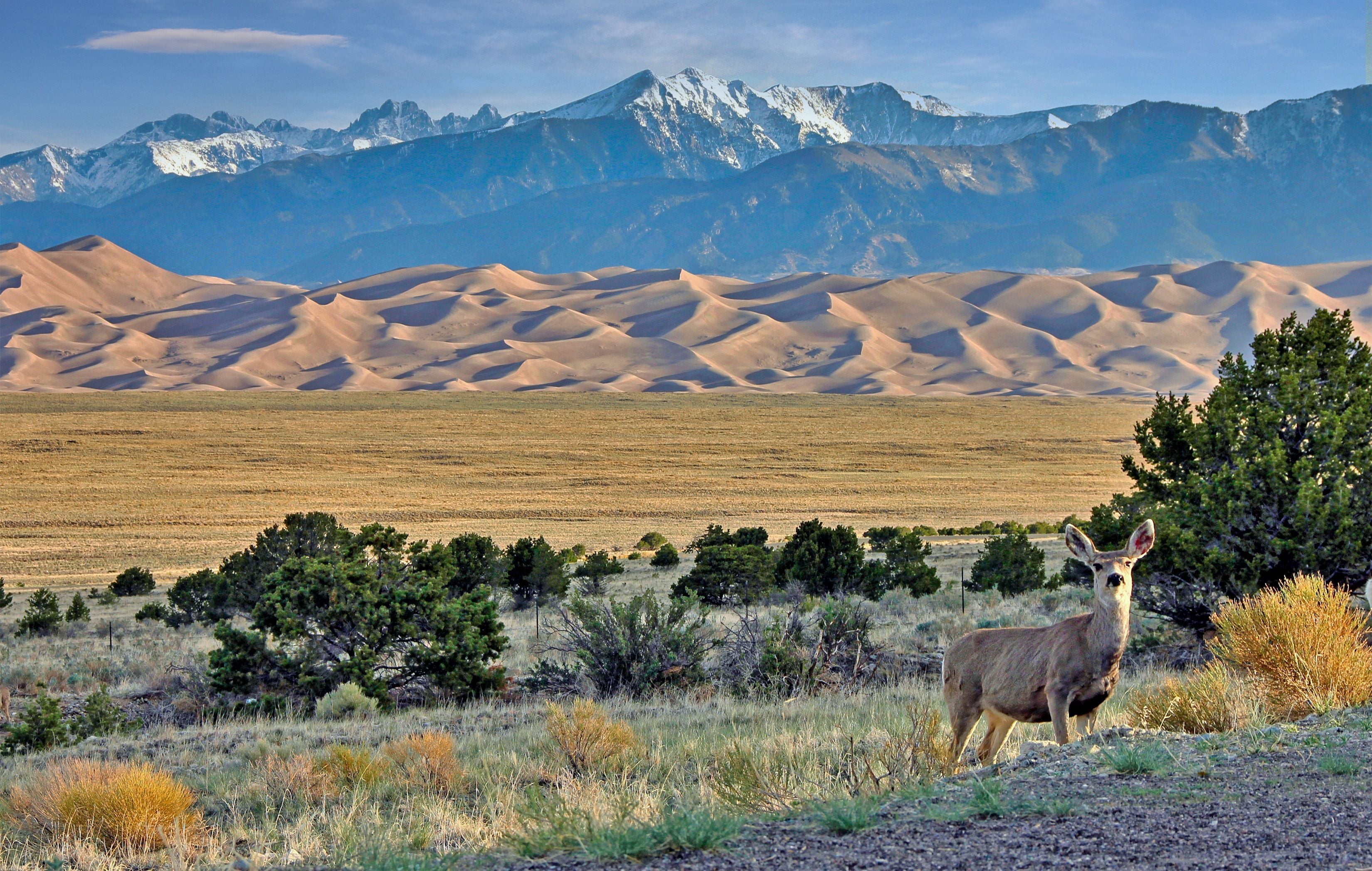
Geology & Ecology
At Great Sand Dunes, water makes everything work. You walk atop a two-layer aquifer up to a mile beneath the valley floor, recharged by mountain runoff in a closed basin. Medano and Sand Creeks recycle sand and can create surge flow. A high water table builds sabkha wetlands, while hidden dune moisture, averaging 7%, keeps unique plants and animals alive. Medano Creek qualifies under state standards as “Outstanding Waters,” and protecting this system drove the park’s 2004 expansion.
Regulations & Considerations
Regulations & Considerations
Know the rules so your visit goes smoothly. Marijuana is illegal here under federal law. Drones, hang gliders, and paragliders aren’t allowed. You may possess firearms per law, but not inside signed facilities, and hunting is in the preserve in season.