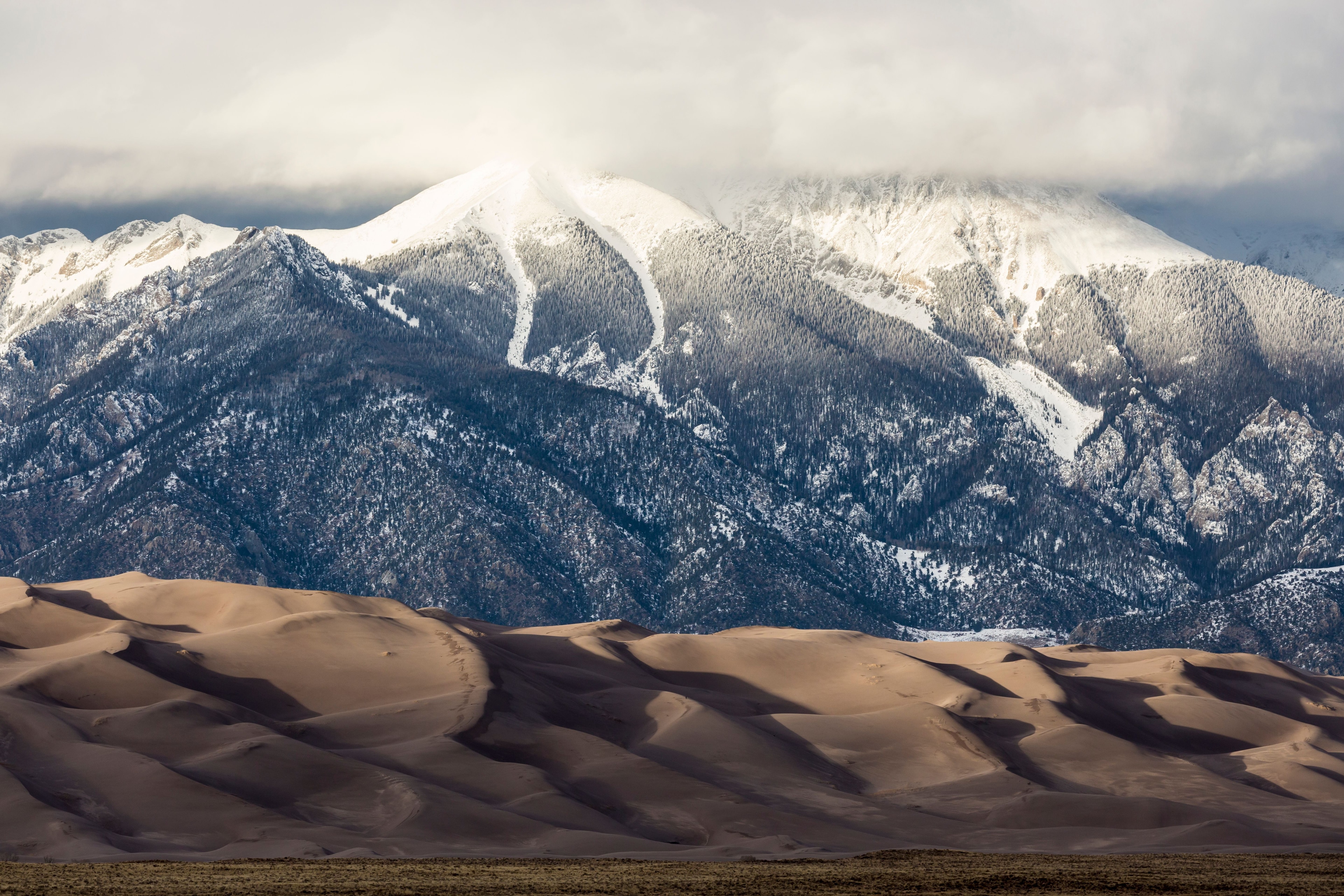
Great Sand Dunes National Park and Preserve
Overview
The Great Sand Dunes National Park and Preserve is open 24 hours a day, 7 days a week, year-round, and you'll be happy to know that you do not need timed entries or reservations to visit. Here, the tallest dunes in North America rise from a landscape that also includes grasslands, wetlands, forests, alpine lakes, and tundra.
The park is certified as an International Dark Sky Park by Dark Sky International, which means it meets strict standards for sky darkness, limits outdoor lighting, and works with neighboring communities to reduce light pollution. Before you visit the park, check the weather forecast, Medano Creek conditions and forecast flow, Medano Pass Primitive Road conditions, and any alerts, and plan for what to expect each month of the year.
Connectivity is limited with no wi-fi, though Verizon generally works in open valley areas. The Visitor Center store sells maps, books, and souvenirs, and ranger programs run mainly in summer and fall. Evening amphitheater talks may be cancelled for storms.
A huge draw of the park are the after dark activities; the park's remote location and lack of light pollution make it an excellent spot for stargazing. Time your visit for clear, moonless nights to see the most stars and the Milky Way. Plan to view the sky at least an hour and a half after sunset or before sunrise, and be sure to avoid nights with bright moonlight. The Milky Way is usually up in the early morning during spring and in the evening from mid-summer to early fall. To the naked eye, it appears as a dull whitish cloud rather than the vivid colors we see in long-exposure photos. There are no outdoor lights on the dunes or in parking areas, so carry a flashlight if needed and use a red light to protect night vision.
Large parts of the park are wilderness. Fishing is regulated, with certain waters reserved for catch-and-release Rio Grande cutthroat trout. Guided options include Jeep tours, birding, and backpacking tours. Hunting isn’t allowed in the park but is permitted in the preserve during legal seasons, with restrictions on party size, livestock, and camping in specific areas.