Great Sand Dunes National Park and Preserve
Geology & Ecology
Geological Features
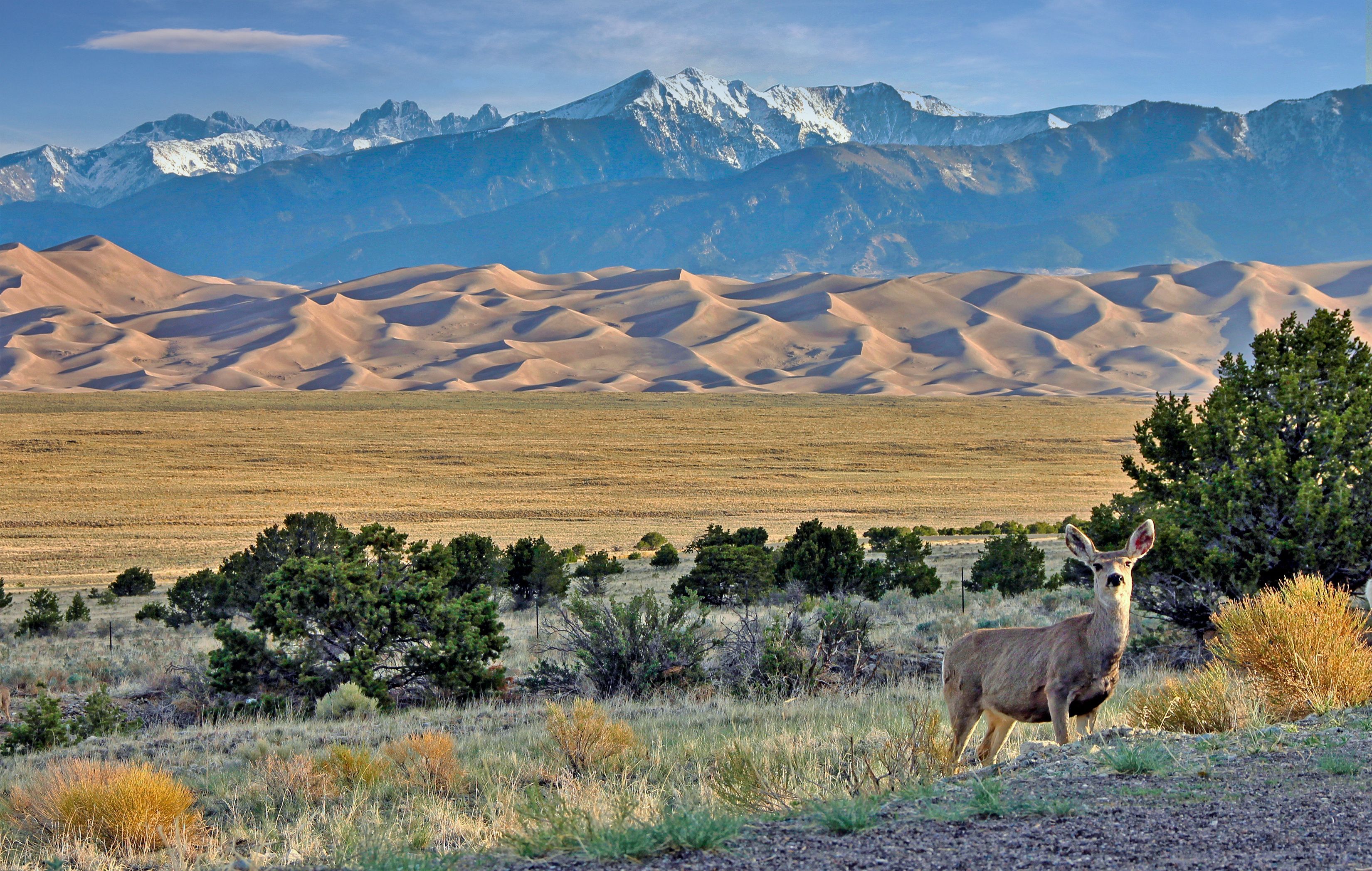
The Great Sand Dunes are the tallest in North America, rising up to 741 feet within a 30-square-mile dunefield. They formed where winds, water, and mountains converge. About 70% of the sand comes from volcanic rock in the San Juan Mountains, eroded into grains and carried into the San Luis Valley. Here, prevailing southwest winds push sand toward the Sangre de Cristo Mountains, while storm winds from the northeast reverse crests, building sharp ridges and star-shaped dunes.
Creeks like Medano and Sand play a vital role, carrying sand back to the valley floor where the wind picks it up again—recycling that keeps the dunes in place rather than spreading out. Beneath the dunes, a vast two-layer aquifer stores mountain runoff and holds hidden moisture; even a few inches underfoot, sand stays damp year-round. This groundwater also supports rare wetlands and surge flow in Medano Creek, a natural wave effect seen in few places worldwide.
The dunefield is part of a larger system that includes alpine watersheds, the sand sheet, and alkaline flats (sabkha). Together, they reveal a dynamic landscape where geology, wind, and water continuously shape Colorado’s shifting desert mountains.
Ecology & Wildlife
Great Sand Dunes hosts a surprising mix of ecosystems, from alpine tundra at 13,000 feet to desert wetlands at 7,500 feet. In a short drive you can pass tundra wildflowers, subalpine forests, montane woodlands, grasslands, creeks, wetlands, and the 30-square-mile dunefield itself. Each zone supports distinct life: alpine phlox and pikas in the high country, Douglas firs and aspen with deer and black bears in foothills, and cottonwood-lined creeks with Rio Grande cutthroat trout and songbirds.
Over 250 bird species have been recorded, including peregrine falcons, mountain bluebirds, hummingbirds, and sandhill cranes during migration. Grasslands shelter burrowing owls, pronghorn, and elk herds, while wetlands sustain amphibians like tiger salamanders and chorus frogs. The dunefield itself hosts specialized plants such as Indian ricegrass and unique insects, including seven species found nowhere else, like the iridescent Great Sand Dunes Tiger Beetle.
Mammals range from Ord’s kangaroo rats—living entirely in the dunes—to bighorn sheep, bobcats, coyotes, and mountain lions. Reptiles are few due to elevation; notably, no venomous snakes have been documented in the dunes or preserve. This convergence of habitats makes the park a living web of desert, mountain, and wetland species thriving side by side.