Rocky Mountain National Park (RMNP)
Seasonal Closures
Seasonal Closures
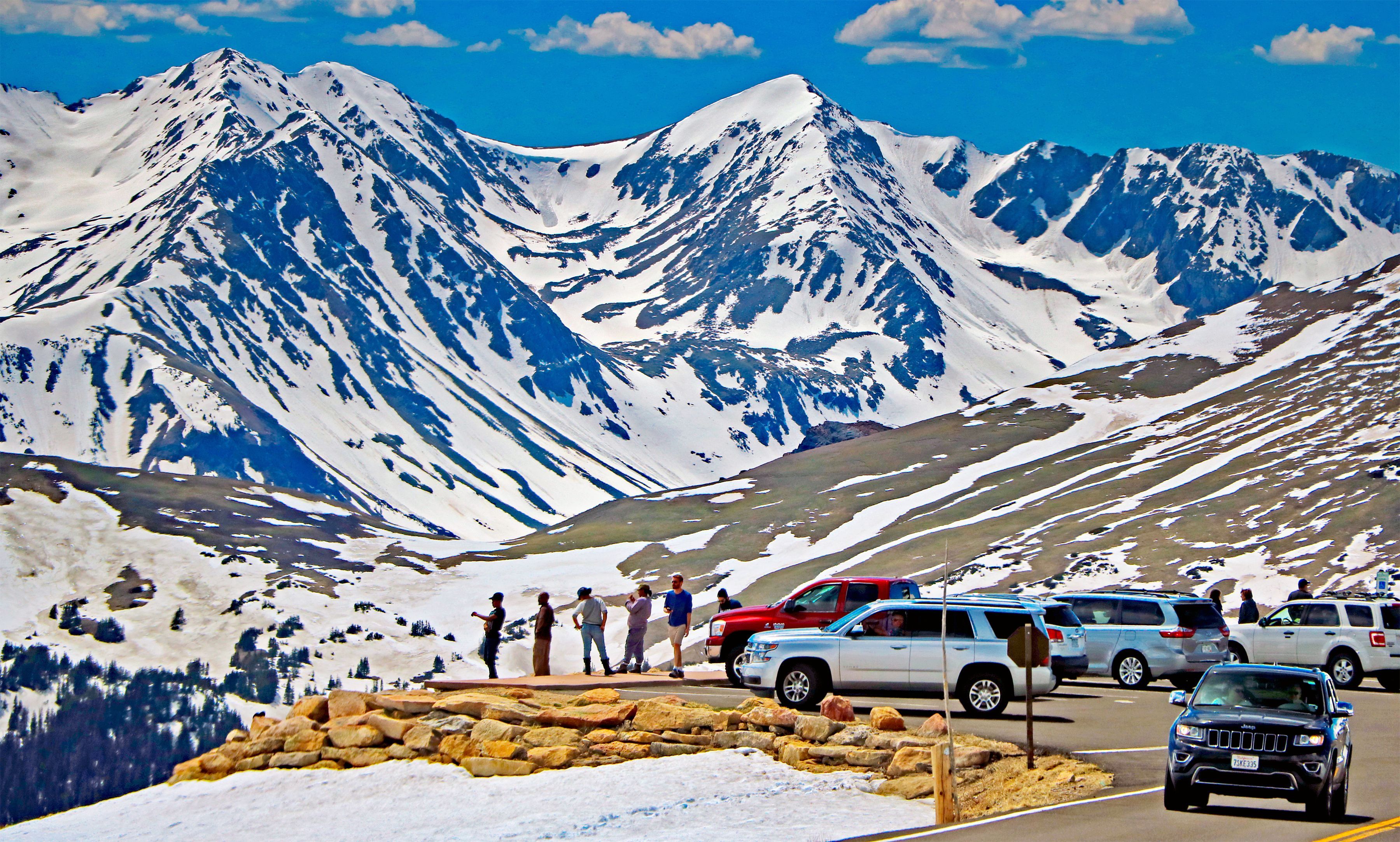
High elevation roads in RMNP close each year for the winter and reopen in late spring or early summer, depending on conditions. The two most notable seasonal road closures are Trail Ridge Road and Old Fall River Road:
Trail Ridge Road (Highway 34):
- Usually closes for the winter in late October.
- With 11 miles of road located at elevations above 11,500 feet, few guard rails, and no shoulders, Trail Ridge Road is not designed to be an all-season road. Winter conditions of drifting snow, high winds and below-freezing temperatures occur above 10,000 feet. Trail Ridge Road normally opens the last week in May, weather permitting.
- RMNP staff will update the Trail Ridge Road recorded phone line 970-586-1222 when the road status changes.
Old Fall River Road:
- Usually closes for the Winter in early October. During this time of the year, bicycles and leashed pets are not allowed on the road.
- After closing to vehicles in October, both Trail Ridge Road and Old Fall River Road remain open through November 30 for those exploring on foot, by bicycle, or with leashed pets. During this time, bicycles and pets are allowed only on the main roadways, side trails remain off-limits to both.
Starting December 1, the roads officially shift to winter trail status. From that point on, bicycles and leashed pets are no longer allowed past the closed gates. However, if you're snowshoeing, skiing, or simply enjoying a winter walk, you’re welcome to continue exploring the snow-covered landscape along these scenic roads throughout the season.
Other Roads:
Check in at the visitor’s center if you are traveling in late fall/early winter to see about other potential road closures.
Wildlife Closures
To protect wildlife during sensitive times, RMNP implements several seasonal wildlife closures each year. These limit human access to certain areas so that animals can breed, nest, or migrate with minimal disturbance. Key wildlife-related closures in RMNP include:
Elk Rut Closures (Fall)
Every fall, RMNP gives elk the space they need for their annual rut, an unforgettable season when bull elk bugle, gather harems, and spar in open meadows. From September 1 to October 31, the park enforces special closures to keep both visitors and wildlife safe during this intense mating period.
Each day, from 5:00 pm - 10:00 am, the meadows in Horseshoe Park, Moraine Park, Upper Beaver Meadows, Harbison Meadow, and Holzwarth Meadow are closed to all off-trail walking. That means you can’t wander into the grasses or veer off roads and trails during those hours. In addition, fishing is not allowed in the streams that flow through those meadows, from 5:00 pm - 7:00 am, including the Fall River, Big Thompson River, and Colorado River.
These rules reduce human-wildlife conflicts and give the animals a chance to behave naturally without interference. Rangers patrol these areas in the evenings, when crowds gather to hear elk bugles echo through the valley, and they do issue fines for those who ignore the rules.
Raptor Nesting Closures (Spring to Early Summer)
Each year, from February 15 through July 31, RMNP enforces seasonal closures to protect birds of prey during their sensitive breeding and nesting periods. These raptors are highly affected by human presence, and continued disturbances can lead to unsuccessful nesting, which ultimately threatens overall population health. In some cases, these closures may be lifted earlier or extended beyond July 31, depending on ongoing observations of nesting activity.
The closures focus on specific rock formations and their surrounding areas, which are popular with hikers and climbers but also serve as critical nesting habitat for raptors. When a closure is in effect, it includes the entire formation and nearby access routes. This means all climbing routes, cliff faces, outcroppings, approach and descent paths, and climber access trails are closed to the public on all sides of the listed formations.
These measures help ensure both the protection of the birds and the safety of visitors, as nesting raptors may act aggressively to defend their territory. The park monitors activity throughout the spring and early summer, and closures may be adjusted accordingly. Compliance with these closures is essential, and failure to follow them may result in a court citation under federal regulations.
Bald Eagle Roost Closure (Winter)
Each year from November 15 - March 15, RMNP enforces seasonal closures on the west side of the park near the Colorado River to protect migrating Bald Eagles. These birds return each winter to a shared roosting site located on U.S. Forest Service land next to the park, and the closures help limit disturbance during this critical time.
The restricted area includes a portion of the East Shore Trail, part of the Colorado River, and Columbine Bay. Human entry is not allowed along the river or within a 300-yard zone on either side of it throughout the closure period. However, hiking is still allowed on the Ranger Meadows Loop Trail, which is located outside of the closed area.
These closures are jointly managed by RMNP and the U.S. Forest Service. They may be lifted early or extended based on conditions and eagle activity. Anyone entering closed areas will face fines and prosecution.
Bighorn Sheep Closures
Seasonal (Spring/Summer)
From April 15 to August 31, RMNP sets aside quiet time for one of its most iconic residents: the bighorn sheep. During this season, parts of Horseshoe Park and the west side of the Alluvial Fan are closed to off-trail hiking to protect the sheep while they give birth and gather minerals from the soil.
One of the most important spots is Sheep Lakes, where bighorn sheep regularly come down for the nutrients they need. But they won’t show up if people are too close. That’s why the park prohibits walking off the road or trail in this area, and stopping or parking along the road near Sheep Lakes is restricted, unless a ranger says otherwise. Rangers may even pause traffic when sheep are crossing the road.
You can still watch the bighorns from a distance, and it’s worth it. Often, rangers are stationed at Sheep Lakes with spotting scopes to help you get a close-up look without disturbing the animals. These closures ensure the sheep can raise their lambs and take care of themselves in peace.
Year-Round
Tucked high in RMNP’s alpine tundra is a fragile, protected zone known as “The Crater.” This area is permanently closed to all visitors, all year long. Why? It serves as a safe haven for bighorn sheep, who rely on this remote stretch of land for survival in an environment where even a little disturbance can make a big impact.
Hikers aren’t allowed to enter The Crater at any time, not in summer, not in winter. It is a wildlife sanctuary, carved into the upper reaches of the park, where sheep can roam, rest, and lick minerals in peace.