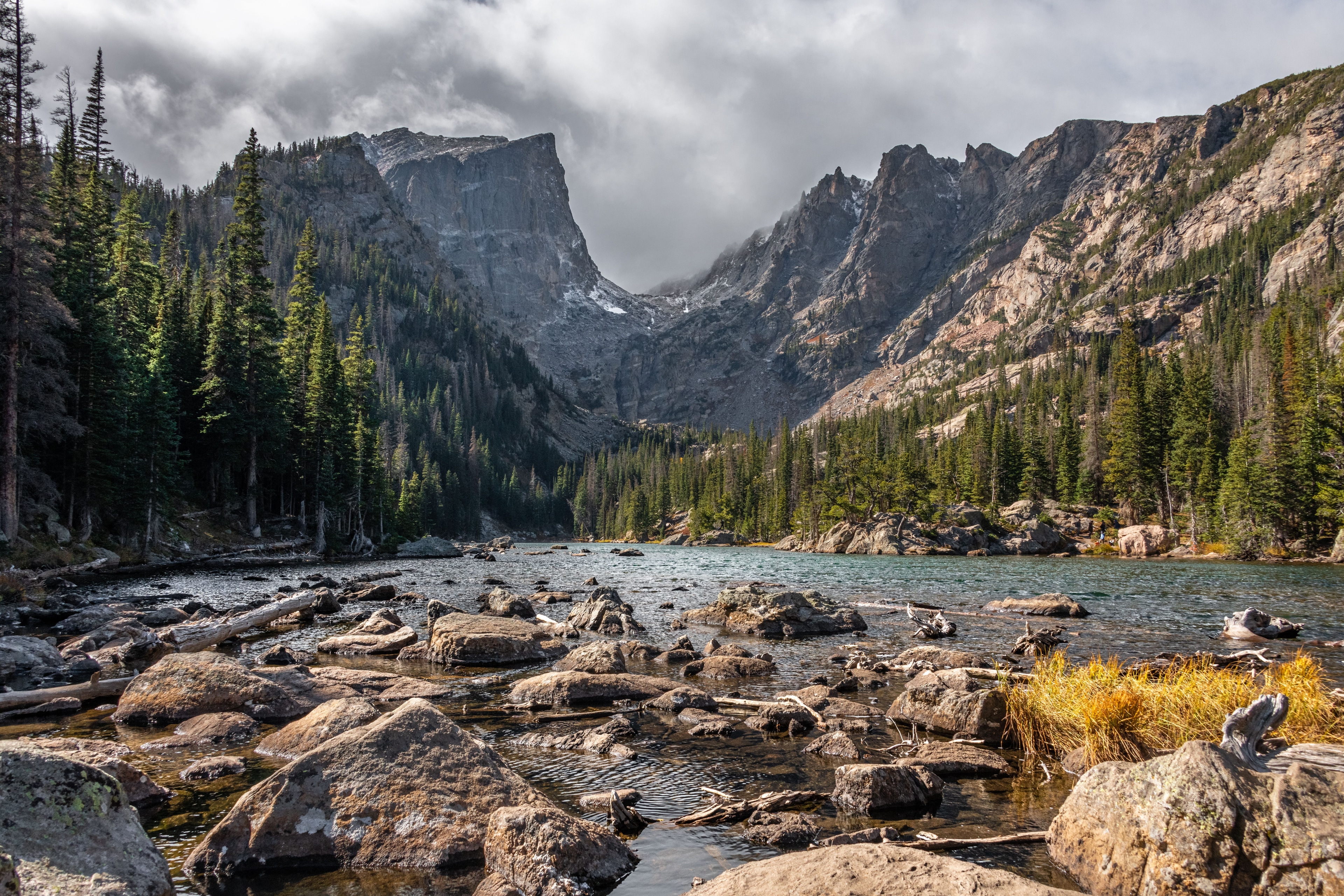
Rocky Mountain National Park (RMNP)
Geology & Ecology
Geological Features
- Geological History: Formed during the Laramide Orogeny (70 - 40 million years ago); shaped further by glaciation in the last few million years
- Landforms: U-shaped Valleys (e.g., Glacier Gorge, Kawuneeche Valley), Cirques, Arêtes, Moraines, Tarn Lakes (e.g., Chasm Lake)
- Major Peaks: Longs Peak (14,259 ft), Mount Alice, Hagues Peak, Chiefs Head Peak (77 peaks above 12,000 ft; 124 above 8,000 ft)
- Glacial Features: Tyndall Glacier, Andrews Glacier, permanent snowfields in sheltered cirques
- Continental Divide: Runs 42 miles through the park, separating Atlantic and Pacific watersheds
- Trail Ridge Road: Is the highest continuous paved road in North America (12,183 ft), is 48 miles, and crosses Continental Divide at Milner Pass (10,758 ft)
- Notable Geology: Lava cliffs in the Never Summer Mountains (ancient volcanic origin); widespread alpine tundra and bare rock at high elevations
- Unique Fact: Glacial processes shaped much of the current landscape, with visible features throughout valleys, peaks, and basins.
RMNP’s rugged landscape has been millions of years in the making. It all began between 70 and 40 million years ago during a powerful mountain-building event known as the Laramide Orogeny, when the Earth’s crust buckled and lifted to form the towering peaks of the Colorado Rockies. But nature wasn’t finished. Just a few million years ago, glaciers swept through, carving deep valleys, sharp ridges, and U-shaped canyons; shaping the dramatic, iconic scenery that defines the park today.
As you explore, you’ll spot classic glacial landforms everywhere: wide U-shaped valleys like Glacier Gorge and Kawuneeche Valley, sharp ridgelines called arêtes, deep bowl-shaped cirques now filled with lakes (like Chasm Lake below Longs Peak), and long mounds of rock debris called moraines that created broad meadows like Moraine Park.
Many of the park’s 147 lakes, including Bear Lake, Emerald Lake, and Lake Nanita, were formed when ancient glaciers melted and left behind natural basins.
The tallest point in RMNP is Longs Peak at 14,259 ft (4,346 m); a massive, flat-topped mountain that can be easily seen from Denver. Its dramatic eastern face, called The Diamond, is a sheer cliff that’s a favorite for climbers and a stunning sight for photographers. But Longs Peak isn’t the only towering summit in RMNP; incredible thirteeners like Mount Alice, Hagues Peak, and Chiefs Head Peak, each offer their own slice of high-elevation beauty.
Some small glaciers and year-round snowfields still hold on in RMNP’s high country, quiet reminders of the last ice age. Tucked into shady, protected basins called cirques, these icy patches survive where the sun can’t quite reach. You’ll find them in hidden corners of the park, like Tyndall Glacier near Hallett Peak and Andrews Glacier above Loch Vale, where cool conditions help keep them frozen even through summer.
The Continental Divide cuts through RMNP like a rugged backbone, 42 miles of sharp, alpine peaks that split the flow of water across the continent. On the east side, rivers eventually head toward the Atlantic Ocean, while on the west, they join the Colorado River on their journey to the Pacific. One of the best places to stand on the divide is Milner Pass at 10,758 ft, a scenic stop right along Trail Ridge Road where you can straddle both sides of the continent.
Ecology & Wildlife
- Ecosystems: Montane (approximately 5,600 - 9,500 ft), Subalpine (9,000 - 11,000 ft), Alpine Tundra (from 11,000+ ft)
- Mammals: Elk, Mule Deer, Moose, Bighorn Sheep (approximately 350), Black Bears (20 - 35), Mountain Lions, Pikas, Coyotes, Snowshoe Hares, Yellow-Bellied Marmot, Beavers, Bats, Squirrels and Chipmunks
- Birds: Raptors, Western Tanagers, Dusky Grouses, Mountain Chickadees, Pine Grosbeaks, Gray Jays, Pygmy Nuthatchs, Red Crossbills, Clark's Nutcracker, American Dippers, Townsend's Solitaires, Owls, Passerines (Perchers) (over 270 reported species)
- Reptiles & Amphibians: Two reptiles; Western Terrestrial Garter Snake and Eastern Fence Lizard and four amphibians; Wood Frog, Boreal Chorus Frog, Tiger Salamander and the endangered Boreal Toad
- Flora: Ponderosa Pine, Lodgepole Pine, Englemann Spruce, Subalpine Fir, Willows, Aspen, Wildflowers, Alpine Grasses, Lichens
- Fish: Brook, Brown, Rainbow, and Greenback Cutthroat Trout (fishing allowed with license)
- Unique Fact: Over one-quarter of RMNP is alpine tundra or bare rock above treeline
RMNP is like a vertical mosaic, with different habitats stacked layer by layer from the valley floor to the mountain peaks. At the base, between 5,600 and 9,500 ft, is the montane zone (RMNP’s terrain starts around 7,600 ft), where you’ll wander through open pine forests, flower-filled meadows, and along clear streams edged with willows and aspens. Wildlife is everywhere here: mule deer, coyotes, and especially elk, which gather in huge numbers in places like Moraine Park and Horseshoe Park. Come fall, the elk rutting season is in full swing, and the haunting sound of their bugling echoing across the valley is one of the most unforgettable experiences in the park.
Climb a bit higher and you’ll enter the subalpine zone, stretching from about 9,000 to 11,000 ft. Here, the forest thickens with Engelmann spruce, lodgepole pine, and subalpine fir, and the air gets cooler, wetter, and snowier. In summer, the forest floor lights up with wildflowers like fairy slipper orchids and arnica. This is black bear territory, especially in berry-filled areas, and though mountain lions live here too, sightings are rare. You might also spot pine martens, porcupines, snowshoe hares, and other elusive woodland creatures. Elk and mule deer often spend summer grazing in these high meadows before heading to lower ground for the winter.
Over on the west side of the park, the Kawuneeche Valley is one of the best places to spot moose, especially around Big Meadows and along the Colorado River Trail. These giants love the dense willow thickets that grow throughout the valley. Surprisingly, moose weren’t commonly seen here until the 1970s, but thanks to a reintroduction effort just outside the park, they’ve made a strong comeback and are now one of RMNP’s star wildlife sightings. Keep your eyes peeled near streams and marshy meadows, especially early or late in the day.
Above 11,000 ft, you step into the alpine tundra, a rugged, treeless world that covers over a quarter of RMNP. It’s quiet, exposed, and absolutely stunning. Life clings close to the ground here, with low-growing wildflowers, hardy grasses, and lichens making up a fragile mosaic. Look closely and you might spot tiny blooms like alpine forget-me-nots, cushion phlox, and moss campion.
This high-elevation zone is home to the yellow-bellied marmot and the ever-busy pika (pronounced pike-ah, sorry Pokemon fans), both scrambling to store food before winter returns. In summer, bighorn sheep graze along the ridgelines, retreating lower as snow creeps back in. You might even catch a glimpse of a white-plumed ptarmigan, nearly invisible against the snow, or a golden eagle soaring on the wind. Because the alpine tundra is incredibly delicate, visitors are strongly urged to stay on marked trails, the plants up here take decades to recover from even a single misplaced step.
All together, RMNP is home to approximately 67 mammal species and almost over 270 bird species. You’ll find hundreds of Rocky Mountain elk, along with bighorn sheep, mule deer, and elusive predators like black bears and mountain lions, which are rarely seen but still roam the landscape. Smaller wildlife is everywhere, from red foxes and snowshoe hares to chipmunks, ground squirrels, and even pygmy shrews in the high country. Beavers are busy building dams along streams and ponds, and river otters, once gone from the region, have begun to make a quiet comeback in the park’s waterways.
Birders, bring your binoculars, there’s plenty to spot. In the forests, you’ll hear the calls of Steller’s jays and woodpeckers, all while sparrows, hummingbirds, and birds of prey glide and dive overhead. Reptiles are rare here thanks to the chilly climate, the garter snake is the only one you might see. But in the park’s wetlands and ponds, you might find amphibians like the tiger salamander and the elusive, endangered boreal toad quietly tucked among the reeds.
In RMNP’s lakes and streams, anglers can cast for brook, brown, rainbow, and the native greenback cutthroat trout, Colorado’s state fish. Just be sure to bring a valid Colorado fishing license if you plan to drop a line, as fishing is regulated to help protect these cold, clear waters.
Visitors play a big role in protecting the ecology. You’re encouraged to watch wildlife from a distance, stay on marked trails, and always practice Leave No Trace. Every small act helps keep this mountain sanctuary wild, healthy, and thriving for generations to come.