Palisade
Overview
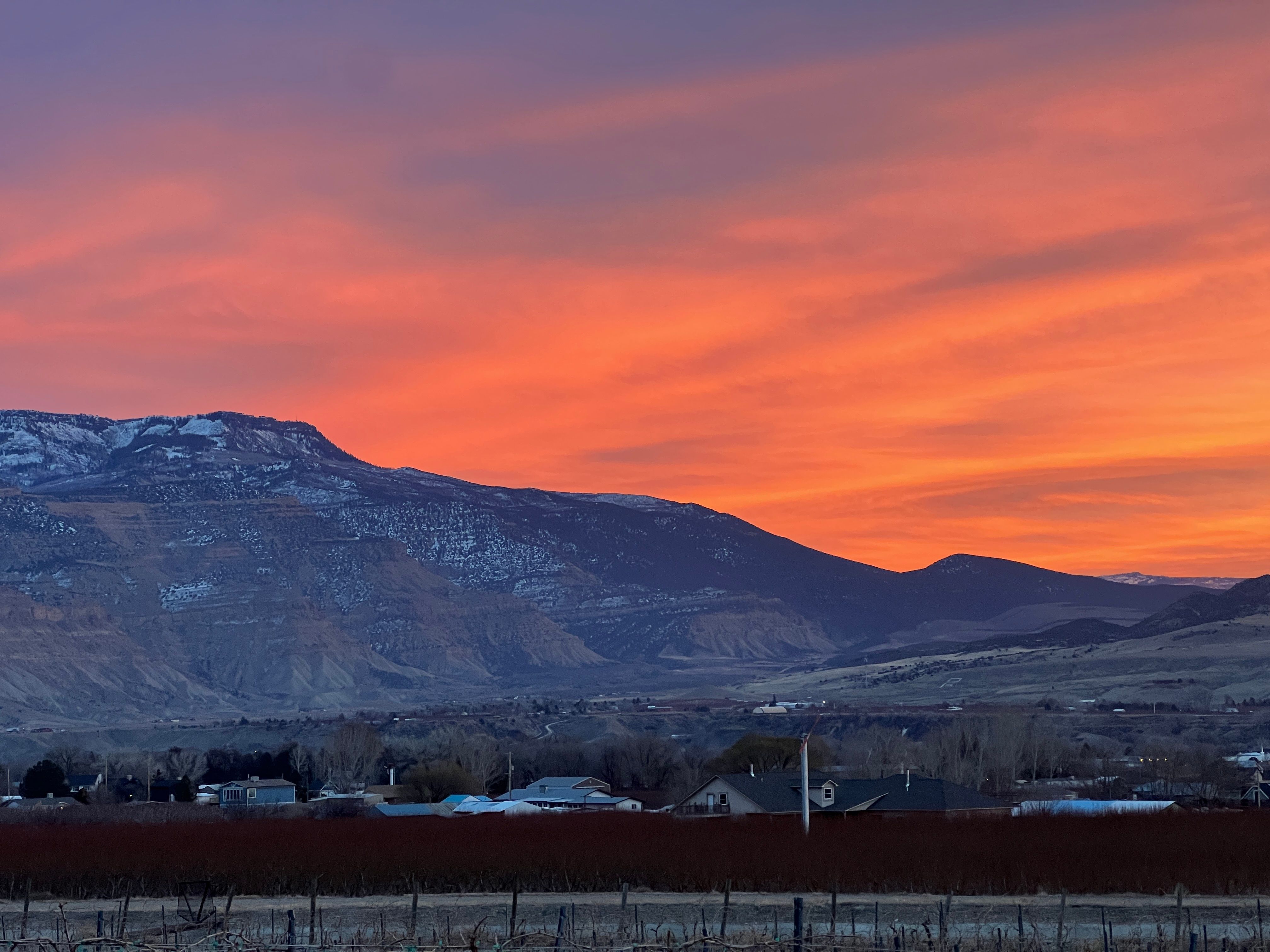
Palisade is a small town on Colorado’s Western Slope, just east of Grand Junction and Clifton, and reachable from I-70 at Exit 42. The town sits beside the Colorado River, below the Book Cliffs and Mt. Garfield, and enjoys more than 300 days of sunshine each year with mild winters. At 4,718 feet, Palisade falls in USDA hardiness zone 7, averages 10" of precipitation and 14" of snow, and offers quick access to Grand Mesa for year-round outdoor activities.
Local lodging is mostly locally owned, friendly, and polished. Staying in town keeps you close to restaurants, wineries, and trails. Dining ranges from pizza and burgers to tacos and brunch, and the summer farmers market lets you buy produce straight from area growers.
Palisade is famous for peaches, pears, cherries, and grapes. The first commercial grapes were planted in the early 1970s, and wineries followed in the 1980s. Today the town has the state’s highest concentration of wineries, with specialties such as Cabernet Franc, Sauvignon Blanc, Riesling, Meritage White, Chardonnay, Syrah, Merlot, Viognier, and ports. Self-guided or guided tours (by bike, shuttle, or car) help visitors sample these award-winning wines.
The statutory town had a 2020 population of 2,565. It spans 1.2 square miles, with 0.50 percent water, and lies 11 miles east of Grand Junction on U.S. Route 6; Interstate 70 runs just north of town. A 182-day growing season and 78% average sunshine support its nickname, “The Peach Capital of Colorado.”
Palisade offers a Victorian downtown, low crime, good schools, nearby world-class medical care, and Grand Junction Regional Airport just minutes away. Fields, orchards, and 1,000 acres of vineyards surround the area, which produces 90 percent of Colorado wine grapes.
History begins with Ute inhabitants. Settler J. P. Harlow raised fruit and vegetables in Rapid Creek from 1882, and W. A. Pease homesteaded 160 acres in 1884. Early growers used Rapid Creek and the Colorado River for irrigation. Katabatic winds from DeBeque Canyon helped peaches survive spring frosts, so most of Mesa County’s 2,200 acres of peaches lie east of Mt. Garfield. Low-sulfur coal mining started in 1884 and added to the local economy.
Irrigation projects transformed the desert. The Grand Valley Canal diversion dam appeared in 1883, and the Grand River Diversion (Roller) Dam (14 feet high and 546 feet long) opened in 1915, sending water 55 miles to 33,000 acres. Although coal mines closed in the late 1950s, agriculture thrived. Today Palisade has more than 500,000 peach trees, 30 wineries, hops, and lavender fields. The Grand Valley American Viticultural Area was designated in 1991.
Guided walking tours from the Palisade Historical Society cover the downtown’s three routes, and self-guided brochures and Kindle editions are also available.