Best U.S. National Parks: Ranked
By WayFy Staff
Updated on January 09, 2026
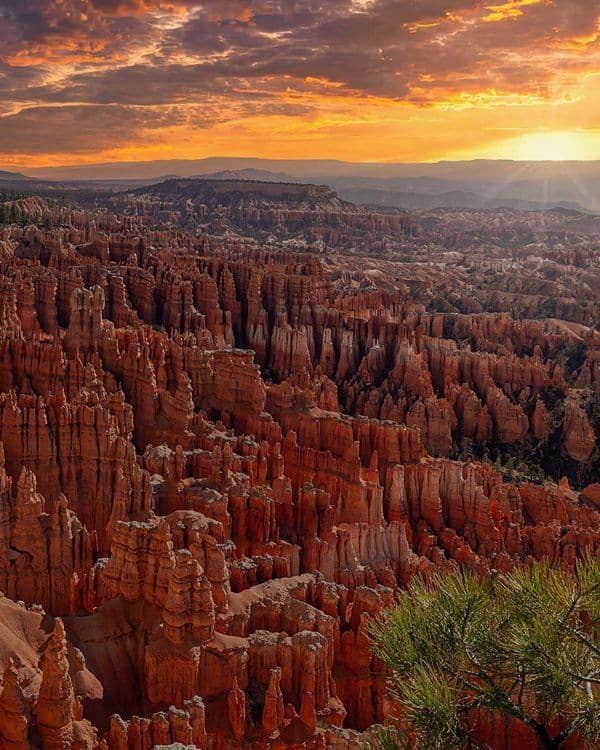
The U.S. is lucky to be home to 63 national parks, each one vastly unique and intrinsically important. With so many to choose from, how do you decide which to visit first? We’ve ranked all 63 based on six key factors: scenic beauty, distinctive landscapes, crowd levels, trail and recreation quality, accessibility to the park, and wildlife-viewing opportunities.
You might be surprised by which park claimed the #1 spot.
63. Gateway Arch (Missouri)
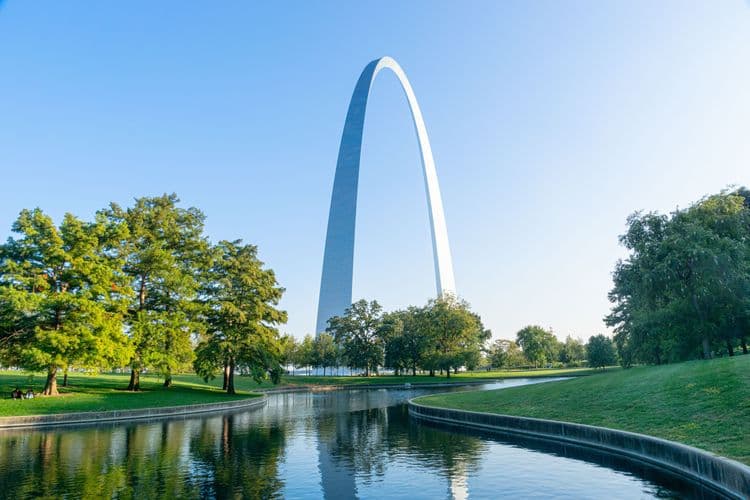
The smallest national park centers on St. Louis’s stainless-steel Gateway Arch, symbolizing westward expansion. It’s unique as an almost entirely urban site combining iconic architecture with a museum about U.S. frontier history. Visitors can ride the tram up to the top of the arch and enjoy the views from the top.
Since there’s essentially no natural landscape or wildlife associated with this national park, some may think of it as more of a National Monument rather than a National Park.
- Annual visitors: 2.5 million
- Park size: 91 acres
- Miles of hiking trails: 5
Download WayFy
Create the perfect Colorado itinerary with our simple, intuitive trip builder that guides you every step of the way.
62. Hot Springs (Arkansas)
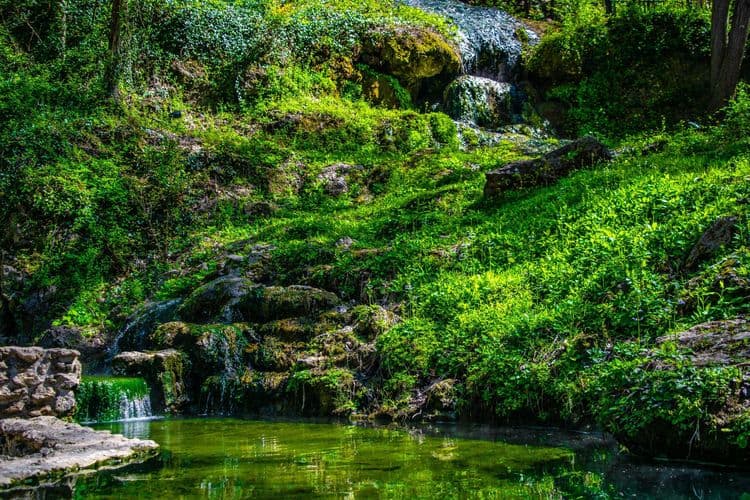
Hot Springs is unique as a park embedded in a small city that’s built around historic bathhouses fed by natural thermal springs. It combines public health history, architecture, and low mountain trails in one compact area. Because of its small size, high crowd level, and the fact that it’s essentially part of the town, we’ve ranked it near the bottom of the list
- Annual visitors: 2.4 million
- Park size: 5,555 acres
- Miles of hiking trails: 26
61. New River Gorge (West Virginia)
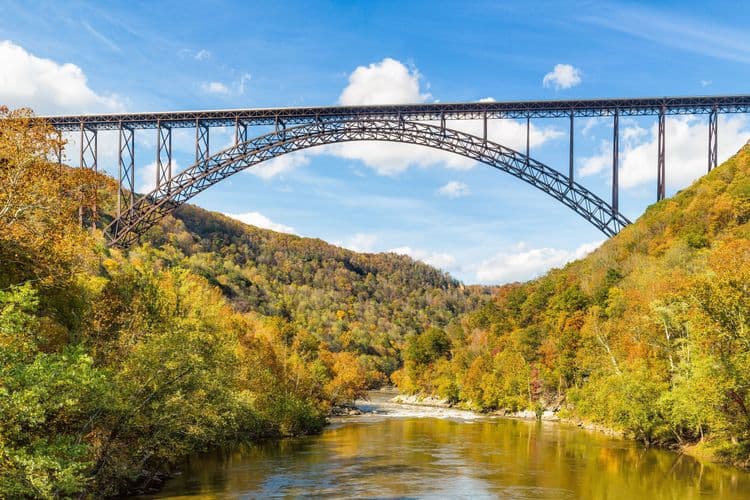
Officially named a National Park in 2021, New River Gorge protects a deep river canyon long loved by whitewater rafters and rock climbers. The arcing New River Gorge Bridge and rebounding forest, around former coal towns, tell both industrial and ecological comeback stories. Because of its crowd levels and lack of unique scenery, we have it ranked at #61.
- Annual visitors: 1.8 million
- Park size: 70,000 acres
- Miles of hiking trails: 100+
60. Dry Tortugas (Florida)
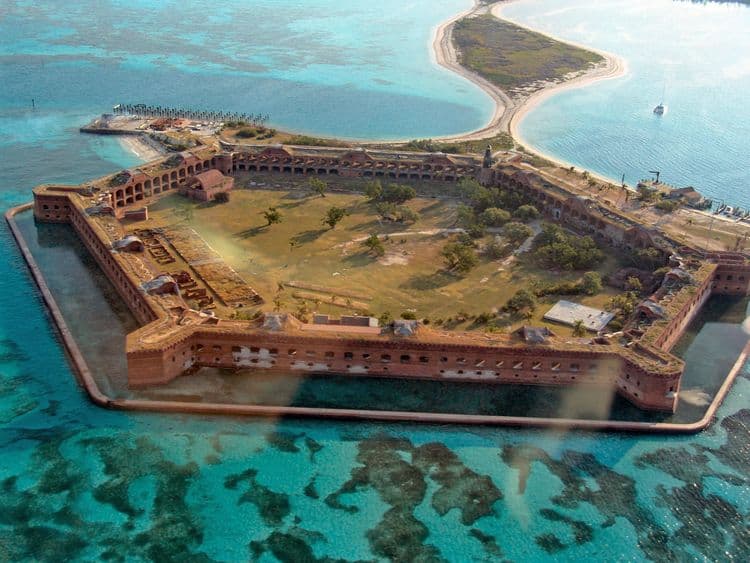
Dry Tortugas is known for remote coral reefs and the historic Fort Jefferson, one of the largest brick structures in the Americas. It’s accessible only by boat or seaplane, making it a rare combination of snorkeling destination and 19th-century fortress. Because of its smaller size and challenging access, we’ve ranked it #60.
- Annual visitors: 84,873
- Park size: 64,000 acres (primarily water)
- Miles of hiking trails: 1.5
59. Mammoth Cave (Kentucky)
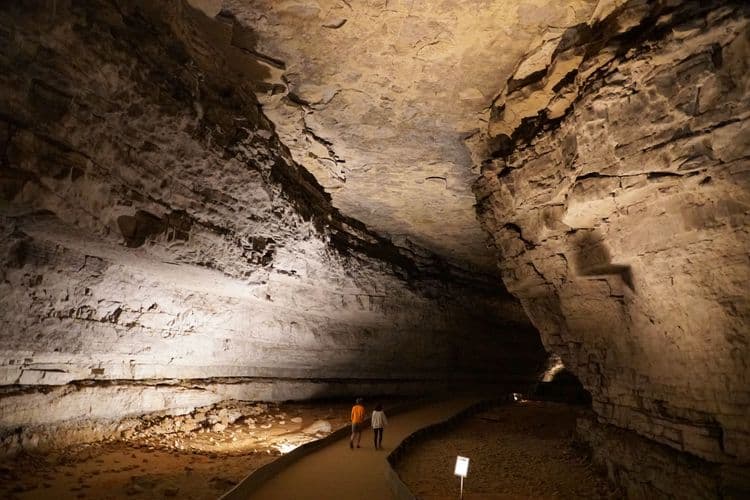
Mammoth Cave contains the world’s longest known cave system, with more than 400 miles of mapped passageways. Above ground, rolling hills and river valleys provide contrast to the elaborate underground world.
- Annual visitors: 747,042
- Park size: 52,000 acres
- Miles of hiking trails:
- 70 miles aboveground.
- 400+ of mapped cave passages (accessible only on guided tours)
58. Indiana Dunes (Indiana)
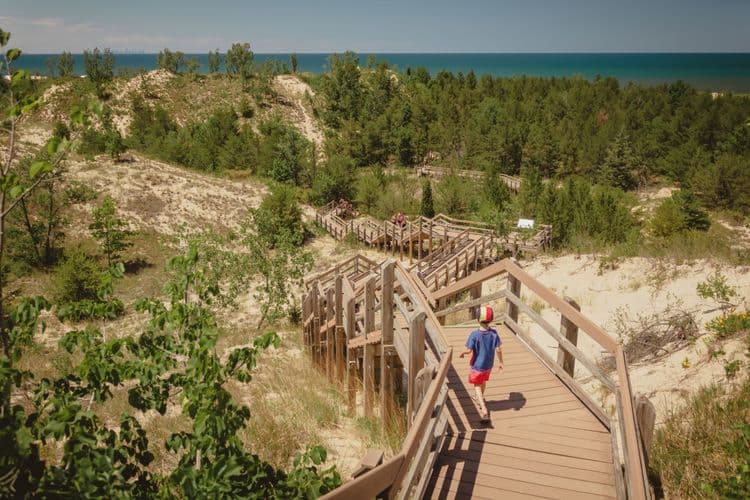
Along Lake Michigan’s southern shore, Indiana Dunes blends tall sand dunes, beaches, wetlands, and oak savannas. Its proximity to Chicago and surprising plant diversity make it a rare mix of heavy industry views and delicate ecosystems.
- Annual visitors: 2.7 million
- Park size: 15,349 acres
- Miles of hiking trails: 50
57. Guadalupe Mountains (Texas)
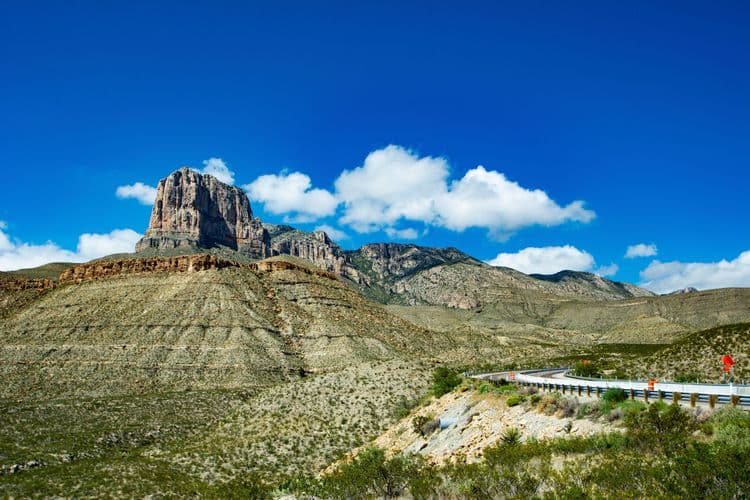
Guadalupe Mountains protects the exposed reef of an ancient Permian Sea, now uplifted into sharp limestone peaks, including Texas’s highest point. It’s less visited than many parks, so its desert canyons and woodland trails often feel very quiet.
- Annual visitors: 226,134
- Park size: 86,416 acres
- Miles of hiking trails: 80
56. Wind Cave (South Dakota)
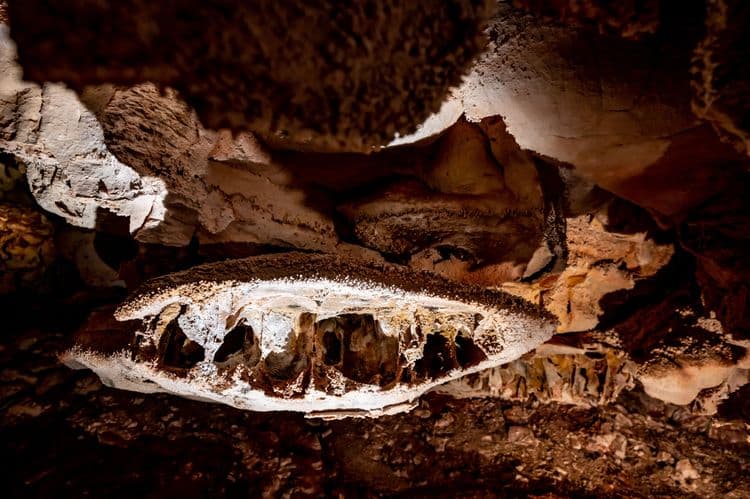
One of the world’s longest caves, Wind Cave is known for its intricate “boxwork” formations not commonly seen elsewhere. Mixed-grass prairie and ponderosa pine forest provide habitat for bison and prairie dogs above ground.
- Annual visitors: 489,399
- Park size: 28,295 acres
- Miles of hiking trails:
- 30 miles (above ground)
- 6 guided cave tours, all under 1 mile in length
55. Channel Islands (California)
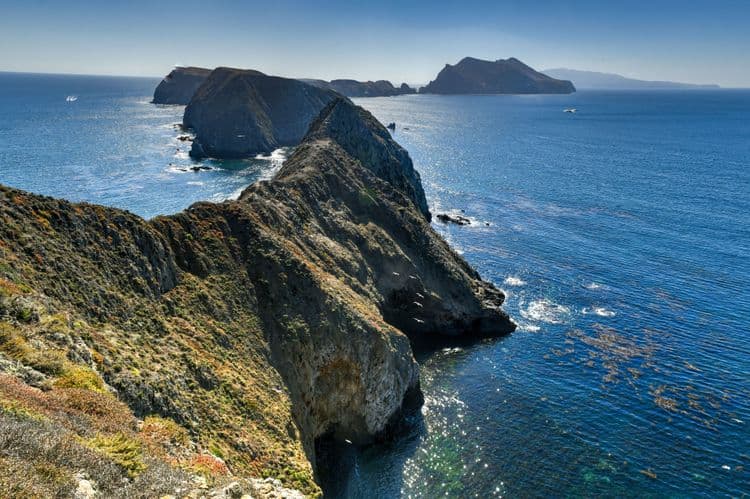
This “Galápagos of North America” protects five rugged islands and the surrounding ocean, home to many species found nowhere else—like the tiny island fox. It’s a mix of sea caves, kelp forests, and windswept cliffs reachable only by boat or small plane.
- Annual visitors: 262,581
- Park size: 249,561 acres
- Miles of hiking trails: 115 across its five islands
54. Crater Lake (Oregon)
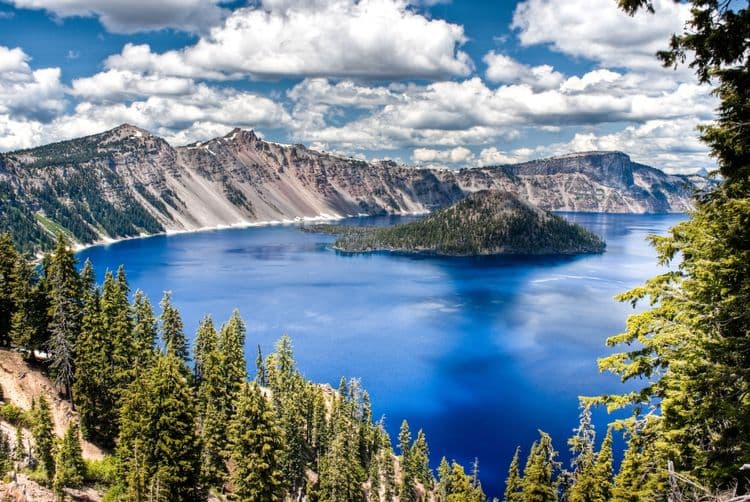
Formed in the collapsed caldera of Mount Mazama, Crater Lake is the deepest lake in the U.S. and famed for its intense blue color and clarity. Wizard Island, the encircling Rim Drive, and sheer caldera walls create a dramatic, self-contained landscape. Although the lake itself is beautiful and profound, the limited access to the lake makes the visit highly crowded. It’s also a bit off the beaten path and requires a decent drive that can get pretty slow during peak season.
- Annual visitors: 504,942
- Park size: 183,224 acres
- Miles of hiking trails: 100
53. Isle Royale (Michigan)
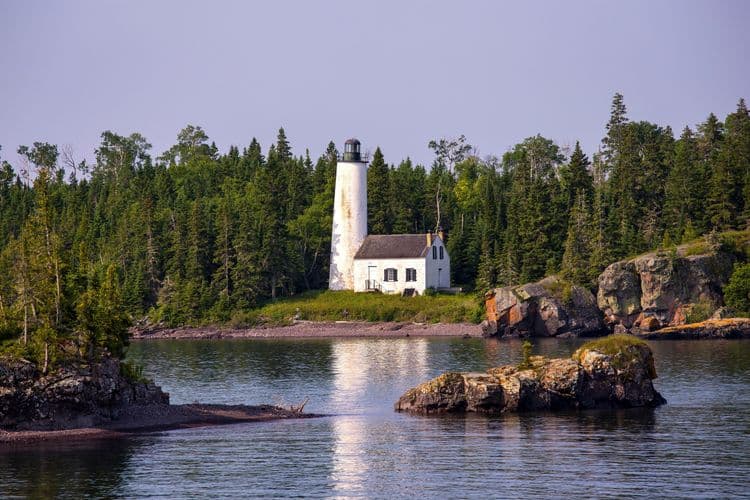
Accessible only by boat or seaplane, Isle Royale is a remote island in Lake Superior known for its long-running wolf-and-moose ecology study. It’s primarily a backpacking and paddling destination with very few roads or permanent residents.
- Annual visitors: 28,806
- Park size: 571,790 acres
- Miles of hiking trails: 165+
52. Pinnacles (California)
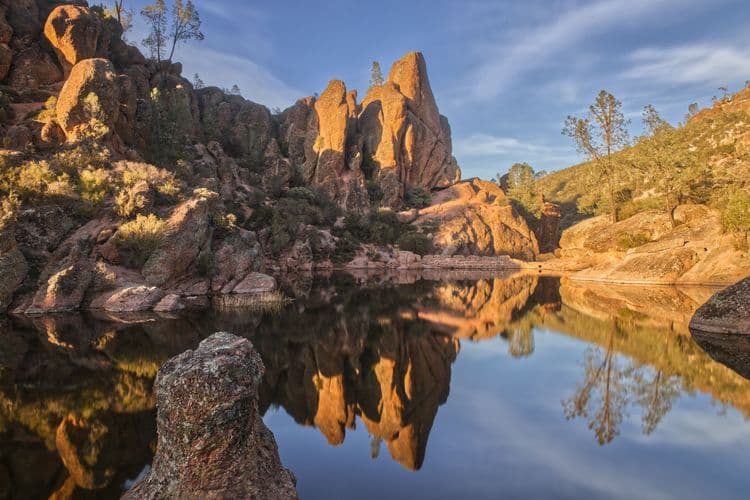
Formed from the eroded remains of an ancient volcano, Pinnacles is known for towering rock spires, talus caves, and endangered California condors soaring overhead. It’s a favorite for climbers and spring wildflower hikes. Although large, the park has limited hiking trails for people to access.
- Annual visitors: 354,076
- Park size: 26,606 acres
- Miles of hiking trails: 30
51. Haleakalā (Hawai'i)
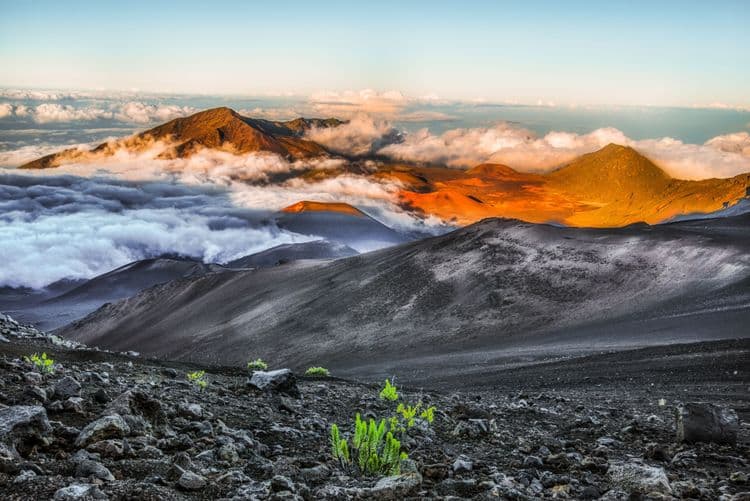
Centered on the huge shield volcano Haleakalā, this park features a summit “crater” of cinder cones that makes visitors feel like they’ve been transported to another planet. It’s a vital habitat for rare Hawaiian birds and plants and offers famous sunrise views above the clouds.
- Annual visitors: 732,477
- Park size: 33,265 acres
- Miles of hiking trails: 35+
50. Cuyahoga Valley (Ohio)
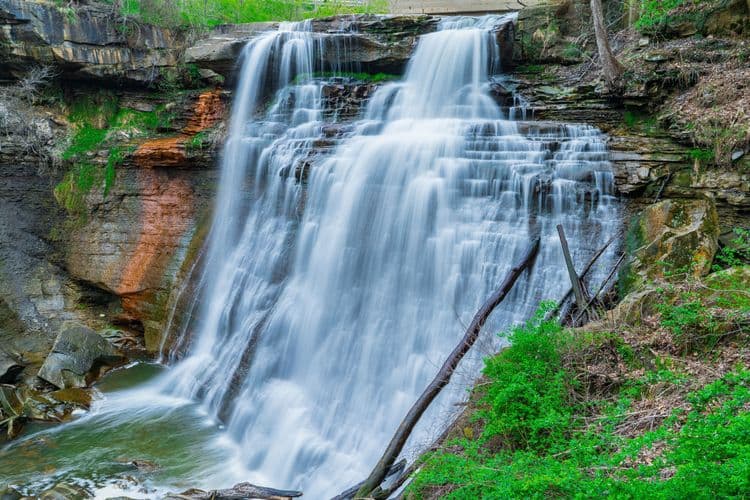
Just outside Cleveland and Akron, this park follows the Cuyahoga River through forest, farmland, and historic canal towns. It combines waterfalls and ravines with the Ohio & Erie Canal Towpath Trail and a scenic railroad, blending nature and industrial history.
- Annual visitors: 2.9 million
- Park size: 33,000 acres
- Miles of hiking trails: 125
49. Carlsbad Caverns (New Mexico)
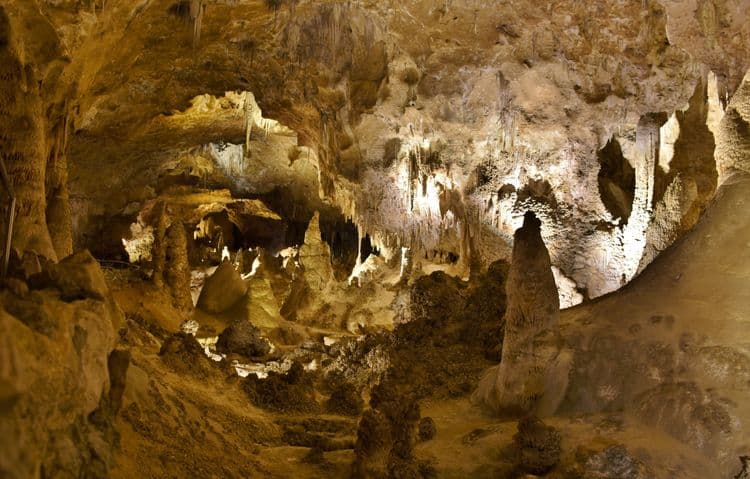
Best known for its enormous underground chambers, Carlsbad holds more than 100 caves formed in ancient reef limestone. The Big Room and the nightly flights of hundreds of thousands of Mexican free-tailed bats make this park uniquely subterranean.
- Annual visitors: 460,474
- Park size: 46,766 acres
- Miles of hiking trails:
- 52 miles aboveground
- 2.5 miles within the cave (timed-entry permits required)
48. White Sands (New Mexico)
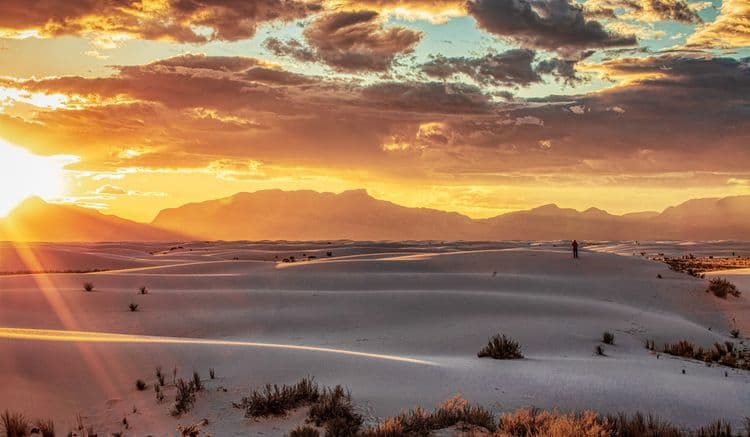
White Sands features dazzling dunes of gypsum sand—the largest such dune field in the world. The bright white landscape changes constantly with the wind and creates surreal light at sunrise and sunset. Although very unique and worth seeing, the trails and activities at the park are limited.
- Annual visitors: 702,236
- Park size: 176,000 acres
- Miles of hiking trails: 4.5
47. Death Valley (California)
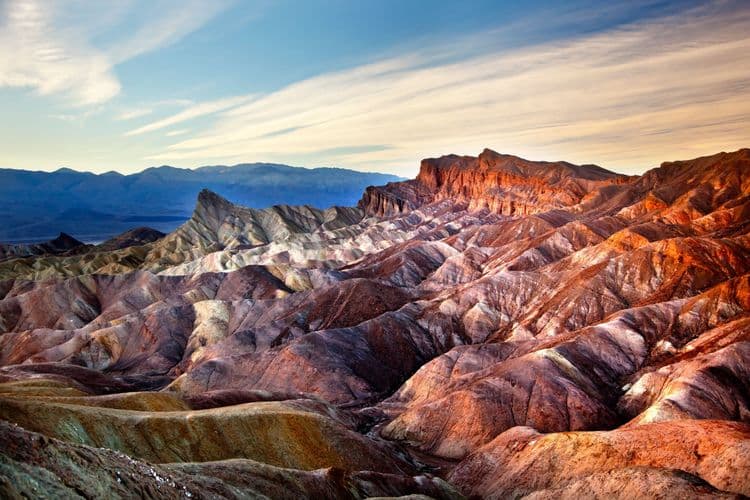
Death Valley is the hottest, driest, and lowest national park in the country, with Badwater Basin sitting 282 feet below sea level. The park consists of sand dunes, salt flats, slot canyons, and surprisingly colorful mountains that all come together to show how varied a desert can be. If you plan to hike at this park, it’s imperative you pack properly and bring plenty of water.
- Annual visitors: 1.4 million
- Park size: 3.4 million acres
- Miles of hiking trails: 100+
46. Petrified Forest (Arizona)
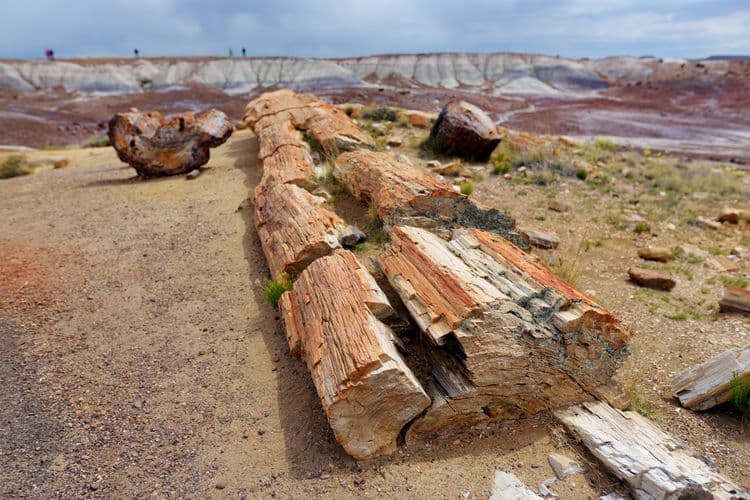
Petrified Forest protects colorful badlands and one of the world’s largest concentrations of petrified wood from a 200-million-year-old forest. It also includes a stretch of historic Route 66 and ancestral sites of Indigenous peoples.
- Annual visitors: 559,254
- Park size: 221,390 acres
- Miles of hiking trails: 28
45. Capitol Reef (Utah)
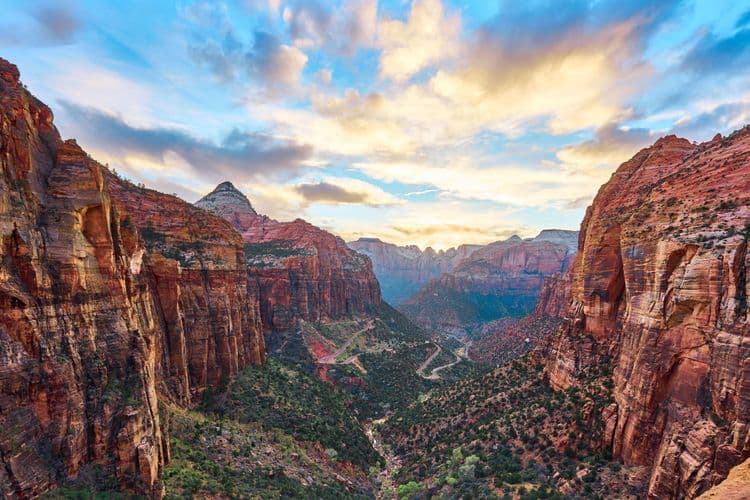
Capitol Reef revolves around the Waterpocket Fold, a 100-mile-long wrinkle in the Earth’s crust that exposes colorful rock layers. It’s also known for historic fruit orchards in the tiny settlement of Fruita, where you can stroll among cottonwoods beneath towering cliffs.
- Annual visitors: 1.4 million
- Park size: 241,904 acres
- Miles of hiking trails: 100+
44. Great Basin (Nevada)
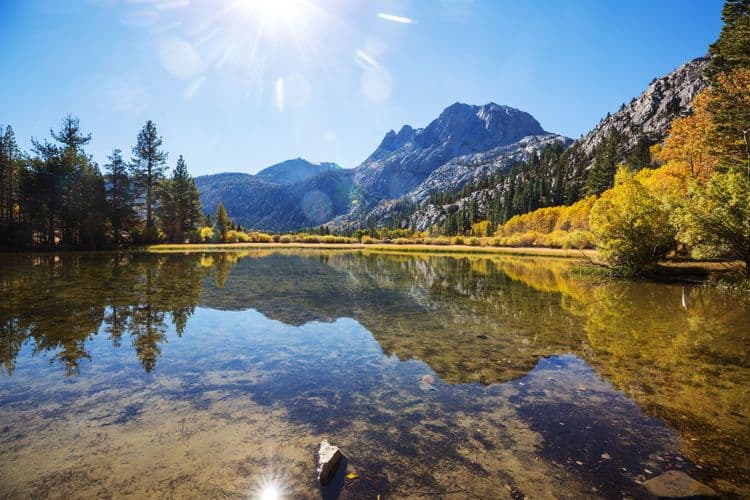
Great Basin brings together high desert, ancient bristlecone pines, and the limestone caverns of Lehman Caves. It’s also renowned for dark skies and star-filled nights far from city lights. It’s quite a ways off the beaten path though, so getting to it for a day trip can be a daunting task.
- Annual visitors: 152,068
- Park size: 77,180 acres
- Miles of hiking trails: 70+
43. Saguaro (Arizona)
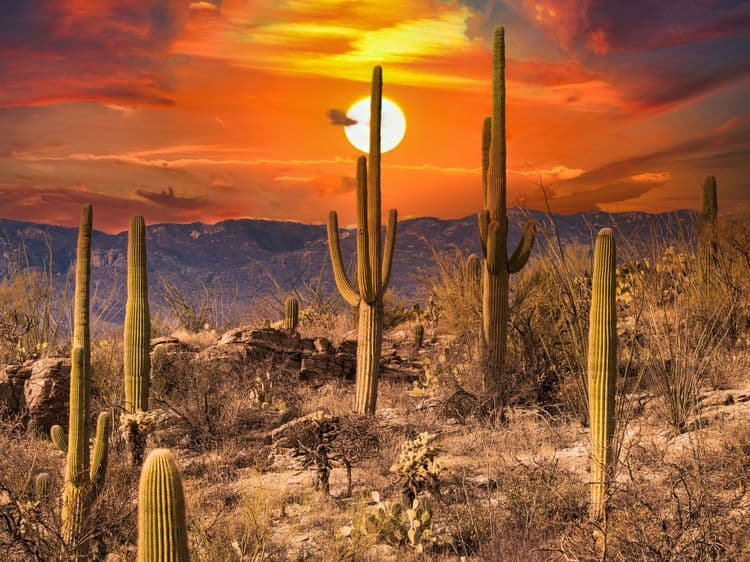
Saguaro celebrates the towering saguaro cactus, an emblem of the American Southwest, within Sonoran Desert landscapes. This park is also known for its stunning sunsets and diverse wildlife, including coyotes and javelinas.
- Annual visitors: 946,369
- Park size: 91,700 acres
- Miles of hiking trails: 200
42. Theodore Roosevelt (North Dakota)
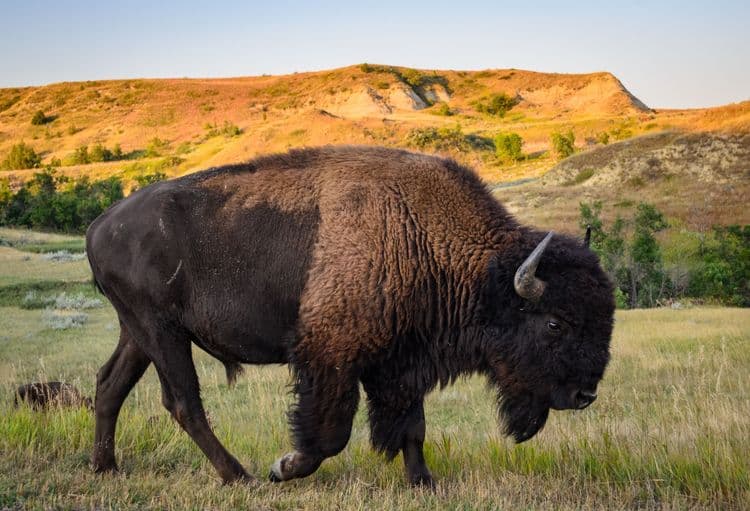
This park protects badlands and prairie strongly associated with President Theodore Roosevelt’s conservation legacy. Bison, wild horses, and rugged buttes make it feel surprisingly wild compared to the surrounding plains.
- Annual visitors: 732,951
- Park size: 70,447 acres
- Miles of hiking trails: 90+
41. Great Sand Dunes (Colorado)
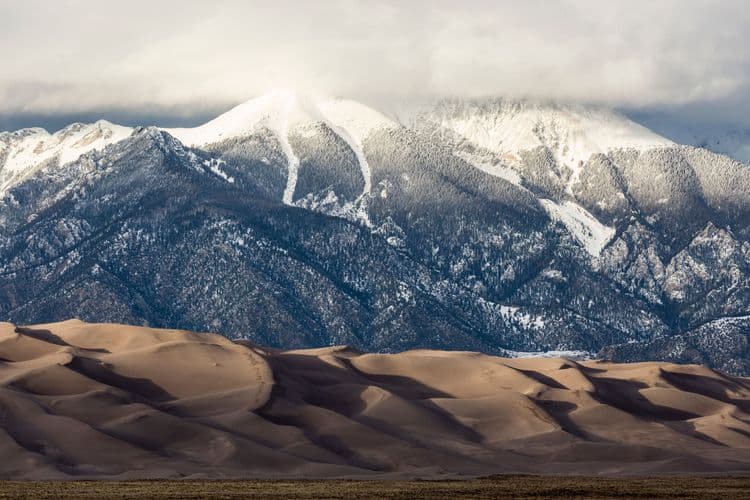
Enjoy the tallest dunes in North America as they rise against the backdrop of the Sangre de Cristo Mountains. The park is especially unique for its seasonal Medano Creek “beach” and the juxtaposition of dunes, forest, wetlands, and alpine tundra.
- Annual visitors: 437,661
- Park size: 107,342 acres
- Miles of hiking trails: 50+
Download WayFy
Create the perfect Colorado itinerary with our simple, intuitive trip builder that guides you every step of the way.
40. Congaree (South Carolina)
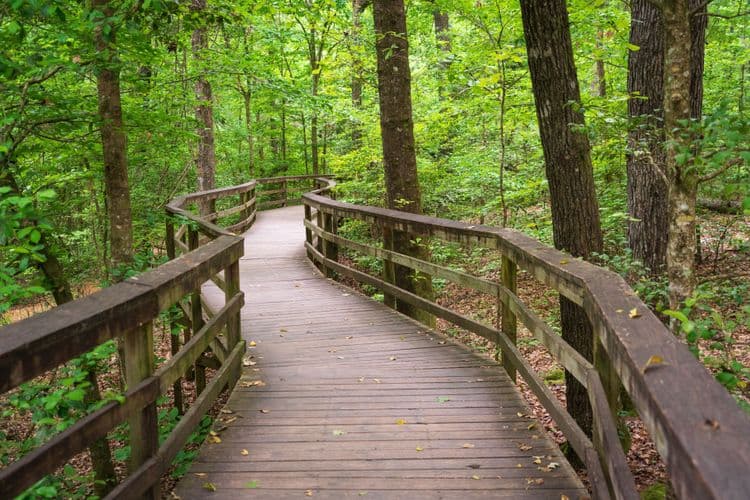
Congaree preserves one of the largest intact old-growth hardwood forests in North America. Visitors experience towering trees, seasonal flooding, and a magical synchronized firefly display in late spring. You can explore the park from various trails, including unique boardwalks that are built over the floodplain.
- Annual visitors: 242,049
- Park size: 15,000 acres
- Miles of hiking trails: 25+
39. Lake Clark (Alaska)
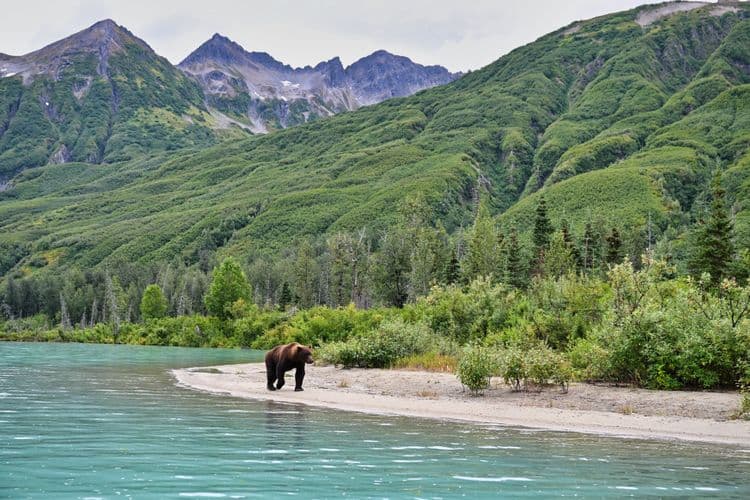
This park protects a mix of volcanoes, turquoise lakes, salmon rivers, and coastal brown bear habitat west of Cook Inlet. It’s particularly known for bear viewing on coastal sedge flats and for remote, floatplane-based adventures.
- Annual visitors: 18,505
- Park size: 4 million acres
- Miles of hiking trails: 10 of maintained trail
38. Badlands (South Dakota)
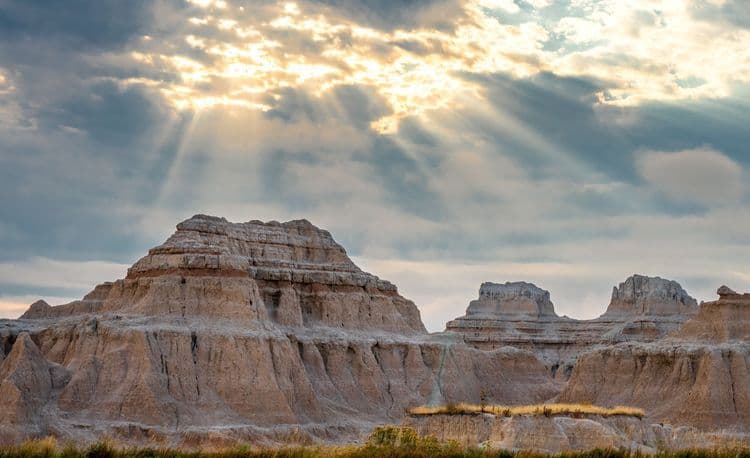
This park combines eroded buttes and colorful pinnacles with mixed-grass prairie full of bison and prairie dogs. It’s also one of the world’s richest fossil beds for late Eocene and Oligocene mammals, making it a geologic and palaeontologic treasure.
- Annual visitors: 1.1 million
- Park size: 244,000 acres
- Miles of hiking trails: 17+
37. Biscayne (Florida)
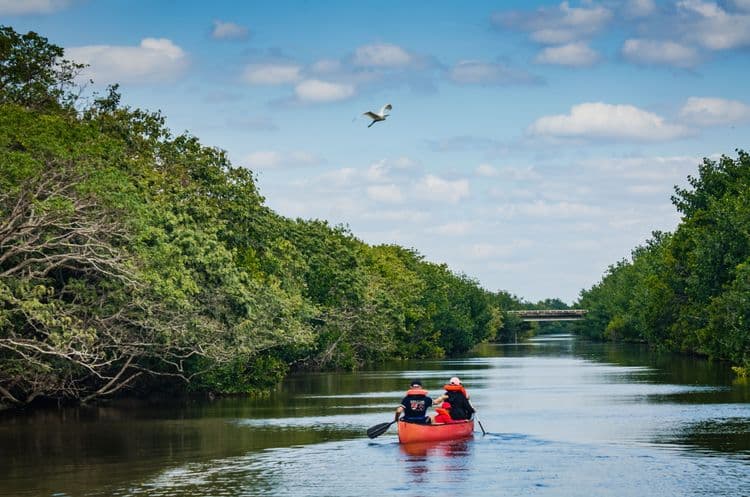
Mostly underwater, Biscayne protects coral reefs, mangrove shoreline, and the clear waters of Biscayne Bay at the northern end of the Florida Keys. It’s uniquely focused on boating, snorkeling, and marine life—think manatees, sea turtles—and yes, shipwrecks.
- Annual visitors: 512,213
- Park size: 172,971 acres
- Miles of hiking trails: 9+
36. Mesa Verde (Colorado)
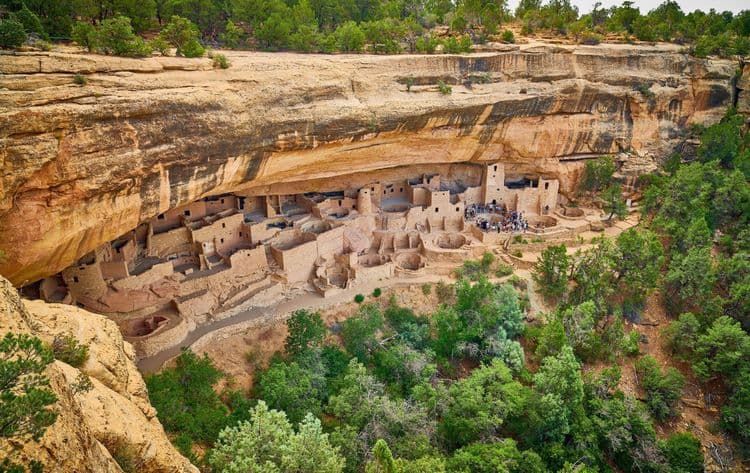
This park preserves cliff dwellings and other archaeological sites built by Ancestral Pueblo people, most famously, Cliff Palace. It’s primarily a cultural park, offering tours that delve into community life on the mesas and cliffs centuries ago.
- Annual visitors: 480,065
- Park size: 52,074 acres
- Miles of hiking trails: 30
35. Lassen Volcanic (California)
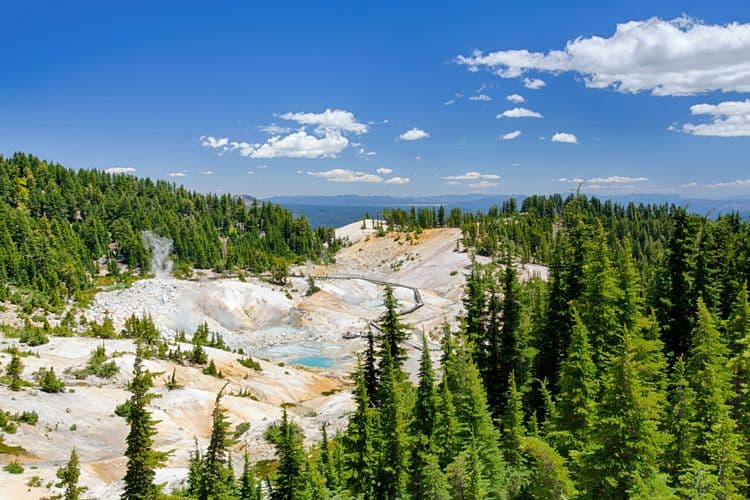
Lassen showcases almost every type of volcano plus hydrothermal features like boiling springs and fumaroles. It offers a compact, less-crowded alternative to bigger volcanic parks, with alpine lakes and meadows surrounding Lassen Peak.
- Annual visitors: 357,651
- Park size: 106,000 acres
- Miles of hiking trails: 150+
34. Everglades (Florida)
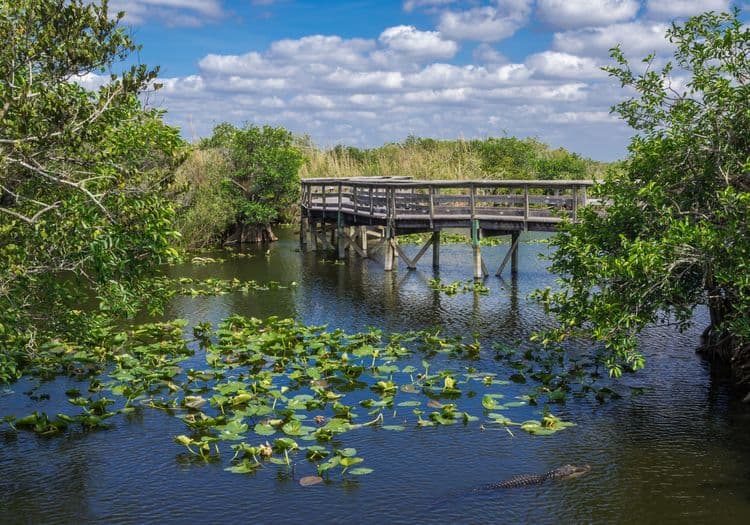
The Everglades protect a vast “river of grass”—a slow-moving sheet of water flowing through sawgrass, mangroves, and coastal estuaries. It's a uniquely important habitat for alligators, crocodiles, manatees, wading birds, and the endangered Florida panther.
- Annual visitors: 741,983
- Park size: 1.5 million acres
- Miles of hiking trails: 25+
33. Acadia (Maine)
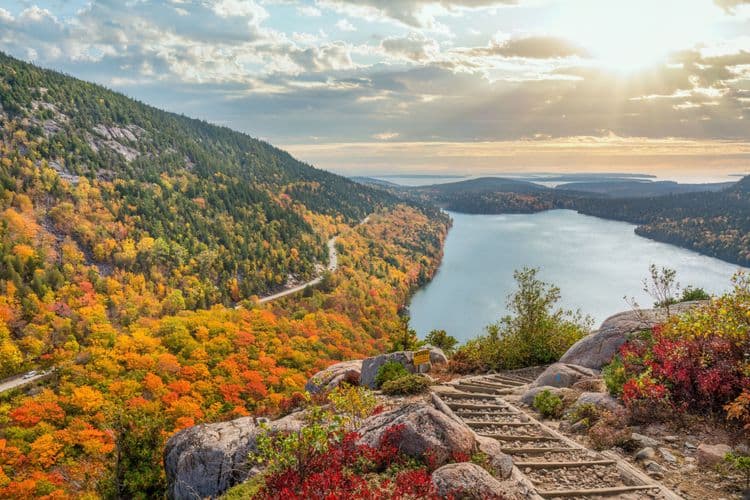
A meeting of granite mountains and dramatic Atlantic coastline, Acadia mixes rocky shorelines, lakes, and spruce–fir forests on and around Mount Desert Island. It’s famous for sunrise views from Cadillac Mountain and for how close rugged wilderness feels to the charming town of Bar Harbor.
- Annual visitors: 3.9 million
- Park size: 47,748 acres
- Miles of hiking trails: 150+
32. Glacier Bay (Alaska)
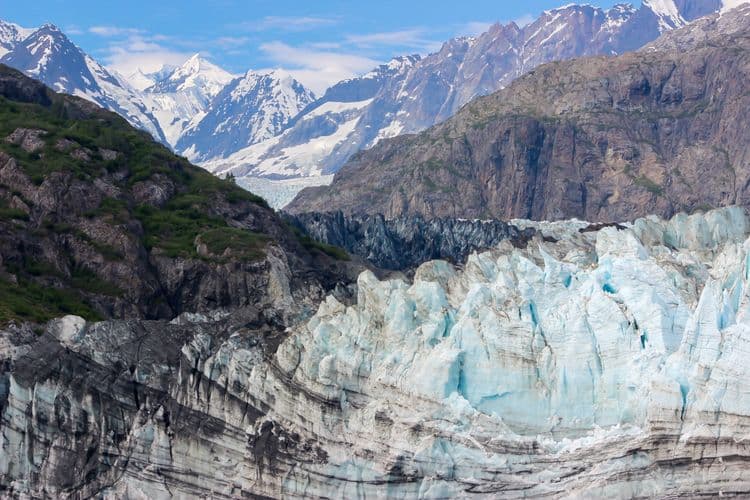
This park protects a dynamic landscape where tidewater glaciers meet a cold marine ecosystem rich in whales, seals, and seabirds. Visitors often arrive by boat to watch glaciers calve into the bay and see how quickly the land has rebounded since the last ice age.
- Annual visitors: 736,282
- Park size: 3.3 million acres
- Miles of hiking trails: 22+ of maintained trail
31. Virgin Islands (U.S. Virgin Islands)
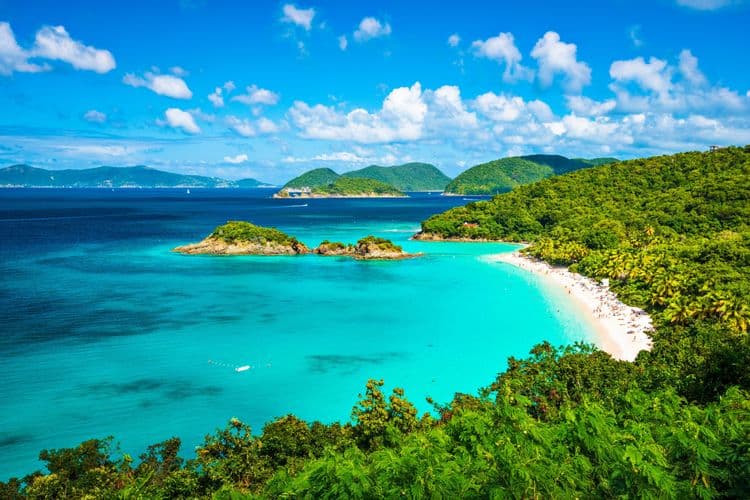
Making up about 60% of the island of St. John, Virgin Islands National Park protects tropical beaches, coral reefs, and dry forest, along with historic sugar plantation ruins. Much of the park is underwater, making snorkeling and sailing key ways to experience it.
- Annual visitors: 423,029
- Park size: 12,909 acres
- Miles of hiking trails: 27+
30. Black Canyon of the Gunnison (Colorado)
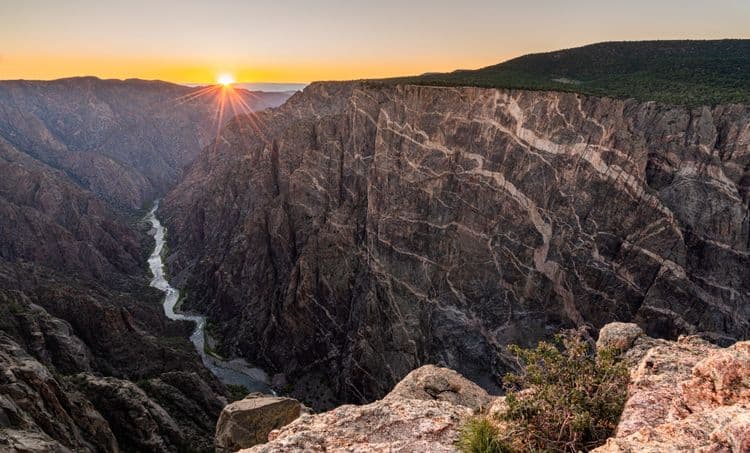
Black Canyon of the Gunnison has some of the steepest, narrowest, and most sheer walls in North America, dropping over 2,000 feet almost straight down to the Gunnison River. Because the canyon is so deep and tight, sunlight barely reaches the bottom. Some sections get less than an hour of direct light a day, giving the canyon its “black” name.
- Annual visitors: 335,862
- Park size: 30,385 acres
- Miles of hiking trails: 12+
29. Shenandoah (Virginia)
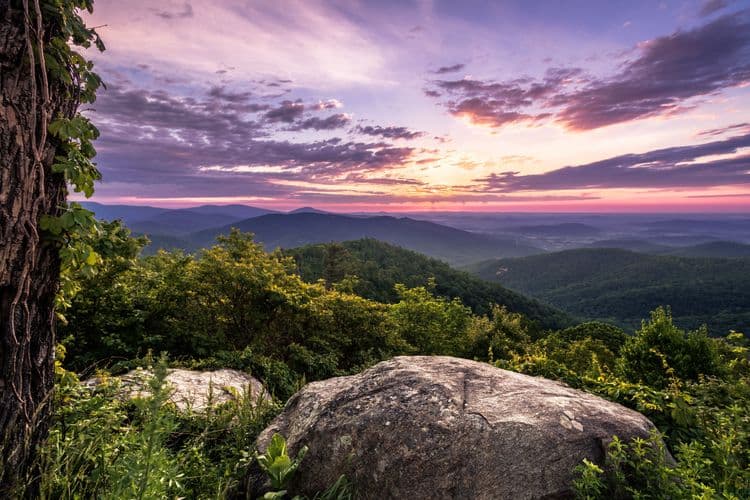
Shenandoah hugs the Blue Ridge Mountains with Skyline Drive providing constant overlooks. It’s especially loved for its waterfalls, hardwood forests, and accessible East Coast hikes with big views.
- Annual visitors: 1.7 million
- Park size: 200,000 acres
- Miles of hiking trails: 516
28. Kobuk Valley (Alaska)
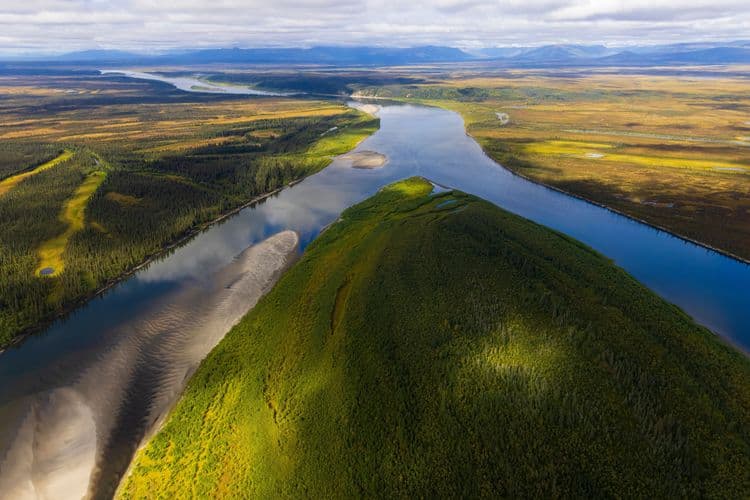
Kobuk Valley is defined by giant sand dunes north of the Arctic Circle and the Kobuk River. Twice a year, one of the world’s great caribou migrations passes through, highlighting its importance to both wildlife and Indigenous culture.
- Annual visitors: 17,233
- Park size: 1.7 million acres
- Miles of hiking trails:
- No maintained or signed hiking trails at all.
- All hiking is off-trail cross-country travel through tundra, dunes, and mountains in true wilderness conditions.
27. Joshua Tree (California)
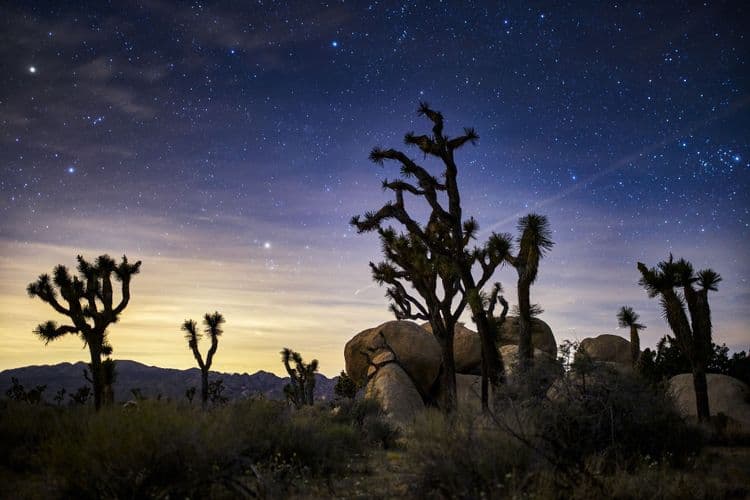
Joshua Tree sits at the meeting of the Mojave and Colorado Deserts, filled with hundreds of year old Joshua trees, massive rock formations, and unique wildlife. Climbers, stargazers, and artists are especially drawn to its stark, sculptural landscape.
- Annual visitors: 2.9 million
- Park size: 795,155 acres
- Miles of hiking trails: 190+
26. Big Bend (Texas)
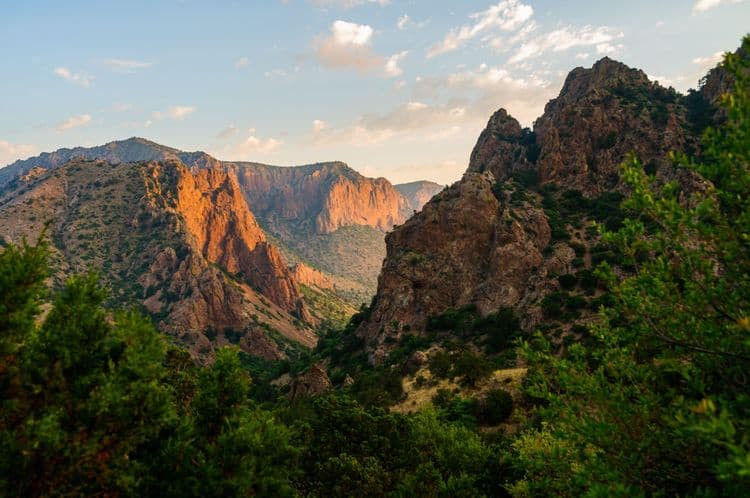
Remote and vast, Big Bend wraps around a great curve of the Rio Grande where desert, river canyons, and the Chisos Mountains all meet. Its isolation means dark night skies, solitude, and a striking mix of Chihuahuan Desert wildlife and high-country forests.
- Annual visitors: 561,458
- Park size: 801,163 acres
- Miles of hiking trails: 150+
25. Gates of Arctic (Alaska)
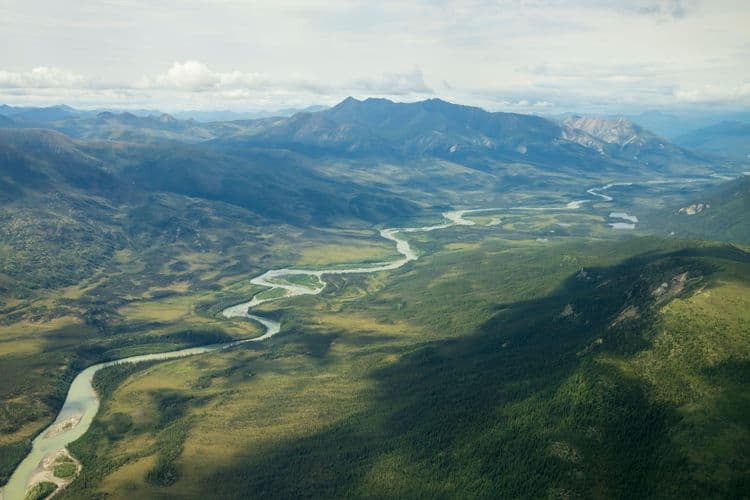
Completely roadless and above the Arctic Circle, this is one of the most remote national parks, preserving a huge slice of the Brooks Range. There are no established trails or facilities; it’s wilderness backpacking and paddling for experienced travelers only.
- Annual visitors: 11,907
- Park size: 8.4 million acres
- Miles of hiking trails:
- No maintained or signed hiking trails at all.
- All hiking is off-trail cross-country.
24. National Park of the American Samoa (American Samoa)
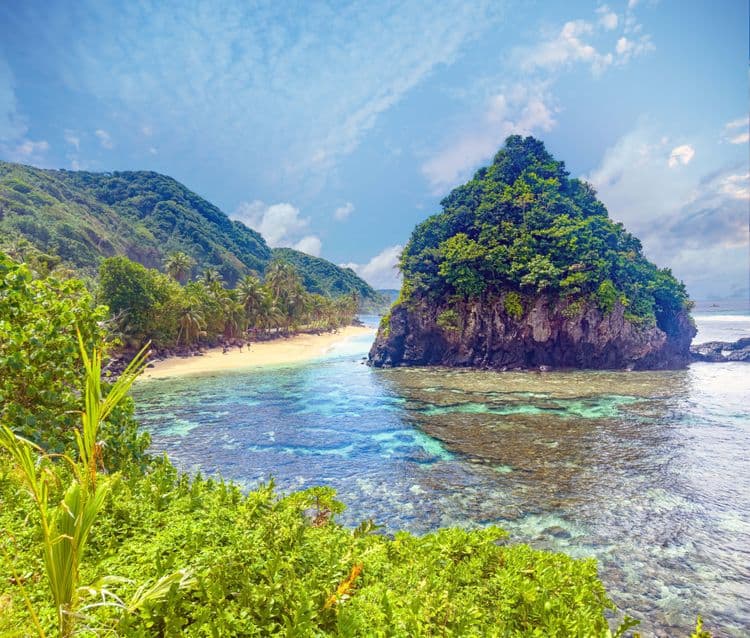
The only U.S. national park south of the equator protects lush tropical rainforest, volcanic peaks, and vibrant coral reefs across three islands. You get rare insight into Samoan culture alongside pristine beaches and steep green ridges that plunge into the Pacific.
- Annual visitors: 22,567
- Park size: 4,800 acres
- Miles of hiking trails: 18+
23. Canyonlands (Utah)
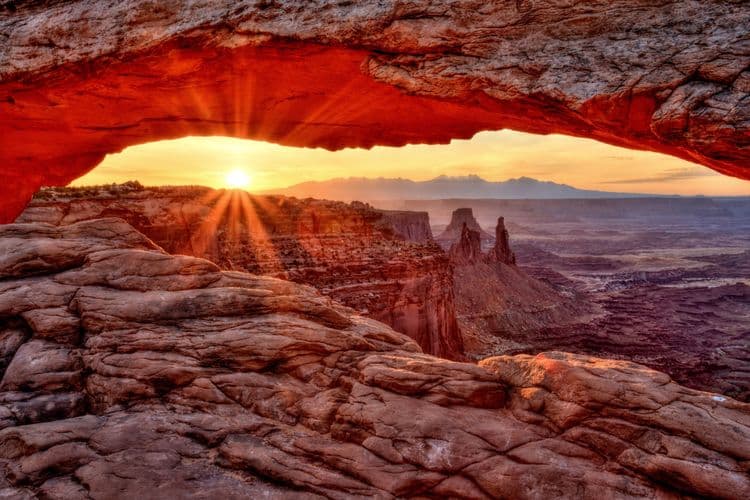
Carved by the Colorado and Green Rivers, Canyonlands is a maze of canyons, mesas, and buttes divided into three very different districts. From Island in the Sky’s sweeping overlooks to the Needles’ rock spires and the White Rim’s backcountry roads, it showcases the scale of the Colorado Plateau.
- Annual visitors: 818,492
- Park size: 337,598 acres
- Miles of hiking trails: 80+
22. Arches (Utah)
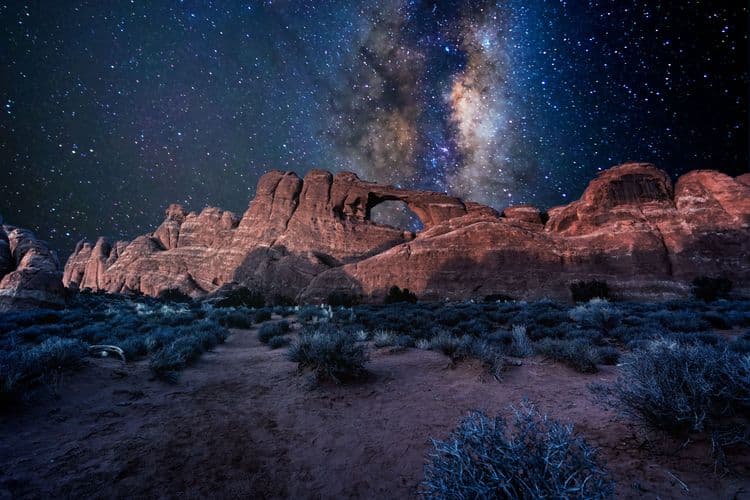
All about red rock sculpted by time, Arches has more than 2,000 natural stone arches plus fins, spires, and balanced rocks in a high-desert landscape. Delicate Arch, Landscape Arch, and the Windows area are icons of the American Southwest.
- Annual visitors: 1.4 million
- Park size: 76,519 acres
- Miles of hiking trails: 21+
21. Great Smoky Mountains (Tennessee/North Carolina)
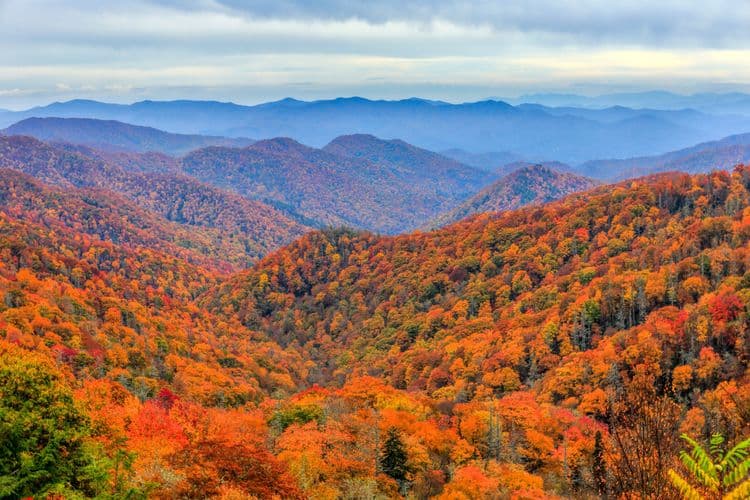
America’s most-visited national park is known for its blue-hazed ridges, incredible biodiversity, and preserved Appalachian homesteads. Spring wildflowers, fall color, and historic cabins make it feel both wild and lived-in.
- Annual visitors: 12.2 million
- Park size: 522,419 acres
- Miles of hiking trails: 800+
20. Grand Canyon (Arizona)
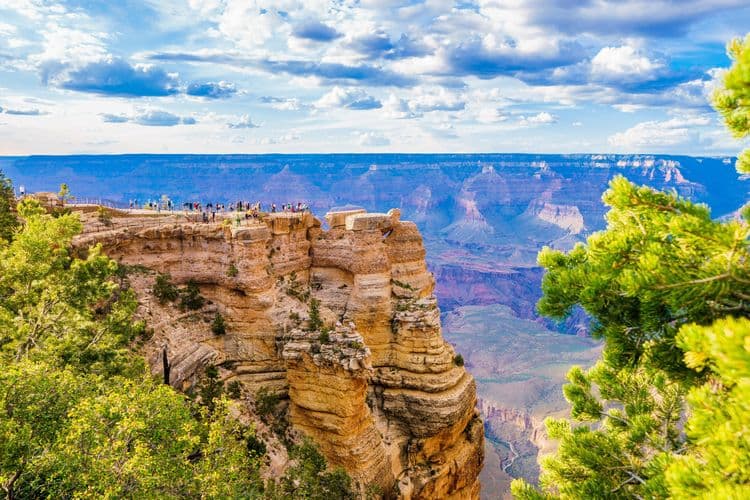
One of the world’s most famous landscapes, Grand Canyon exposes nearly two billion years of geologic history in layered rock carved by the Colorado River. The contrast between popular rim overlooks and the rugged inner canyon trails makes it uniquely dramatic. The skywalk allows visitors to literally step out over the canyon if there isn’t time for hiking.
- Annual visitors: 4.9 million
- Park size: 1.2 million acres
- Miles of hiking trails: 400+
19. Bryce Canyon (Utah)
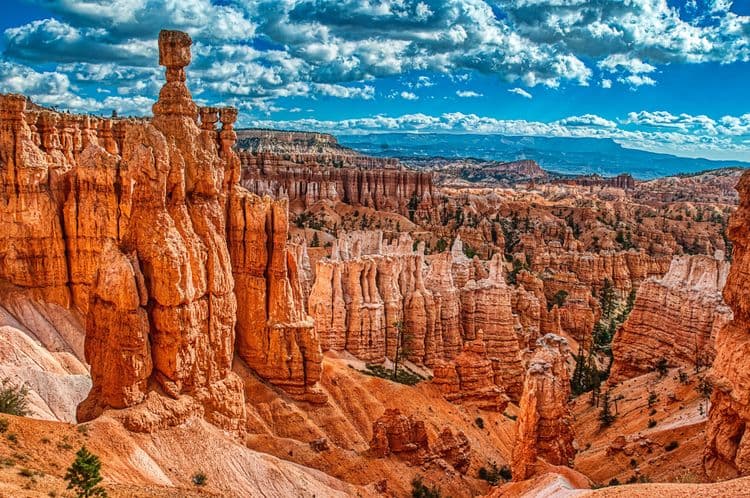
Bryce Canyon is a high-elevation amphitheater filled with thousands of orange and pink “hoodoos”—thin towers of eroded sandstone. Its combination of alien-looking geology and big-sky stargazing gives it an almost otherworldly vibe.
- Annual visitors: 2.5 million
- Park size: 35,835 acres
- Miles of hiking trails: 60+
18. Denali (Alaska)
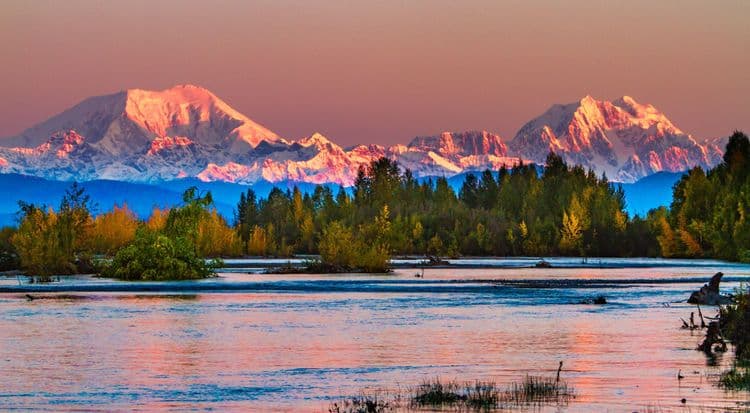
Dominated by North America’s tallest peak, Denali, this park is largely roadless wilderness where wildlife like grizzly bears, caribou, and Dall sheep roam. The single park road offers panoramic views of tundra, taiga, and glaciers that surround Denali.
- Annual visitors: 466,227
- Park size: 4.7 million acres
- Miles of hiking trails: 35+ maintained trails
17. Wrangell-St. Elias (Alaska)
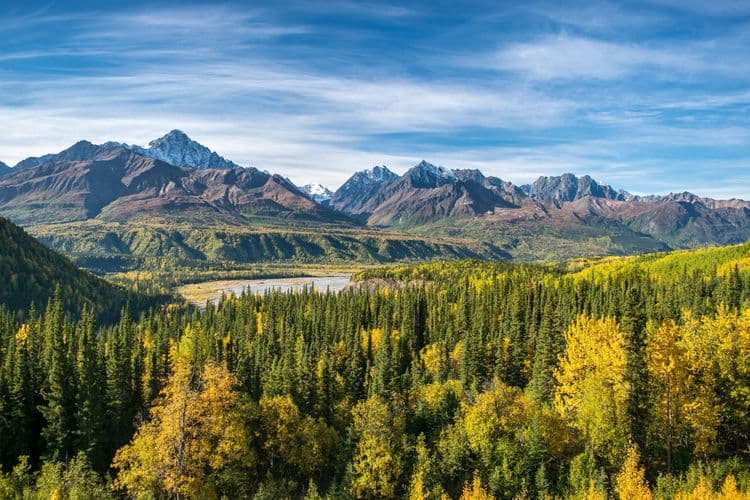
The largest U.S. national park is bigger than several states and it’s filled with massive mountain ranges, glaciers, and wild rivers. It forms part of a huge international protected area with neighboring parks in Canada, highlighting its global conservation value.
- Annual visitors: 81,670
- Park size: 13.2 million acres
- Miles of hiking trails: 10+ maintained trails
16. Voyageurs (Minnesota)
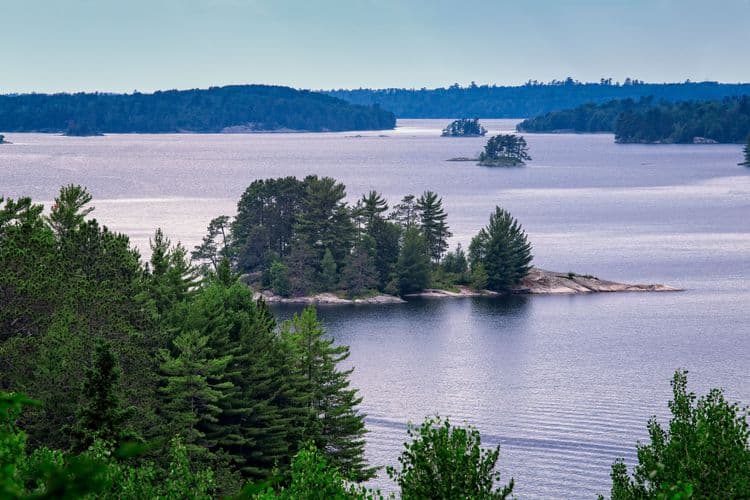
Voyageurs is a water-based park of interconnected lakes and boreal forest along the Canadian border. Houseboats, kayaks, and canoes rule here, and the park is a great place for northern lights when conditions are right.
- Annual visitors: 199,030
- Park size: 218,000 acres
- Miles of hiking trails: 27+ maintained trails
15. Hawai'i Volcanoes (Hawai'i)
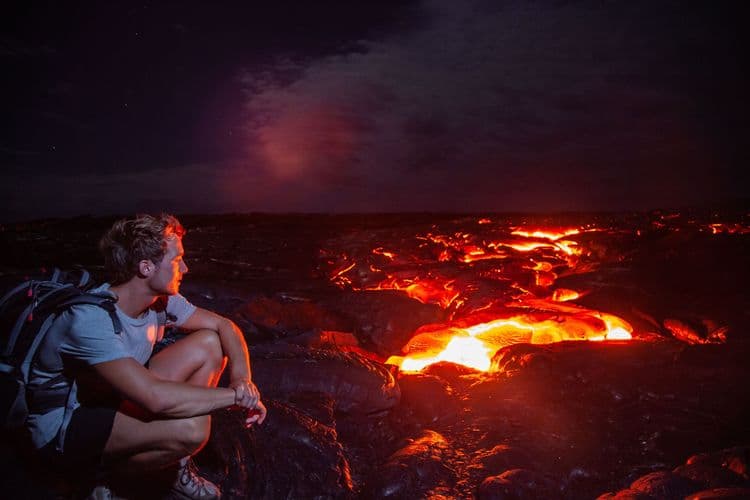
This park protects two of Earth’s most active volcanoes—Kīlauea and Mauna Loa—so its landscape is constantly changing. Visitors can see fresh lava flows, steam vents, and old lava tubes alongside native rainforest and coastal cliffs.
- Annual visitors: 1.4 million
- Park size: 335,259 acres
- Miles of hiking trails: 150+
14. Grand Teton (Wyoming)
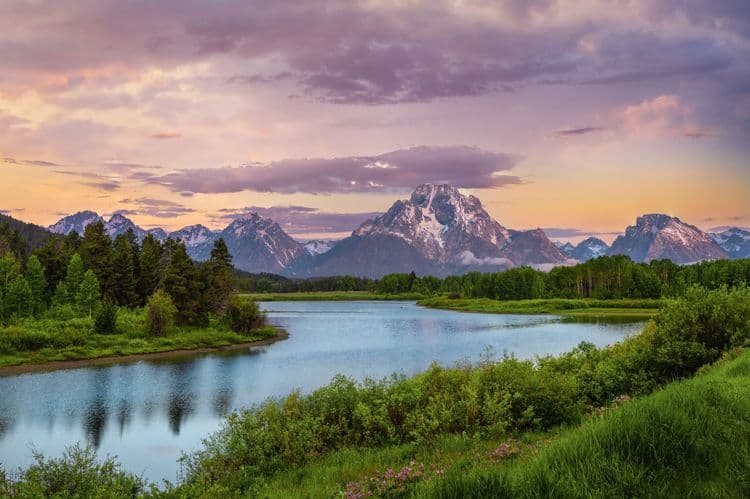
Grand Teton showcases a sheer mountain range rising abruptly from flat valley floor, with no foothills to soften the view. Its string of glacial lakes and the wildlife-rich Snake River bottomlands create a compact but incredibly photogenic alpine landscape.
- Annual visitors: 3.6 million
- Park size: 310,000 acres
- Miles of hiking trails: 250+
13. Redwood (California)
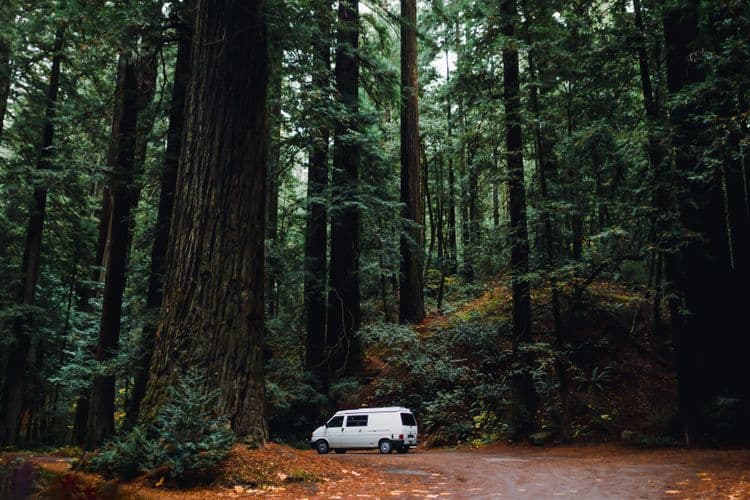
This park, co-managed with state parks, protects some of the world’s tallest trees—coast redwoods—along with prairies and rugged coastline. Misty groves of redwoods create a cathedral-like atmosphere that feels unlike any other forest.
- Annual visitors: 622,883
- Park size: 131,983 acres
- Miles of hiking trails: 200+
12. Katmai (Alaska)
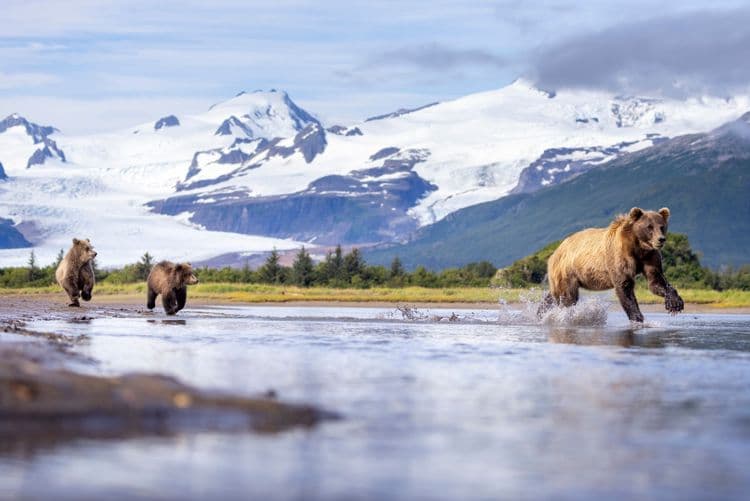
Katmai is famous for brown bears catching salmon at Brooks Falls, but it also protects vast volcanic landscapes including the Valley of Ten Thousand Smokes. It’s one of the best places on Earth to safely watch large bears in the wild.
- Annual visitors: 36,230
- Park size: 4 million acres
- Miles of hiking trails: 5 miles of maintained trail
11. Mount Rainier (Washington)
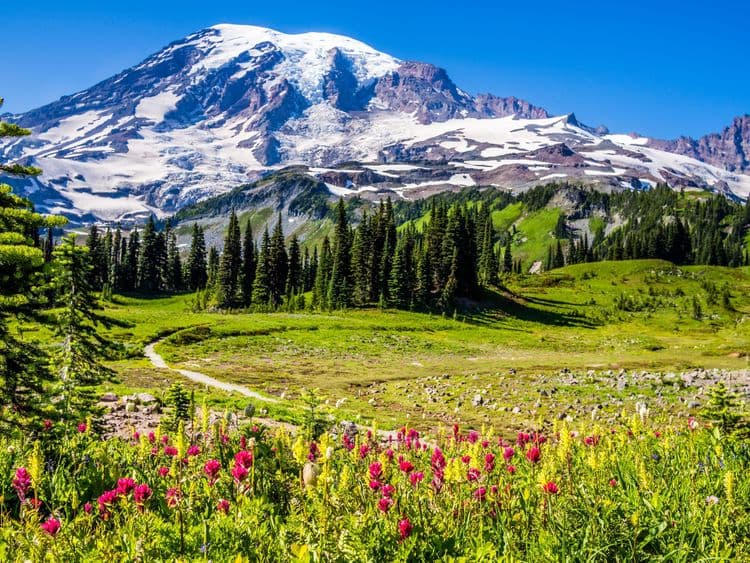
Dominated by the glacier-clad volcano Mount Rainier, this park is known for wildflower meadows and subalpine forests surrounding the mountain. Its numerous glaciers and high snowfall make it a key spot for studying climate and water resources in the Pacific Northwest.
- Annual visitors: 1.6 million
- Park size: 236,380 acres
- Miles of hiking trails: 260+
Download WayFy
Create the perfect Colorado itinerary with our simple, intuitive trip builder that guides you every step of the way.
10. Zion (Utah)
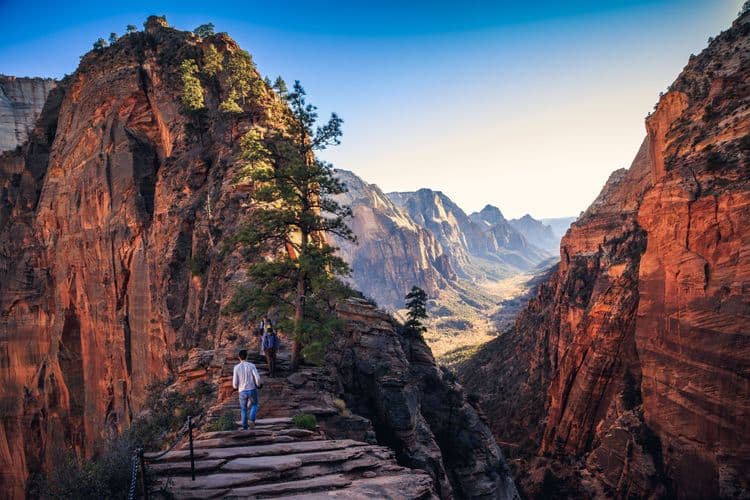
Zion’s sheer sandstone cliffs, slot canyons, and the Virgin River Narrows make it one of the most dramatic canyon parks. Hikes like Angels Landing and Observation Point combine big exposure with sweeping views over apricot-colored rock walls.
Zion is quickly becoming one of the top visited national parks in the country (surpassing Yellowstone several years in a row now). Although its scenery is incredible, and you’re sure to have a great experience, you will almost certainly be battling crowds.
- Annual visitors: 4.9 million
- Park size: 148,733 acres
- Miles of hiking trails: 90+
9. Sequoia (California)
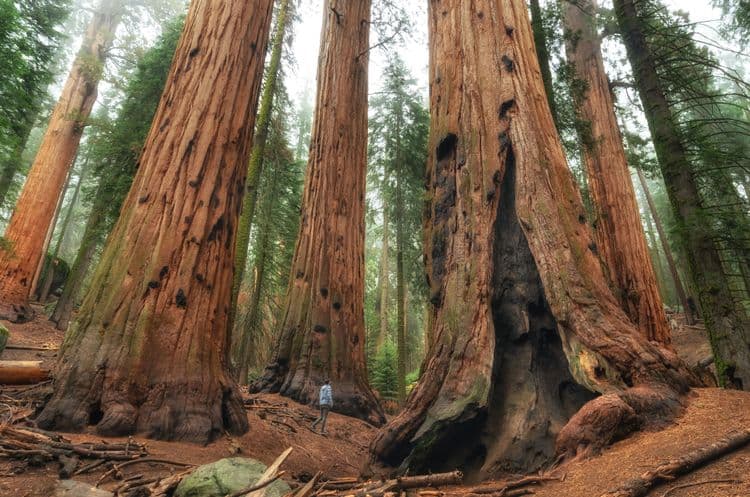
Home to General Sherman, one of the largest trees on Earth by volume, Sequoia protects giant sequoia groves and high Sierra backcountry. You can stand among trees thousands of years old and then quickly climb into serious mountain terrain.
Sequoia has a tremendous trail system and it contains some jaw-dropping scenery, bringing it near the top of our list.
- Annual visitors: 1.3 million
- Park size: 404,000 acres
- Miles of hiking trails: 800+ miles across the combined Sequoia–Kings Canyon trail system.
8. Yellowstone (Wyoming/Montana/Idaho)
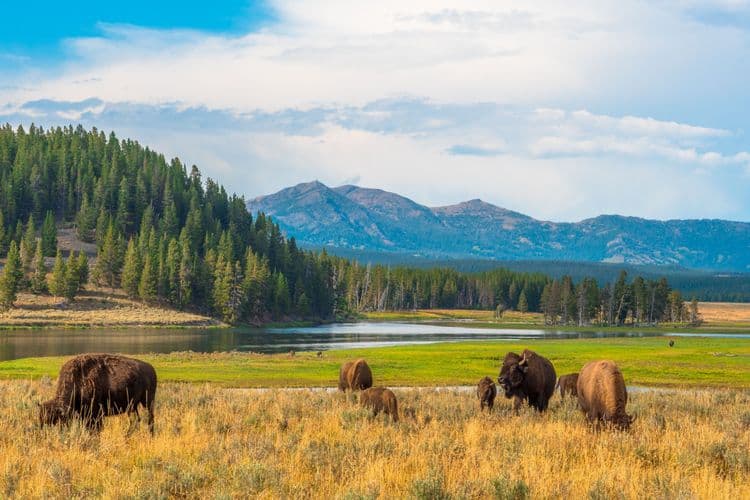
The world’s first national park, Yellowstone is famous for geysers like Old Faithful, hot springs, and colorful geothermal basins atop a huge volcanic caldera. It also has abundant wildlife, like bison, wolves and bears.
With more than 1,100 miles of hiking trails across diverse landscapes, it’s no wonder Yellowstone is one of the top visited parks in the country year-after-year.
- Annual visitors: 4.7 million
- Park size: 2.2 million acres
- Miles of hiking trails: 1,100+
7. Rocky Mountain (Colorado)
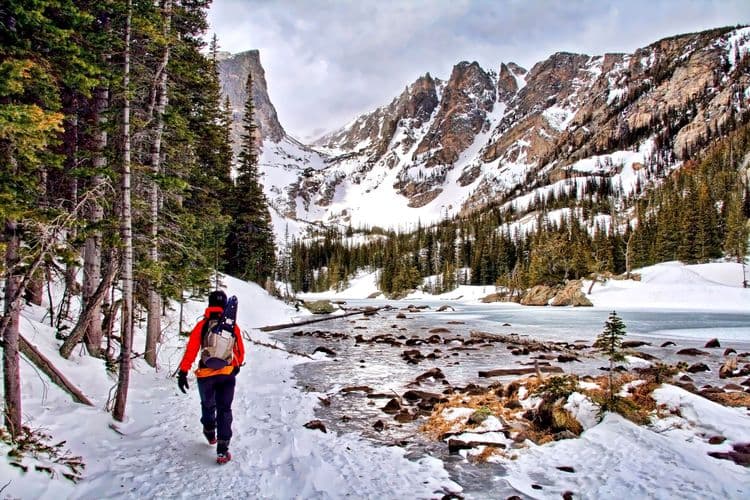
Rocky Mountain spans the Continental Divide and climbs from montane forest to tundra, with Trail Ridge Road, one of the highest continuously paved roads in the U.S. You climb 12,000 feet into an open world of ridgelines, peaks, and sweeping views without needing a big backcountry expedition.
Add in abundant wildlife (like elk, moose, and bighorn sheep), four distinct seasons of experiences, and easy access from Denver and Estes Park, it’s one of the best places in the U.S. to experience a “big mountains” trip without leaving the Lower 48.
- Annual visitors: 4.1 million
- Park size: 265,807 acres
- Miles of hiking trails: 350+
6. Kings Canyon (California)
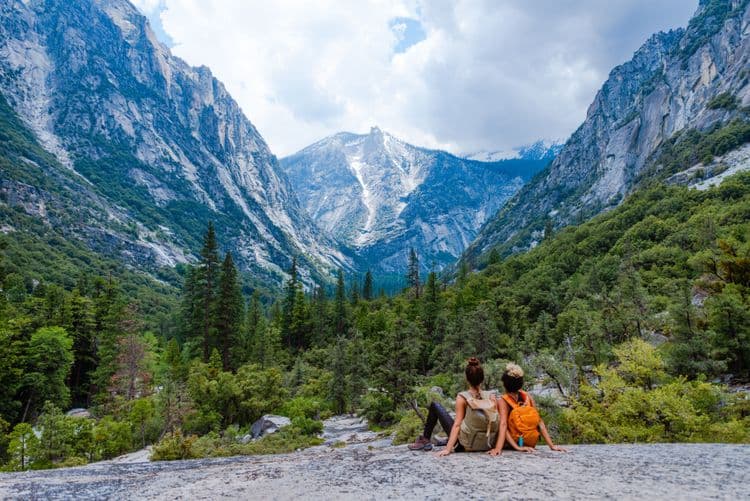
What makes Kings Canyon especially unique is how wild and uncrowded it feels: over 90% of Kings Canyon is designated wilderness, with high passes, alpine lakes, meadows, and stretches of canyon so steep there aren’t even trails.
Visitors come for the dramatic drive into Cedar Grove along the canyon floor, mellow riverside walks and swimming holes, sequoia-grove strolls on short, paved loops, and serious multi-day backpacking on routes that link into the John Muir and Pacific Crest Trails.
- Annual visitors: 699,389
- Park size: 461,901 acres
- Miles of hiking trails: 800+ miles across the combined Sequoia–Kings Canyon trail system
5. Olympic (Washington)
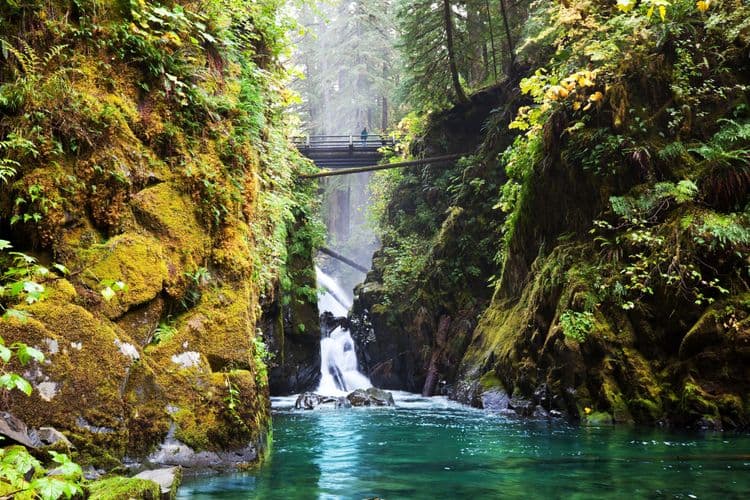
Olympic is one of the few places on Earth where you can wander through dripping temperate rainforest, drive up to glacier-capped mountains, and watch the sunset on a pristine Pacific beach—all inside one national park. It is one of the most ecologically diverse parks in the world.
It’s also globally recognized: Olympic is both a UNESCO World Heritage Site and an International Biosphere Reserve, largely because it contains some of the best-preserved temperate rainforest left on the planet and huge swaths of old-growth forest. In the Hoh and Quinault Rain Forests, trees tower over carpets of moss, while higher up, the Olympic Mountains hold glaciers, subalpine meadows, and endemic species found nowhere else.
Whether visitors are looking for peaceful, low-key nature walks; big alpine hikes from Hurricane Ridge; or backpacking along tide-pools, sea stacks, and driftwood-covered beaches, Olympic feels like a true backcountry adventure that’s only a few hours outside of Seattle.
- Annual visitors: 3.7 million
- Park size: 922,000 acres
- Miles of hiking trails: 600+
4. Glacier (Montana)
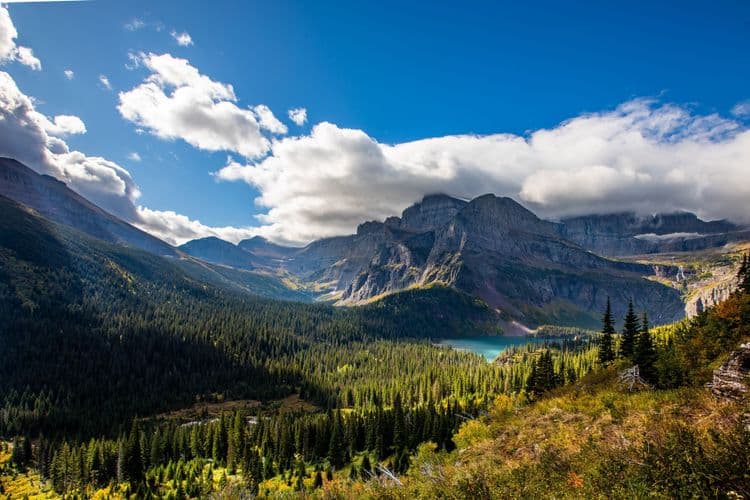
A big part of what makes Glacier unique is how much you can see in a relatively compact area. The 50-mile Going-to-the-Sun Road crosses the whole park, climbing to Logan Pass with nonstop views of hanging valleys, sheer cliffs, and glacial lakes; it’s no surprise it’s often ranked among the best scenic drives in the world.
Step off the road and you’re quickly in prime wildlife habitat. Glacier is home to grizzly and black bears, mountain goats, bighorn sheep, moose, and nearly 300 bird species.
People visit Glacier if they want big, dramatic mountain scenery; serious but accessible hiking; close-up wildlife viewing; and the feeling of being in a genuinely wild place that still has just enough connection to civilization.
- Annual visitors: 3.2 million
- Park size: 1 million acres
- Miles of hiking trails: 700+
3. Kenai Fjords (Alaska)
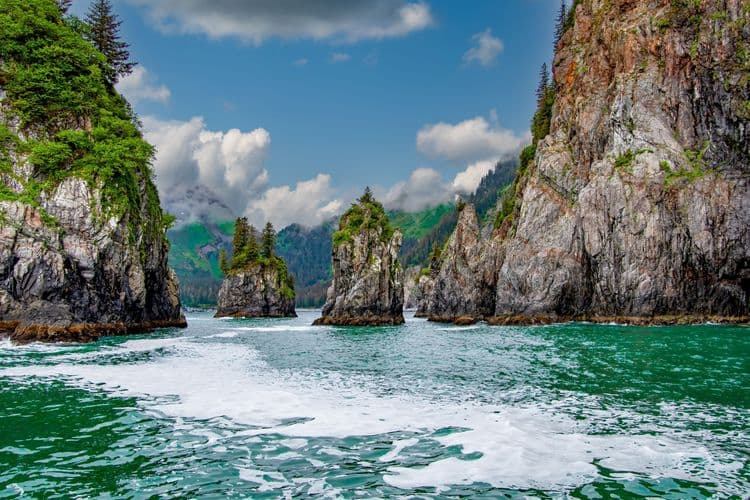
If you’re looking for heart stopping views that you just can’t get anywhere else, Kenai Fjords bring you something straight out of another world. Towering mountains dive straight into the sea, glaciers tumble down from a 700-square-mile icefield, and whales, puffins, sea otters, and seals all share the same ice cold, blue water.
At the heart of it all is the Harding Icefield, one of the largest icefields in the U.S., which spills out into dozens of tidewater glaciers that you can see from tour boats or from the famous Harding Icefield Trail above Exit Glacier.
Unlike some of the other parks in Alaska, Kenai Fjords is relatively easy to get to. You can fly into Anchorage, hop down to Seward, and suddenly you’re cruising past calving glaciers and sea stacks or hiking from temperate rainforest into high alpine ice in a single day.
- Annual visitors: 419,468
- Park size: 600,000 acres
- Miles of hiking trails: 10 miles of maintained trails
2. Yosemite (California)
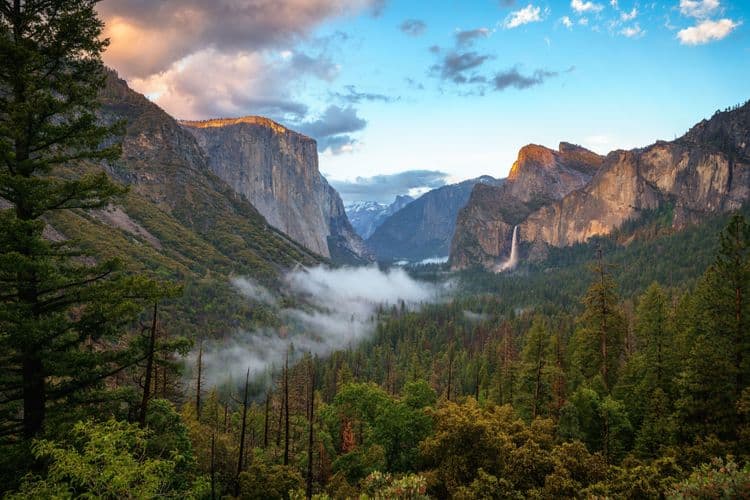
Often at the top of other National Park ranking lists, Yosemite is definitely a tough park to compete against. With its glacier-carved valley, framed by El Capitan and Half Dome and home to Yosemite Falls, it is one of the most iconic views on Earth. Beyond the valley, high country meadows, domes, and over 800 miles of trails spread across the Sierra Nevada.
The reason we don’t have this as our number one national park is because Yosemite is usually in the top 5 of most visited parks each year. With several million visitors (most arriving in the summer months) it’s hard to find solace in the areas that have the most epic views.
However, there’s really no place quite like it, and with such diverse recreational opportunities, it’s easy to find yourself on a trail or a backcountry campsite that gets away from the crowds. And as one of the earliest national parks, established in 1890, it offers over a century of stories, stewardship, and trailblazers to immerse yourself in.
- Annual visitors: 4.1 million
- Park size: 747,956 acres
- Miles of hiking trails: 800+
Download WayFy
Create the perfect Colorado itinerary with our simple, intuitive trip builder that guides you every step of the way.
1. North Cascades (Washington)
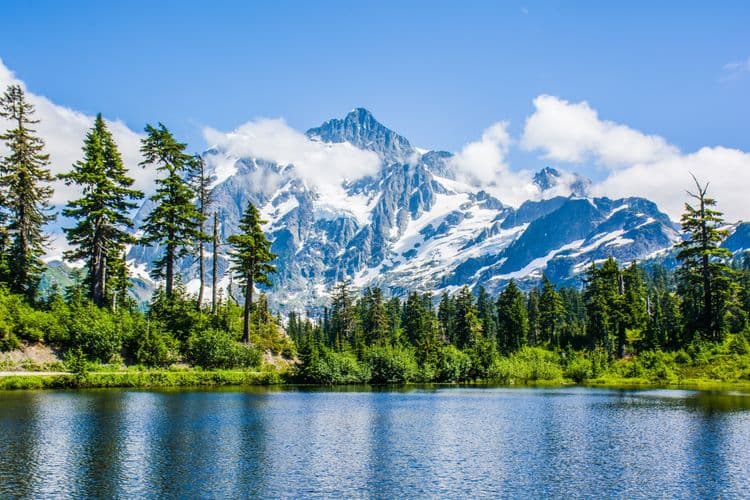
The top National Park on our list is one that is very much overlooked. Known as the “American Alps,” it has jagged granite peaks, over 300 glaciers (the most heavily glaciated area in the Lower 48), emerald alpine lakes, and huge swaths of old-growth forest. More than 90% of the park complex is designated wilderness, so once you leave the road you’re in genuinely wild country.
Despite its beauty, North Cascades sees only a fraction of the visitors a year, compared to our other top parks, and it remains one of the least-visited U.S. national parks. When driving through the park, you will overlook incredible views like Diablo Lake, Cascade Pass and Maple Pass. Wildflower meadows blanket the land in the summer, golden colors take over in the fall, and there’s excellent opportunities for backpacking, climbing, and stargazing.
For a park that has incredible, jaw-dropping views, several hundred miles of hiking trails, and a fraction of the crowds, it’s no wonder North Cascades National Park is our top choice.
- Annual visitors: North Cascades sees only 16,485 visitors a year, but if you include the full North Cascades National Park Complex (with Ross Lake and Lake Chelan), annual visitation jumps to over 1.1 million
- Park size: 684,000 acres
- Miles of hiking trails: 400+