Pagosa Springs
History & Culture
Founding & History
Long before Pagosa Springs became a town, the hot mineral waters along the San Juan River drew Indigenous peoples from across the region. Ute communities knew the place as Pagosah, a term often translated as healing or boiling waters, and treated the springs as a site of ceremony and renewal. Navajo traditions also link the area to important origin stories, underscoring the deep spiritual significance of the steaming pools and the surrounding landscape. For generations, these waters were visited for their perceived curative properties and for the sense of power associated with the rising steam and sulfur-rich scent.
Non Indigenous settlement arrived in the 19th century, when the United States Army established Fort Lewis near the springs as part of broader campaigns in the region. A small civilian community grew alongside the post, serving soldiers, travelers, and ranchers. In the 1880s federal authorities asserted control over the springs and a surrounding section of land, and commercial bathhouses began to replace simpler soaking areas. The town of Pagosa Springs was surveyed and platted in that period and was formally incorporated before the close of the nineteenth century, anchoring development on both sides of the river.
As the 20th century unfolded, local entrepreneurs expanded the use of geothermal water. In the nineteen thirties Cora Woods developed a large pool and a collection of simple cabins fed by the springs, creating one of the early resorts that would later evolve under new owners. Families such as the Giordanos drilled additional wells, improved bathhouses and helped establish the pattern of lodging paired with soaking that still defines much of downtown. In the 1980s the town, county and federal energy agencies partnered on a geothermal heating system that pipes hot water beneath streets and into public buildings, demonstrating an early example of community scale renewable energy.
In the following decade a new riverside resort was built to showcase the hot pools, and in recent years the community has added geothermal heated greenhouses and other projects that keep the springs at the center of both heritage and innovation.
Cultural Significance
Culturally, Pagosa Springs sits at the intersection of Indigenous tradition, western ranching heritage, and contemporary wellness travel. The long-standing use of the hot springs by Ute and other Native peoples underpins current branding that emphasizes healing and respect for the water, and local interpretive materials acknowledge that history while inviting visitors to treat the site with care. Ranching, logging and small town commerce shaped the community during the twentieth century, leaving a legacy of modest wooden buildings, historic houses, and a calendar that still features rodeo events and fairs.
In recent decades the town has embraced its role as a destination for restorative experiences and o,utdoor adventure. Modern resorts and smaller soaking facilities draw guests who come to relax in the mineral pools after days spent skiing, hiking or floating the river. Community recognition as a place that values its past is reflected in preservation efforts and heritage programs, and federal designation as a Preserve America community highlights the importance of local history, from early military outposts to the continuing significance of the springs.
This blend of respect for Indigenous roots, frontier narratives and contemporary wellness culture gives Pagosa Springs a distinct identity among Colorado mountain towns.
Notable Events & Stories
-
The Army fort right in downtown
In 1878, Congress authorized a US Army post at what is now downtown Pagosa Springs—Fort Lewis (originally Camp Lewis). It sat between today’s Lewis Street and San Juan Street. The fort’s mission was to “control and protect” both incoming settlers and the Southern Ute people during intense tension and land grabs in the late 1870s.
-
Gold in the hills
The Summitville Mine area nearby produced a legendary 141-pound gold-bearing boulder in the 20th century—worth hundreds of thousands of dollars—which now lives at the Denver Museum of Nature & Science.
-
Flood of 2025
October 2025, remnants of Tropical Storm Priscilla dumped over 6 inches of rain on the San Juans. The San Juan River through Pagosa hit its third-highest crest since 1911, flooding neighborhoods, damaging around 90 homes, and closing sections of US-160. Local agencies opened shelters and the town rallied around “Pagosa Strong” recovery efforts.
Local Heroes & Notables
-
Dr Mary Winter Fisher
Dr. Fisher arrived from Chicago in the late nineteenth century to establish a medical and healing practice beside the hot springs, and the growing settlement quickly came to rely on her as its pioneering physician. Over many years, she earned a reputation across Colorado for unusually keen diagnosis and unwavering care for ranch families, loggers, miners, and townspeople, and her legacy is now honored through a medical center, a community foundation, and a park that all carry her name.
-
Frank Oppenheimer
A physicist, Oppenheimer left university research during a period of political blacklisting and created a working cattle ranch in the hills outside Pagosa Springs. While running the ranch, he taught science at Pagosa Springs High School, serving as the sole science teacher and turning discarded machinery into hands-on experiments that helped his students gain recognition at state science fairs. His years in Pagosa shaped the experimental, curiosity driven teaching style he later carried into the Exploratorium, and former students and neighbors remember him as a gentle mentor whose love of inquiry made the countryside around town feel like an open air laboratory.
-
Dan Fogelberg
The folk singer who designed and lived on Mountain Bird Ranch, a forest backed property near town where his recording studio looked out over meadows, aspen groves, and a working ranch landscape. Stories about writing and recording in that quiet basin have become part of local lore, and modern real estate descriptions still mention his name when the property is discussed.
-
Ursala Hudson
Contemporary Pagosa Springs is also strongly influenced by artist and school founder Ursala Hudson, a Tlingit textile and fashion artist who lives in town and creates innovative Chilkat and Ravenstail regalia alongside painting, photography, and printmaking. She balances an increasingly visible national and international art career with deep civic work as president and co founder of Pagosa Peak Open School, the community charter school, while her writing, music, and creative projects support a lively local arts scene that keeps the town’s cultural life closely tied to both Indigenous tradition and new ideas.
Fun & Surprising Facts
-
World’s deepest hot spring
Pagosa’s “Mother Spring” holds the Guinness World Record as the deepest geothermal hot spring on Earth. A probe hit 1,002 feet and still didn’t find the bottom.
-
Name literally means “healing water”
“Pagosa” likely comes from a Ute word often translated as “healing waters” or “boiling water,” a nod to the steaming mineral springs used for centuries by Indigenous peoples.
-
Ancient sacred site & Navajo origin story
The springs were a sacred gathering place for Native peoples. In Navajo cosmology, Pagosa Springs appears in some origin stories as part of the journey from the lower worlds to this one.
-
Hot enough to cook (but please don’t)
The Mother Spring itself is around 144°F (62°C) — hot enough to cause serious burns and definitely not a soak spot. The water is cooled and piped into all the soaking pools you see in town.
-
Tiny town, huge backyard
The town sits at about 7,126 feet and is surrounded by millions of acres of public land: San Juan National Forest, Weminuche Wilderness (Colorado’s largest), South San Juan Wilderness, plus Southern Ute land. Roughly 65% of Archuleta County is public or tribal land.
-
“Colorado Sunbelt” with 300 days of sun
Despite being a mountain town at over 7,000 feet, Pagosa Springs touts around 300 sunny days a year and a relatively mild climate thanks to its mix of Rocky Mountains + high-desert influences.
-
A river runs through the hot springs
The San Juan River literally cuts right through downtown, with soaking pools terraced above it and a whitewater park built into the river channel. You can raft, kayak, or tube rapids up to class III while looking up at steaming pools.
-
Gateway to serious powder
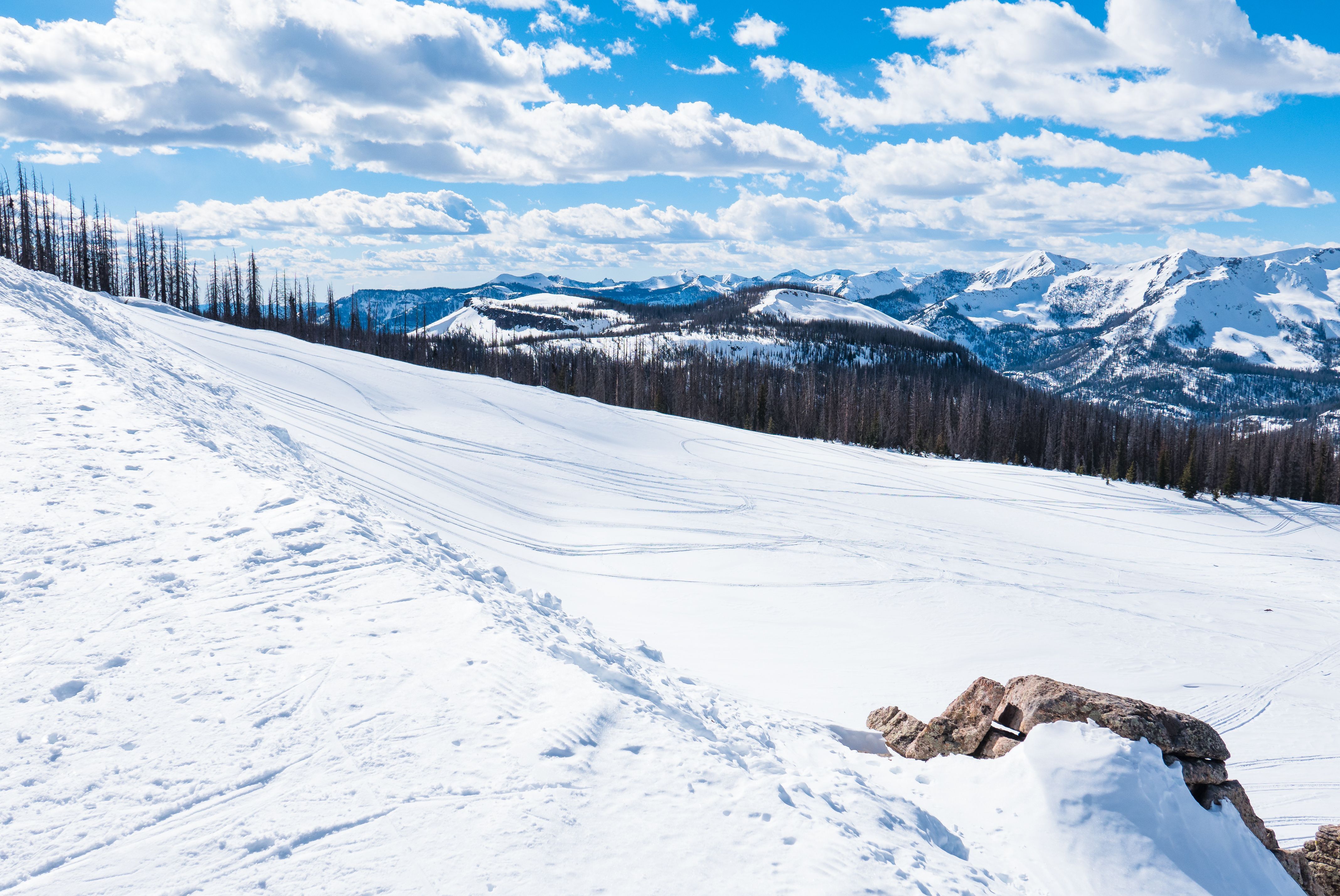
Wolf Creek Ski Area, just up the road over Wolf Creek Pass, is famous for getting some of the highest snowfall totals in Colorado—often 400–450 inches per season—while Pagosa itself stays sunnier and more mellow.
-
So much water, so many minerals
The hot spring water is loaded with minerals like sodium, sulfate, silica, and a bit of lithium. That “minerally” smell and silky feel are part of its reputation for being therapeutic (and a little sulfur-stinky).