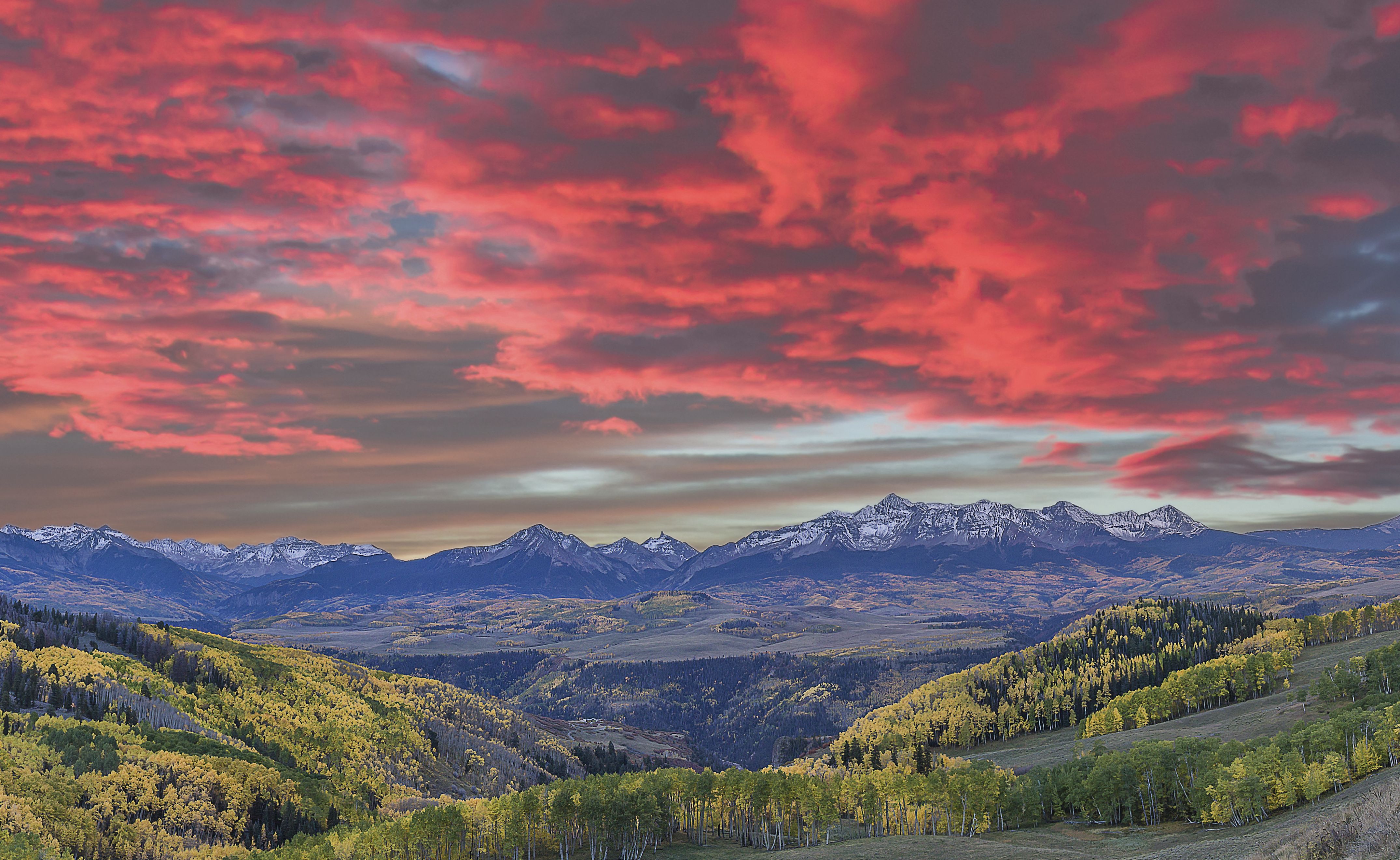
Lizard Head Wilderness
History & Culture
Park History
Lizard Head Wilderness protects roughly 41,500 acres in the high San Juan Mountains, about 10 miles southwest of Telluride, jointly managed by the San Juan and Uncompahgre National Forests. Its federal wilderness designation dates to 1980, recognizing a dramatic skyline, clean headwaters, and rare high-elevation habitats worthy of lasting protection.
The area takes its name from Lizard Head (13,113 ft), a dark volcanic spire whose steep, unstable rock makes it one of Colorado’s more serious climbs. Surrounding the spire rises the Wilson Group, Mount Wilson (14,246 ft), El Diente Peak (14,159 ft), and Wilson Peak (14,017 ft), anchors of the wilderness horizon and some of the San Juans’ most storied summits. Trail use across this interior remains moderate to light, a hallmark of the region’s backcountry character.
Mountaineering history threads through this skyline. The first recorded ascent of Lizard Head came in 1920 by Albert Ellingwood and Barton Hoag, cementing the spire’s reputation among technical climbers. A 1911 landslide is reported to have altered the peak’s silhouette, a detail still referenced in historical accounts of the San Miguel Mountains.
Cultural Significance
The San Juan Mountains are ancestral homelands connected to Ute peoples, with deep cultural ties to the high country’s passes, valleys, and headwaters. Contemporary wilderness protections help retain the quiet, undeveloped character of these mountains, while travel today follows many of the same ridgelines and corridors that long predate modern recreation.
Notable Events & Stories
- In 1911, a huge rockfall ripped away part of Lizard Head’s original summit. Contemporary accounts and photo comparisons show that the older tower was taller and more blocky; after the collapse, the spire we know today became the dominant feature.
- For years Lizard Head was widely talked about as unclimbable. In 1920, Albert Ellingwood and Barton Hoag pulled off the first ascent using hemp rope, three soft iron pitons, and nailed boots—no modern cams, no sticky rubber. Climbing historians note that at the time it was probably the hardest rock climb ever done in the United States, putting Ellingwood at the cutting edge of American alpinism.