Grand Mesa National Forest
Geology & Ecology
Geological Features
Grand Mesa’s tabletop is armor-plated in black volcanic basalt, a hard cap that poured across the summit roughly 10.9-9.6 million years ago in at least two dozen separate lava flows, many venting near today’s Crag Crest. Those stacked flows (up to 93 m/310 ft thick) slowed erosion on the mesa even as the Colorado and Gunnison Rivers carved deep valleys on either side. The result is the world’s most extensive flat-topped mountain, a broad, elevated platform that holds hundreds of lakes and far-ranging views. Beneath the basalt lie softer Eocene shales and sandstones of the Green River and Wasatch formations, then cliffy Mesaverde Group sandstones and lower Mancos Shale, a layer cake you can literally “read” along road cuts and canyon walls.
Ice Age forces then refined the high country. As climates cooled, Pleistocene glaciers and periglacial processes shaped benches, outwash fans, landslides, and colluvial aprons around the mesa’s flanks, leaving a rim of drift and a necklace of basins that help explain why water collects so beautifully on top. Many of today’s lakes occupy glacially carved or dammed depressions enhanced by that basalt cap’s natural watertightness.
For travelers, it’s geology you can see from the road: the Grand Mesa National Scenic Byway (Hwy 65) rises to about 10,800 ft (3,300 m), crossing the lava shield and revealing the mesa’s stepped sedimentary edges and lake-studded summit.
Ecology & Wildlife
Perched around 10,000-11,000 feet, the mesa supports classic subalpine spruce-fir forest, sprawling aspen groves that ignite in autumn, and wetlands and meadow systems strung between more than 300 alpine lakes, a mosaic that draws anglers, paddlers, and photographers all summer long. The broader GMUG landscape spans foothills to fourteeners, packing an impressive range of habitats into one region.
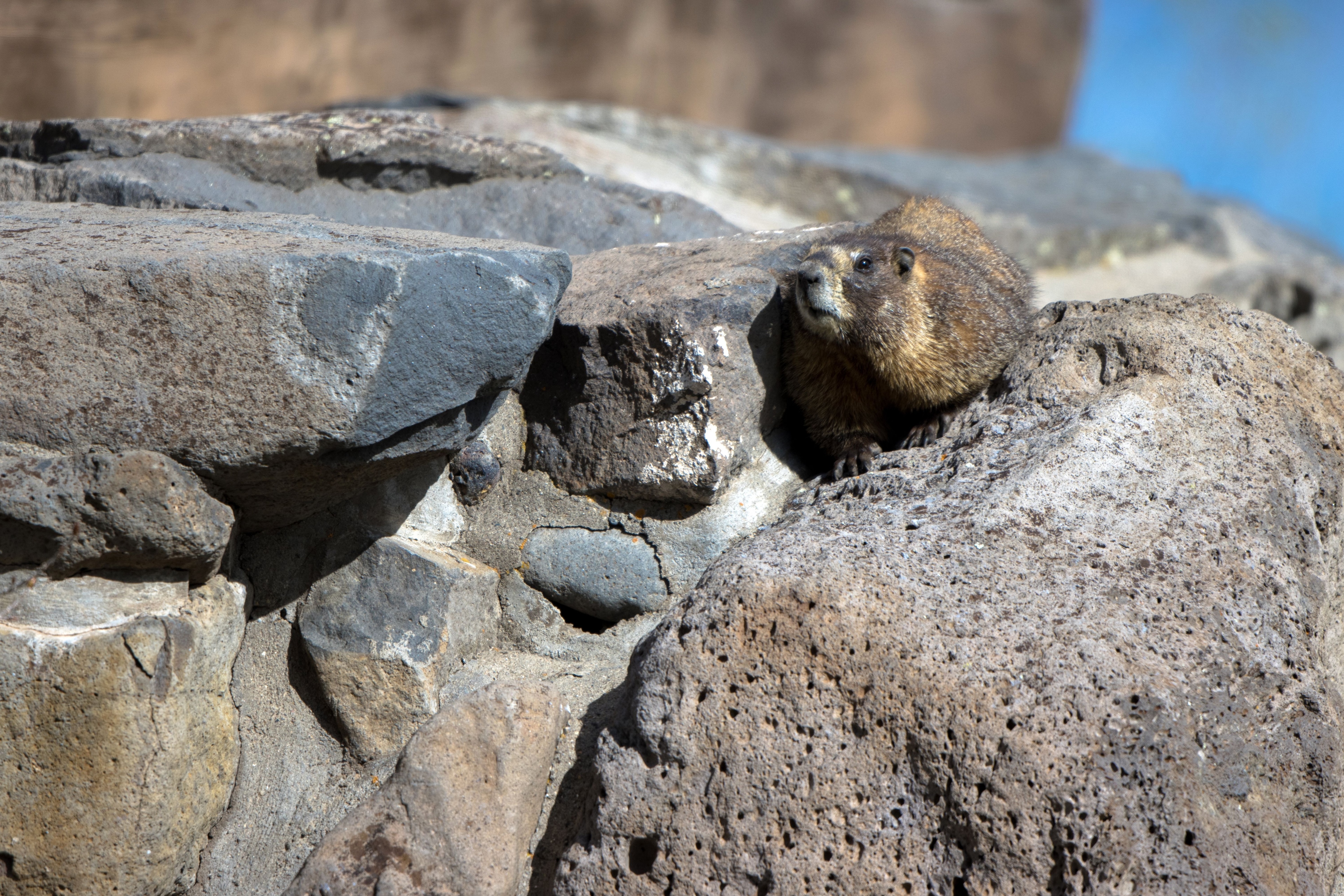
Wildlife watching is outstanding; the forests host large populations of elk and mule deer, along with black bear, mountain lion, pine marten, and Canada lynx in suitable habitat. In recent decades, a resident moose herd has established on the Grand Mesa itself, often spotted near willow-lined lakes and wet meadows. Bring binoculars for raptors and waterfowl cruising the lake country, and give all animals wide space, especially at dawn and dusk when activity peaks.
Trail networks and viewing pullouts make exploring easy. Across the GMUG, managers care for 3,500+ miles of trail spanning dramatic elevation shifts; on the mesa, that translates to short lakeside strolls, family-friendly loops, and longer rambles through fir shade and aspen glow. Always check seasonal notices and current conditions, then settle into a shoreline or overlook, there’s a good chance the scenery will include a trout rise, an elk bugle, or the hush of wind through spruce tops.