Glenwood Springs
Overview
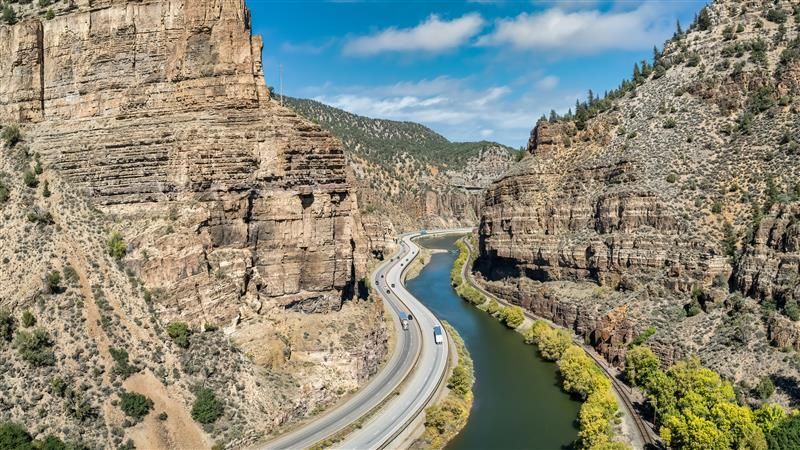
Glenwood Springs sits where the Colorado and Roaring Fork rivers meet, backed by layered canyon walls and high forested slopes. The town’s reputation was shaped by natural hot springs that drew visitors seeking rest and recovery, a tradition that continues with modern soaking pools and vapor caves.
The surrounding landscape belongs to a national forest that stretches over peaks, aspen groves, and red rock benches, with a famed hanging lake tucked above a turquoise creek in a protected canyon. Trails and paved paths link neighborhoods to river parks and out to a regional greenway, so it is easy to move from town sidewalks to riverbanks and canyon overlooks.
Long before resort dreams took hold, this valley was home to Ute people whose seasonal use of the springs and nearby hunting grounds is part of the area’s living story. The settlement that followed first took a rough frontier name, then adopted the present one at the urging of a homesick spouse, and soon became a mountain spa that hosted presidents, outlaws, and a lively flow of travelers.
Today visitors arrive by train through a dramatic canyon portal or by highway that threads the river, then find a compact center of cafes, galleries, and patio dining. Wildlife watchers linger along the river corridor, cyclists glide past cottonwoods on a rails-to-trails route, and families wander from the historic hotel to the pool before sunset on the pedestrian street. The mix of water, rock, and town life gives Glenwood Springs an easygoing rhythm that feels both restorative and adventurous.