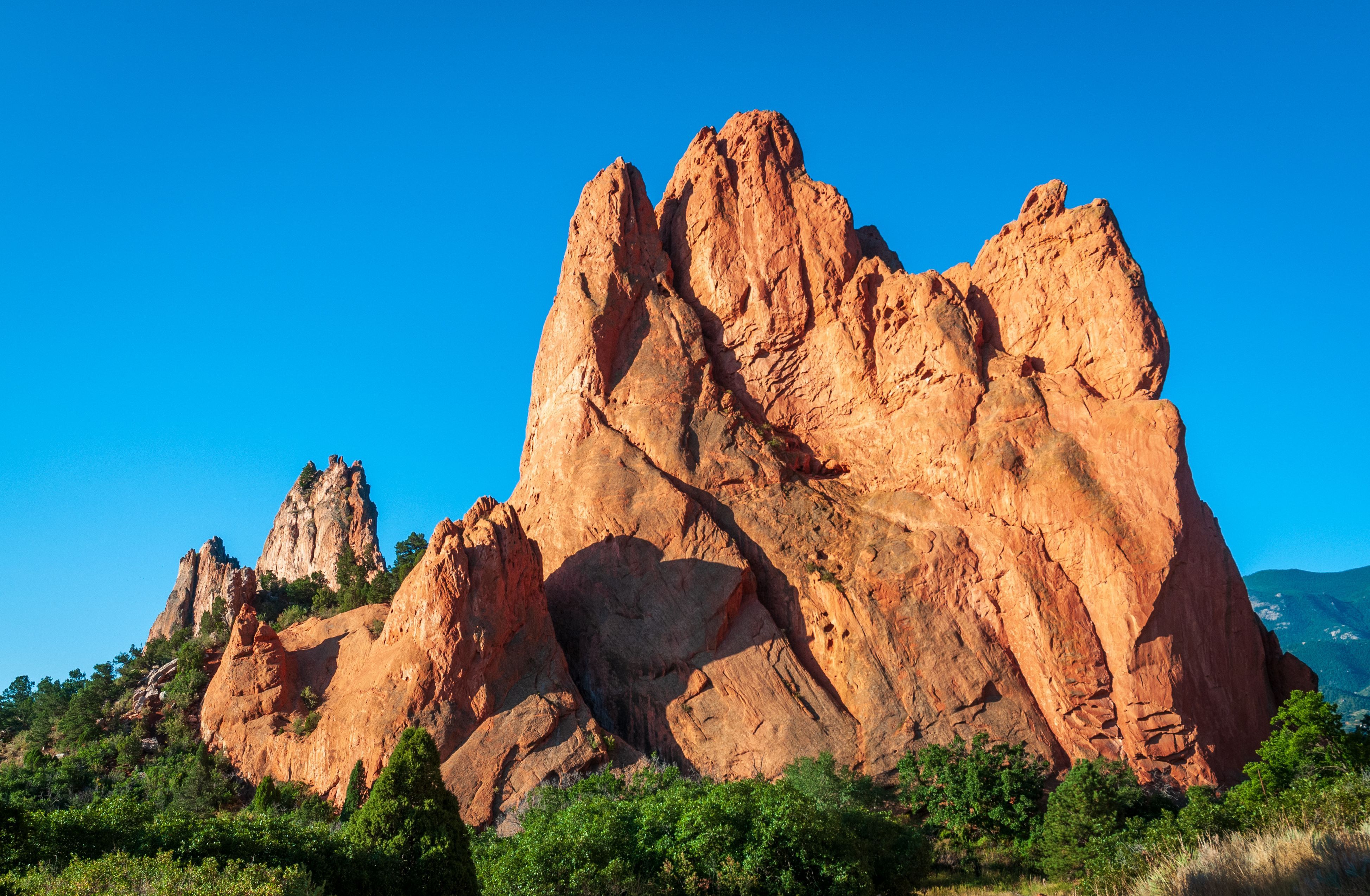
Garden of the Gods
History & Culture
Park History
Indigenous peoples traveled through and camped near these formations long before modern roads. In the early twentieth century, the children of a railroad executive deeded the core acres to the city with a promise that the land would remain open to everyone. The site later gained national recognition for its natural values, and a nonprofit foundation now supports education and preservation through the visitor center.
Cultural Significance
Tribal traditions connect this landscape to creation stories and seasonal travel across the Front Range. Today’s interpretive programs highlight these ties along with more recent community efforts that safeguarded access and established a civic identity rooted in red rock scenery.
Notable Events or Stories (rich text): A compact red-rock corridor became a landmark for early travelers and a gathering place for residents. Local naturalists helped document uncommon species and trace the layered rock story, while community donors expanded protection beyond the original gift.
Notable Events & Stories
1. Naming of the Park (1859)
Two surveyors exploring the area debated its use. One suggested it would make a great beer garden; the other exclaimed it was “a place fit for the gods to assemble.” The name “Garden of the Gods” stuck.
2. Charles Perkins’ Gift (1909)
Charles Elliott Perkins, head of the Burlington Railroad, purchased much of the land in 1879 but refused to build a private estate, wanting it kept open to the public. After his death in 1907, his family donated the land to Colorado Springs in 1909 with the condition it remain free to all visitors forever.
3. Indigenous Significance
The Ute people consider the site sacred. Oral histories say it was a gathering place for tribes, with evidence of human use dating back 3,000+ years. The dramatic red rock formations were landmarks along ancient trails.
4. Dinosaur Discoveries
In 1878, paleontologists found the Theiophytalia kerri, a unique dinosaur species, in the park. It remains the only known species found exclusively at Garden of the Gods.
5. Zebulon Pike’s Expedition (1806)
Explorer Zebulon Pike passed near the area on his way to what became “Pikes Peak.” His journals describe the dramatic sandstone formations, though they were not yet named.
6. Rock Climbing Culture
By the early 1900s, Garden of the Gods became a magnet for climbers. The first recorded technical climb was in 1919 on Montezuma Tower. Today, climbing is still allowed with permits, though it’s tightly regulated to protect the fragile sandstone.
7. Myths and Legends
-
Gateway to the Heavens: Some legends say the towering rocks formed a spiritual gateway used by ancient peoples for ceremonies.
-
Balanced Rock Tales: Local folklore claimed the iconic Balanced Rock was placed by supernatural forces. It became a tourist attraction in the 1800s, when visitors were encouraged to pose beside it with horses and early automobiles.