Colorado National Monument
Seasonal Access & Weather
Seasonal Access
Colorado National Monument welcomes visitors all year, with access shaped by elevation, temperature swings, and short-lived winter weather events.
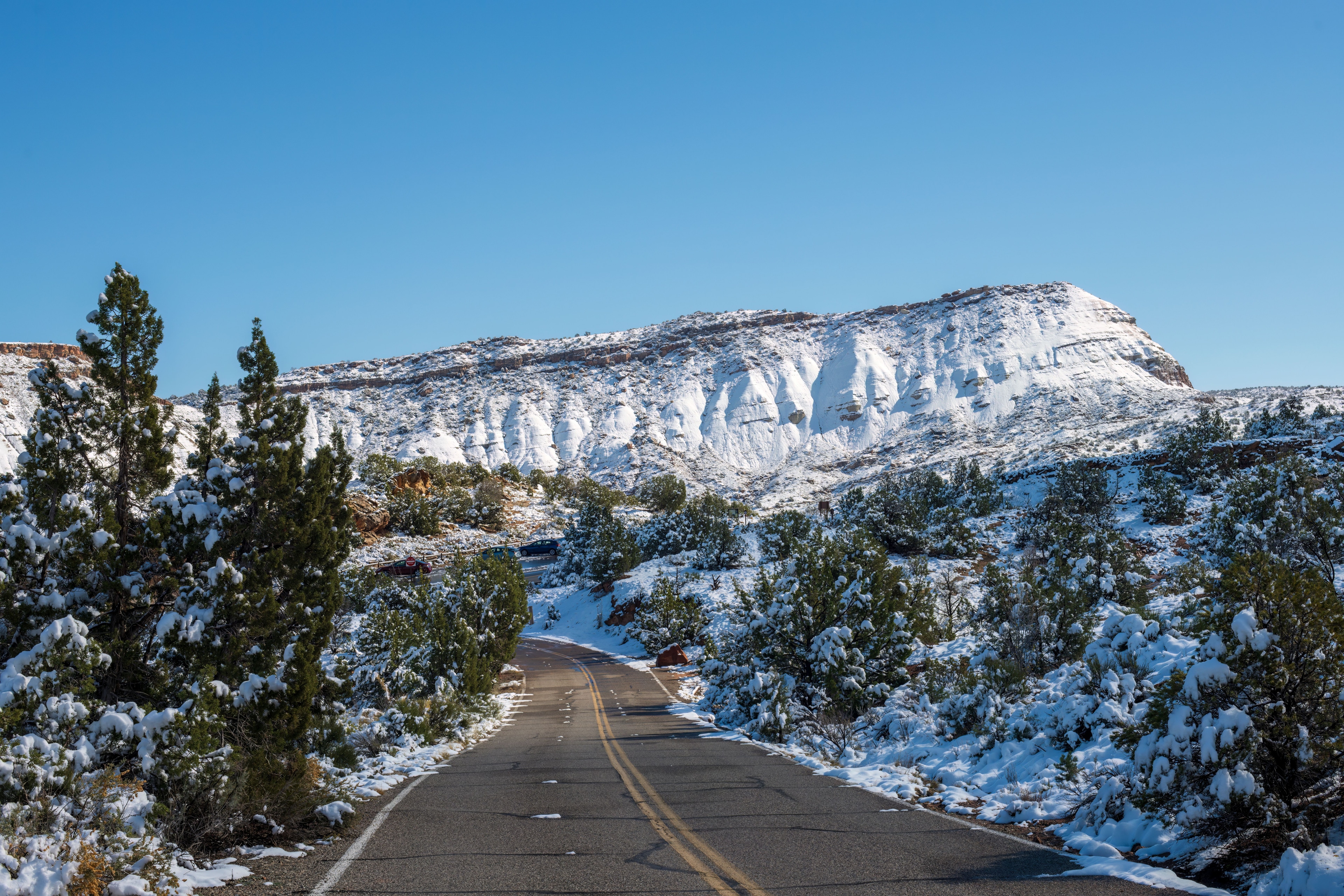
- Rim Rock Drive (23 miles, east–west across the rim): The scenic road stays open year-round, but during active snowstorms the upper section between DS Road and Independence Monument Overlook is temporarily closed to all traffic. After storms, crews plow, sand, and typically reopen that high stretch within about a day; three gates control access (west of DS Road, at 16½ Road, and at Independence Monument Overlook). Always verify status before driving.
- Tunnels & vehicle notes: Three tunnels; two on the west side, one on the east, require lights on for vehicles and bicycles; maximum tunnel height is 16 ft (centerline). Expect steep drop-offs, sharp curves, no shoulders, rockfall, wildlife, and cyclists sharing the lane. Many visitors uneasy with heights prefer traveling west → east to hug the inside lane more often.
- Trails & winter operations: Trails, Rim Rock Drive, and the visitor center generally remain open in winter; ranger-led hikes are uncommon that season. Short storms and morning ice can affect footing, start later in the day as temperatures rise, and check the forecast plus road status before heading out.
- When to expect the smoothest access: Spring and early fall bring the year’s most precipitation, but also classic hiking weather on many days. Summer offers the longest days and fully dry road surfaces, with periodic afternoon thunderstorms. Winter delivers crisp air, quiet overlooks, and occasional dustings of snow that may prompt brief, well-publicized closures and quick reopening's.
Weather Considerations
- Temperature & precipitation at a glance: Annual precipitation averages ~11 inches, with spring and early fall the wettest periods. Average summer high ~90°F, but valley floors can push into the low 100s; neighboring canyon country occasionally reaches 110°F+. Average winter low ~20°F, with total annual snowfall around 31 inches. Cold snaps can dip below zero.
- Summer heat & hydration: Mid-day sun is intense. Start hikes early or late, pack more water than you think you’ll need, and use sun protection. Expect hot pavement on overlooks and parking areas.
- Thunderstorms & “monsoon” pattern: Late summer often brings fast-building afternoon storms across the Colorado Plateau, lightning, brief heavy rain, gusty winds, and sudden drops in visibility/temperature. Seek shelter from lightning, avoid exposed rims during active storms, and postpone canyon descents if heavy rain is forecast.
- Winter chill, ice, and visibility: Expect cold mornings, early sunsets, and the possibility of black ice on shaded curves. A quick storm can add snow or fog to the rim, followed by rapid melt on sunny days. Confirm road status and allow extra time.
- Wind, rockfall, and wildlife on the road: Strong crosswinds can affect high overlooks and exposed segments of Rim Rock Drive. Rockfall and desert bighorn sheep are common road hazards, drive slowly and share the lane with cyclists. Lights are required in tunnels for both vehicles and bikes.
- Fire danger & restrictions: Drought, low humidity, and dry fuels can elevate fire danger. Wood fires and fireworks are prohibited year-round throughout the monument; charcoal and gas/propane are allowed only where specified (e.g., Saddlehorn Campground) and may be further restricted during high fire danger. Always check for current restrictions before your trip.