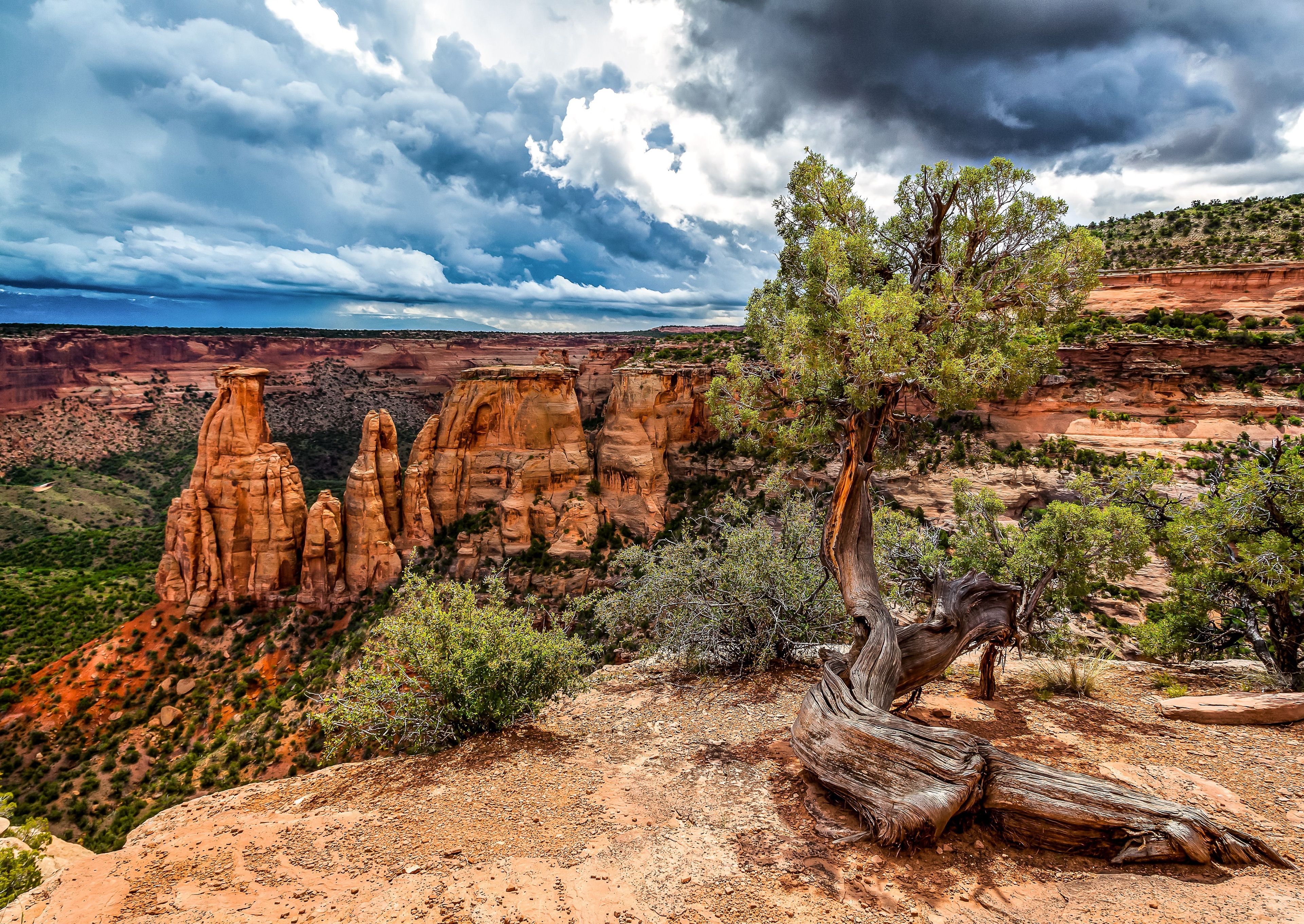
Colorado National Monument
Overview
Colorado National Monument protects a dramatic meeting of plateau and canyon country on the high shoulder of the Uncompahgre Plateau. Sheer walls glow with desert varnish, slender spires stand above winding drainages, and the land opens to long horizons that feel both intimate and immense. Rim Rock Drive clings to the edge of this stone world and links overlook after overlook, giving travelers a front-row view into red-rock amphitheaters and the sweeping valley beyond. The Saddlehorn Visitor Center introduces the story with exhibits, a short film, and friendly rangers who can help you plan a day on the rim or a quiet walk among juniper and sage.
Beneath the scenery lies a geologic tale that stretches across deep time. Towering cliffs of Wingate Sandstone display graceful cross-beds left by ancient winds, while ledges of the Kayenta Formation cap the walls in lighter bands. Softer Chinle mudstones erode to gentler slopes and catch rockfall from the heights above. Where canyons cut even deeper, ancient crystalline rocks peek through at the base, reminding visitors that this landscape sits on a rugged foundation uplifted with the Uncompahgre Plateau. Erosion continues to sculpt alcoves, buttresses, and balanced forms, shaping features like Independence Monument, the Coke Ovens, and broad canyon amphitheaters that define the monument’s skyline.
Water is scarce on these sun-warmed slopes, yet the life of the monument turns around hidden stores that seep from the rock. Groundwater moves through porous sandstone and emerges along canyon walls as steady trickles that feed hanging gardens, ferns, and willows. These pockets of green draw birds, insects, and mammals through the dry months and add surprising softness to an otherwise austere terrain. In spring the mesas and benches answer with wildflowers tucked between cacti and shrubs, while summer brings heat, high skies, and the chance of fast-moving storms that sweep across the rim. Cooler seasons bring quiet light, crisp air, and occasional ice in shadowed bends.
Wildlife thrives where woodlands, cliffs, and seeps meet. Desert bighorn sheep navigate ledges with ease, mule deer browse among piñon and juniper, and coyotes patrol open sage. Golden eagles and other raptors ride the thermals that rise from the canyons, while ravens stitch the air over the rim. Reptiles bask on warm stone and songbirds find cover in thickets near water. The mix reflects an upland desert community tied to both plateau and mountain influences, resilient in dry years and quick to gather around pockets of moisture after storms.
People have known and cared for this place for a very long time. Indigenous nations maintain cultural ties to the lands within and around the monument, and their connections continue today. In the last century local advocates helped secure federal protection, and during the New Deal era crews carved Rim Rock Drive into the cliffs with hand labor, tunnels, and careful engineering. The road later gained recognition as a historic district and remains central to how visitors experience the monument’s views and geology. Mid-century improvements added modern visitor facilities in the Saddlehorn area as part of a service-wide effort to welcome growing numbers of travelers. Through it all, the goal has stayed the same: preserve the canyons, mesas, and living communities of this high desert while inviting people to explore with care.