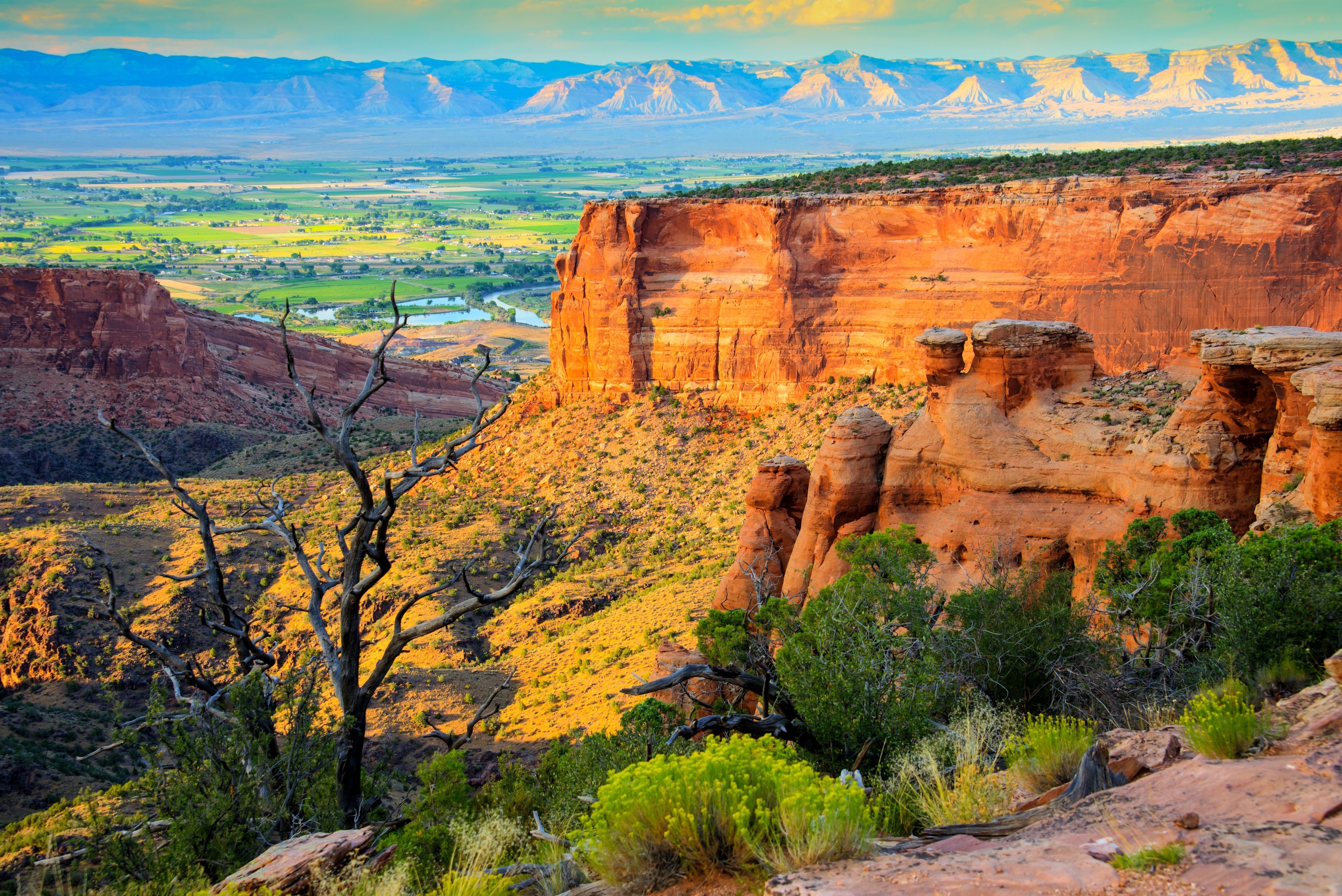
Colorado National Monument
History & Culture
Park History
Colorado National Monument became a reality on May 24, 1911, when President William Howard Taft signed the proclamation creating the monument. The spark came from trailbuilder and advocate John Otto, who arrived in the Grand Valley in the early 1900s, guided visitors through the canyons, and lobbied tirelessly until the canyons were protected. He served as the monument’s first custodian and built trails by hand, often camping in the backcountry with his burros.
Road to the rim. Early access followed the rough-cut Serpents Trail (constructed 1912–1921). In the 1930s, the National Park Service engineered a new scenic rim road. With New Deal support—especially the Civilian Conservation Corps (CCC), the Works Progress Administration (WPA), and Local Experienced Men—crews blasted ledges, stacked stonework, and tunneled through Wingate Sandstone to create Rim Rock Drive. Work began in 1931; after wartime pauses, the 22.42-mile drive was completed in 1950, transforming how visitors experience the monument’s cliffs and canyons. Key structures from this era include the Devils Kitchen Picnic Shelter, stone facilities at Saddlehorn, and maintenance buildings, all classic CCC/WPA craftsmanship.
Modernizing for the post-war boom. After World War II, visitation surged. Through the National Park Service’s Mission 66 program, Colorado National Monument added a purpose-built hub for visitors: the Saddlehorn Visitor Center, designed by NPS architect Cecil Doty, opened on the monument’s 52nd anniversary, May 24, 1963, with panoramic windows and sandstone cladding that echo the canyon walls. The broader Mission 66 effort brought new overlooks, amenities, and trail improvements to help people explore this rugged landscape.
Why these rocks mattered. The layers on display, precambrian basement in the canyon bottoms, massive Wingate cliffs, Kayenta ledges, and more, are a geologic showcase of the Colorado Plateau. Protecting this canyon country ensured future generations could see towering monoliths like Independence Monument and experience a classic desert erosional landscape shaped over immense time.
Cultural Significance
The lands within and around Colorado National Monument hold continuing cultural significance for several Indigenous Nations. The Ute Indian Tribe of the Uintah and Ouray Reservation, the Ute Mountain Ute Tribe, the Southern Ute Indian Tribe, the White Mesa Ute Community, and the Navajo Nation maintain enduring ties to this landscape. Visitors travel among places where people hunted, gathered, traveled, and told stories long before the modern road traced the canyon rims.
As you stand at overlooks or walk along the rim, remember that these vistas are part of living traditions, homelands with ongoing connections, responsibilities, and knowledge that continue today.
Notable Events & Stories
John Otto’s flag and a tradition born on the stone spire: On July 4, 1911, John Otto climbed Independence Monument, a 450-foot sandstone pillar in Monument Canyon, and raised the American flag on its summit, beginning an Independence Day tradition that the community continues to honor. The story of the climb, the patriotic naming of formations such as Independence Monument and Liberty Cap, and Otto’s years of hand-built trails have become part of the monument’s identity. (Note: Wildlife nesting or other resource considerations can sometimes alter annual climb plans.)
Grit, sacrifice, and the making of Rim Rock Drive: Construction of Rim Rock Drive demanded skilled engineering and dangerous labor. On December 12, 1933, during work at the “Half-Tunnel,” a catastrophic rockfall killed nine local men, a sober reminder of the human cost behind today’s scenic route. The drive’s completed stonework, tunnels, and sweeping viewpoints stand as a tribute to both the workers’ craftsmanship and their sacrifice.
A Mission 66 landmark on the rim: When the Saddlehorn Visitor Center opened in 1963, it embodied the modern “visitor center” concept, exhibits, ranger services, and big windows framing the canyons in one stop. Today, it remains the best starting point for trip planning, ranger talks, and a first look at the monument’s geology and stories.