Colorado National Monument
Geology & Ecology
Geological Features
Stand on the rim and you’re looking into time. The monument perches on the northeastern shoulder of the Colorado Plateau, where rock layers tilt gently along a great fold (a monocline) tied to uplift of the Uncompahgre Plateau. That slow heave fractured and raised the crust, then water and gravity did the sculpting, opening today’s canyons, alcoves, and spires. Drive Rim Rock Drive and you’ll even pass through tunnels drilled right in the cliff-forming sandstone.
Beneath your feet, the canyon bottoms expose some of the area’s oldest rocks, hard, dark Precambrian gneiss and schist intruded by granite, overlain by a classic red-rock staircase of younger sediments. The vertical cliffs that define the skyline are Wingate Sandstone, an ancient wind-blown dune sea whose towering cross-beds build sheer walls and narrow slots. Perched above it, the thinner, ledgy Kayenta Formation forms natural “caprock” benches and shelves. Higher still, the softer, rounded slickrock of the Entrada Formation weathers into domes and knobs that catch the first and last light of day. Together these layers create the monument’s signature profile of cliffs, ledges, and sculpted slopes.
That rock architecture explains much of what you see: tall, buttressed canyon walls where Wingate holds firm; stair-step terraces and overlooks where Kayenta forms resistant benches; and smooth, whimsical shapes where Entrada yields to wind and rain. Over geologic time, faults, joints, and the region’s arid climate helped isolate fins, arches, alcoves, and free-standing towers, features revealed brilliantly from roadside viewpoints and short walks.
Ecology & Wildlife
Where desert meets canyon water. Most of the monument is high Colorado Plateau desert, a mosaic of pinyon–juniper woodlands, sagebrush and rabbitbrush shrublands, and sun-exposed grasslands draped across benches and slopes. In canyon bottoms and along seep lines, the scene flips: pockets of green riparian vegetation appear where groundwater moves through porous Wingate Sandstone and emerges at shady cliff faces. These “stringers” and small galleries often include willows and cottonwoods and support plants you won’t find up on the dry mesas, mosses, orchids, and horsetails among them.
Birdlife on the cliffs. The monument hosts more than 80 breeding bird species in a typical year and has been recognized as an Important Bird Area since 2000, thanks to its mix of cliffs, canyons, and woodlands. Scan the updrafts for golden eagles and turkey vultures; listen for the descending whistles of canyon wrens on vertical walls; and watch tight flocks of white-throated swifts stitch the sky above the rims. Peregrine falcons also hunt these canyons, especially where sheer faces and prey are close at hand.
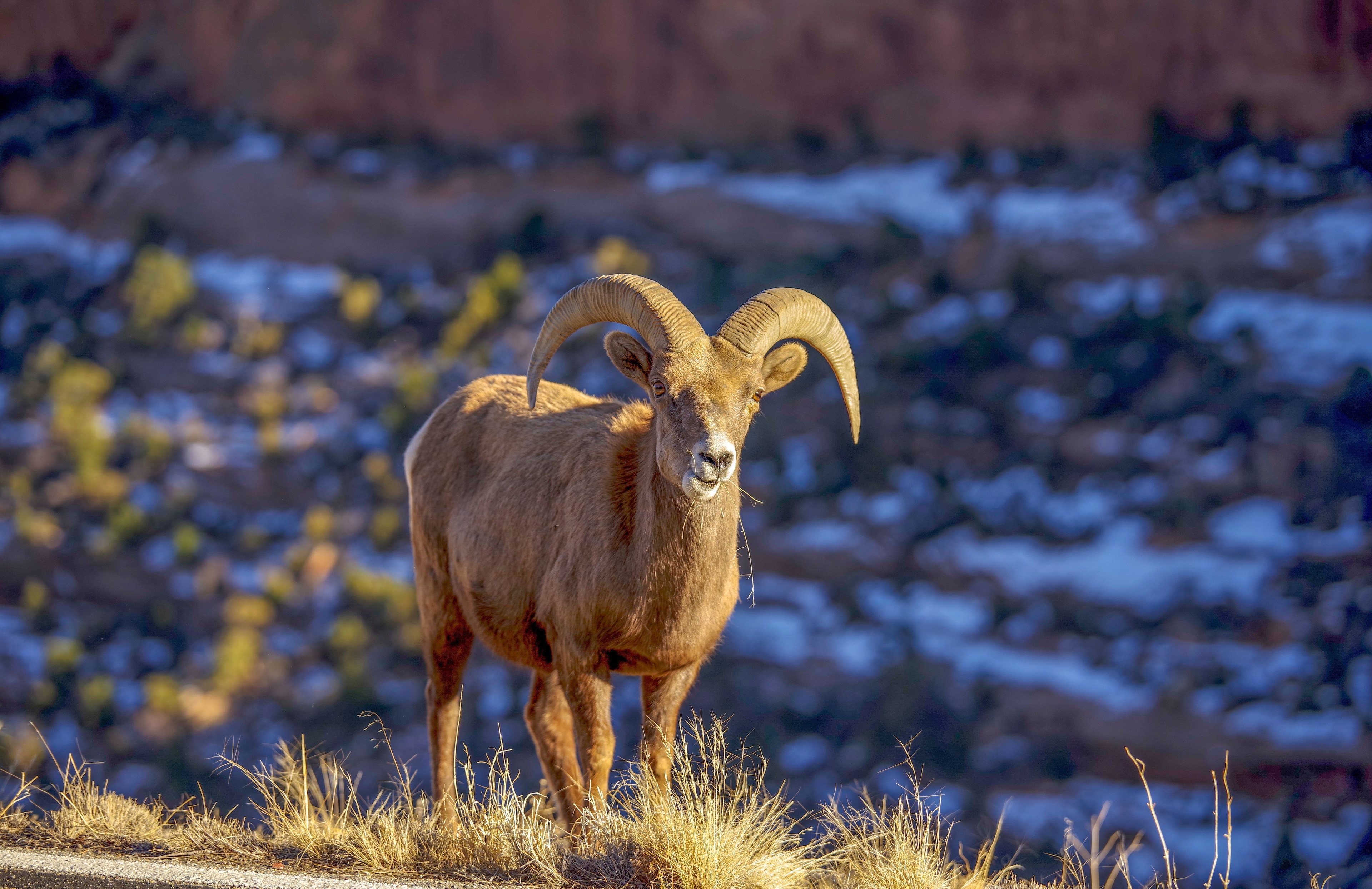
Mammals adapted to the dry country. Mule deer browse among juniper and pinyon, rock squirrels and chipmunks patrol picnic spots, and coyotes work dawn and dusk along draws. Desert bighorn sheep navigate cliff bands and ledges with ease, while mountain lions, rarely seen, range widely across the plateau and canyonlands. Many mammals time their movements around scarce water and cooler hours, a hallmark of life in this sun-forward landscape.
Reptiles & amphibians: heat and hidden water. Lizards are the daytime regulars on warm stone, look for collared lizards and fence lizards basking on ledges. Snakes, including harmless species and rattlesnakes, use shade and rock crevices; give all snakes space and watch where you place hands and feet. Amphibians are more localized, concentrating near springs, seeps, and temporary pools that appear after snowmelt or summer storms.
Plants that make the desert bloom. On the mesas and slopes, shrubs such as sagebrush and rabbitbrush mingle with Mormon tea; cacti, including prickly pear and claret cup hedgehog, dot sandy soils and bloom vividly in late spring. After winter moisture or a well-timed storm cycle, wildflowers like penstemon and evening primrose can paint the benches and roadside cuts, a fleeting burst powered by thin soils and brief windows of water.