Breckenridge
History & Culture
Founding & History
Breckenridge was first home to Ute families, who called the valley Dwaheeya (which meant “The Valley of Many Springs”) and moved with elk herds along the Blue River. In 1859, a prospecting party that included General George E. Spencer found placer gold there, and the town (though more of a camp at that point) was named after John C. Breckinridge, a former vice president and Confederate general.
By 1860, about 75 to 100 people lived in town, a post office opened, and the first stagecoach rolled in. After the Civil War, locals switched the spelling to Breckenridge to avoid association with the Confederacy, then kept digging.
Hydraulic placer mining began in 1870, and Father John Dyer started a church in 1879. A forest fire in 1880 pushed everyone to form a fire department, and in 1882, the South Park and Pacific Railroads constructed a Breckenridge depot with rail service over Boreas Pass.
Gold fever peaked next. In 1887, miners pulled a 13.5-pound nugget they called Tom’s Baby; this moment was later commemorated by the Tom’s Baby statue in Prospector Park (visitors rubbed the nugget for luck).
The population climbed to number in the thousands by 1889, and saloons filled every night. Prostitution boomed, with the term “red light district” referring to when a railway worker hung his red light outside a brothel to let it be known he was there so someone could get him in case of an emergency. Pug Ryan and his gang robbed the fancy Denver Hotel in 1898, then a storm dropped snow for seventy-nine straight days, forcing people to build snow tunnels to get around.
Change came fast in the new century. Phones and electricity arrived in 1900, and a Denver paper called Breckenridge “a camp that has turned out more gold with less work than any camp in Colorado.” In 1936, mapmakers labeled the area the “Kingdom of Breckenridge,” and that same year a fire burned many old buildings. World War II ended the dredging industry in 1942, and the population dwindled to 393 people by 1960.
Ski lifts on Peak 8 opened in 1961, Ullr Fest started in 1963, Peak 9 followed in 1971, and the Eisenhower Tunnel was completed in 1973. Historic structures joined the National Register in 1981, Peak 10 opened in 1985, and by 1990, the population reached 1,285. The Riverwalk Center and Peak 7 lifts opened in 1993, and the population increased to 2,399 residents by 1999. In 2001, the Breckenridge Golf Club added nine new holes to grow to twenty-seven holes. The population hit 3,182 in 2003, and the Barney Ford House Museum opened in 2004.
The Imperial Express chairlift opened in 2005 flying at 12,840 feet high, with the BreckConnect Gondola following in 2007. Peak 6 was opened up in 2013.
By then, adventure still filled Breckenridge, it had simply shifted from the pursuit of gold to biking, hiking, skiing, snowboarding, shopping, fine dining, and a host of other fun activities.
Cultural Significance
The cultural significance of Breckenridge, Colorado, is deeply layered, rooted in Ute heritage, gold rush boomtown grit, progressive mountain-town values, and a modern reinvention through art, outdoor life, and historic preservation.
- Before prospectors arrived, the Ute people lived seasonally in the Blue River Valley, which they called Dwaheeya, meaning "The Valley of Many Springs."
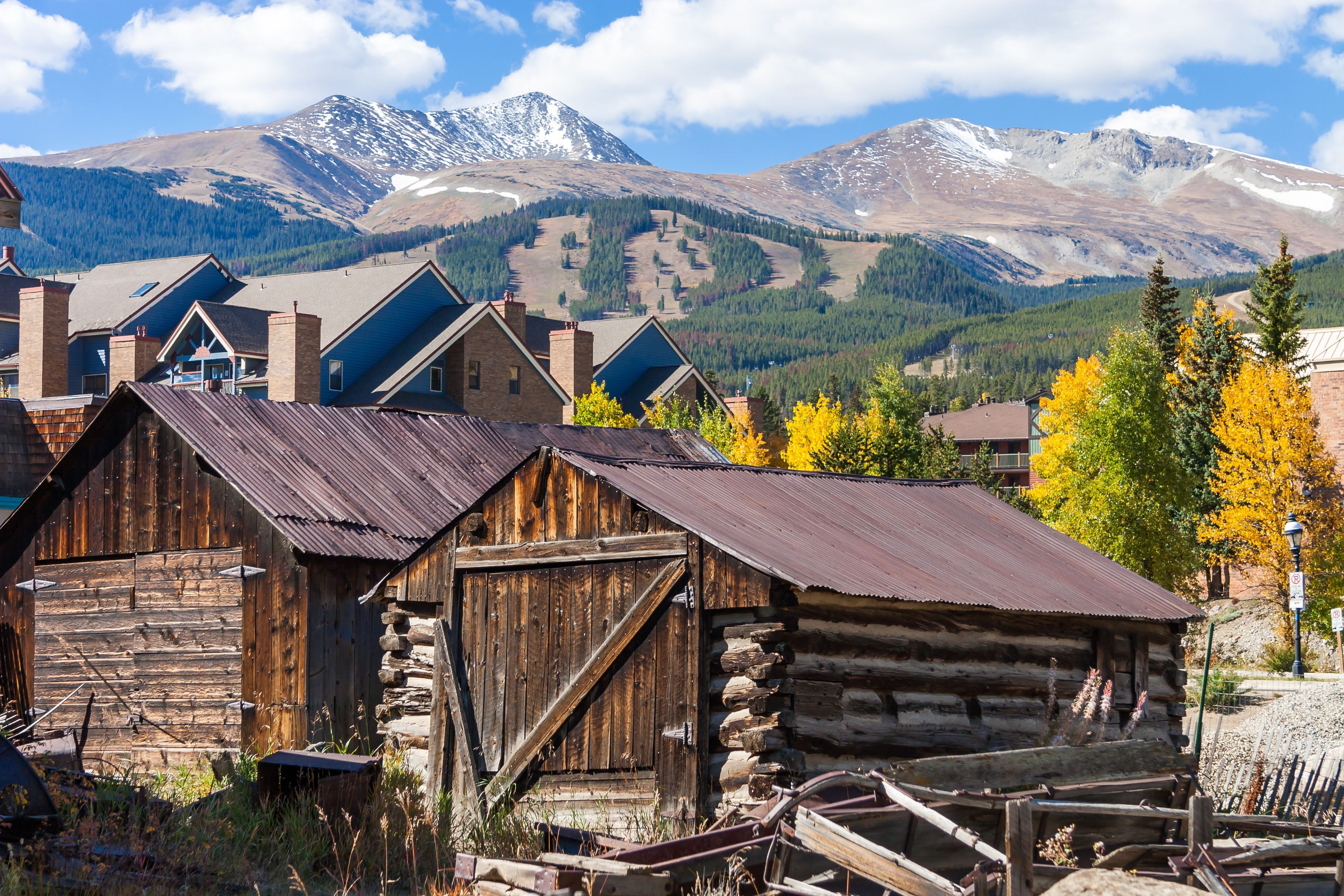
- More than 200 historic structures remain in downtown Breckenridge, with Victorian buildings lining Main Street, many repurposed as shops, galleries, and cafes.
- The Barney Ford House Museum honors an escaped enslaved man turned successful entrepreneur and civil rights advocate, Barney Ford’s story is a lesser-known but powerful part of Breckenridge’s legacy.
- Breckenridge is one of the highest towns in the U.S. with a brewery—Breckenridge Brewery was founded here in 1990.
Notable Events & Stories
1. The Discovery of Tom’s Baby (1887)
Perhaps Breckenridge’s most famous story: miners unearthed a 13.5-pound gold nugget, one of the largest in Colorado. They wrapped it in a blanket like a baby and paraded it around town, hence the name Tom’s Baby. The nugget disappeared for decades and was rediscovered in a Denver museum vault in 1972. Today, it’s commemorated by a statue in Prospector Park, and locals still rub the nugget (or statue) for good luck.
2. The Denver Hotel Robbery by Pug Ryan (1898)
Notorious outlaw Pug Ryan and his gang robbed Breckenridge’s upscale Denver Hotel. They escaped with cash and jewelry, sparking a legendary manhunt. This Wild West-style robbery added to the town’s colorful reputation for saloons, outlaws, and shootouts.
3. The Winter of 1898–1899: 79 Days of Snow
A brutal snowstorm hit Breckenridge and snowed for 79 straight days. Snowdrifts were so high, residents had to dig underground tunnels between buildings just to get around. This storm is still remembered as one of the most extreme winters in town history.
4. The “Kingdom of Breckenridge” (1936)
In a strange twist, mapmakers forgot to include Breckenridge on official state maps. Locals joked they were an independent kingdom, and the name stuck. Today, “The Kingdom of Breckenridge” is still celebrated with Kingdom Days, complete with historical reenactments, outhouse races, and gold panning.
5. The Fire of 1936
The same year as the map blunder, a massive fire destroyed several of the town’s historic wooden buildings. It was a pivotal moment that led to early preservation efforts and later sparked interest in restoring the historic downtown core.
Local Heroes & Notables
-
Barney Ford
Entrepreneur, civil rights leader, escaped enslaved man. He escaped through the Underground Railroad and eventually became one of the wealthiest black men in Colorado, running a successful hotel and restaurant.
-
Father John Dyer
Circuit-riding methodist preacher and skiing pioneer. He delivered mail and sermons across the Rocky Mountains in the mid 1800s - often on skis.
-
Thomas Dambo
Artist behind Isak Heartstone. Though not a local by birth, Danish artist Thomas Dambo became a Breckenridge legend when he installed Isak Heartstone, the beloved wooden troll sculpture.
Fun & Surprising Facts
- In 1887, miners discovered Tom’s Baby, a 13.5-pound gold nugget, one of the largest ever found in Colorado.
- The town was originally named Breckinridge, after the U.S. Vice President, until he joined the Confederacy. Locals changed the spelling to "Breckenridge" out of protest.
- It was the first town in Colorado to have a post office on the Western Slope (1860).
- Imperial Express SuperChair is the highest chairlift in North America at 12,840 feet (opened in 2005).
- Breckenridge Ski Resort has five peaks (6 through 10)—yes, Peak 1–5 are part of a different range!
- The town gets over 300 inches of snow per year on average—that's about 25 feet of snow.
- There’s a giant troll sculpture, Isak Heartstone, made from reclaimed wood by Danish artist Thomas Dambo—originally so popular it had to be relocated to its own trail.