Black Canyon of the Gunnison National Park
Overview
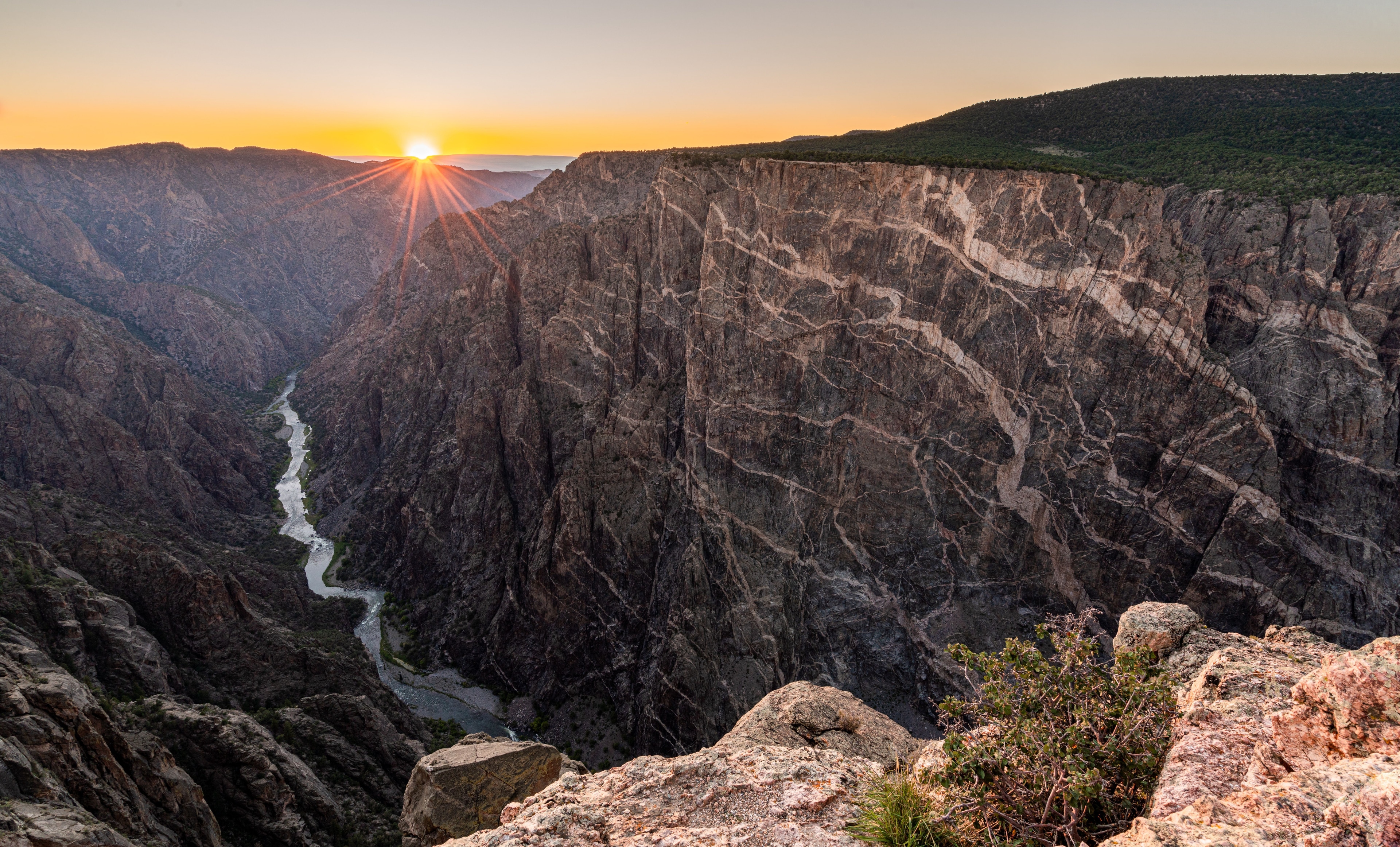
The canyon was carved by the Gunnison River, which cuts through ancient Precambrian rock at one of the fastest rates of erosion known for any river in North America. The walls of the canyon plunge more than two thousand feet in places, making it both one of the steepest and narrowest canyons in the country. This extreme topography has preserved an environment that feels remote and untouched despite its proximity to nearby towns.
Geologically, the park is a showcase of some of the oldest exposed rock on the continent, dating back nearly two billion years. The river’s force and time have created features such as the Painted Wall, the tallest cliff in Colorado, which displays vivid metamorphic patterns in its vertical face. Alongside the canyon walls are ecosystems that shift dramatically from dry pinyon-juniper forests at higher elevations to lush riparian zones along the riverbanks.
Culturally, the canyon has long been significant to Native peoples and later to settlers and explorers who struggled to navigate its harsh terrain. Today it is protected as a national park, recognized both for its natural beauty and scientific importance. The park’s designation helps preserve its wild character while allowing for carefully managed recreation, from scenic drives and rim overlooks to wilderness routes that descend into the canyon itself.